Showing posts with label Slice of Life. Show all posts

Sunday, 13 October 2019

Girl's Last Tour

aka Shōjo Shūmatsu Ryokō


Number of Episodes: 12

What Wikipedia says: The series follows two girls, Yuuri and Chito, as they navigate the ruins of civilization after an unknown apocalypse, and as they travel in their Kettenkrad, they seek food and supplies while surviving day-to-day.  

What KoanMan says: 


Talent hits a target no-one else can hit
Genius hits a target no-one else can see

- Schopenhauer

Girls’ Last Tour, like the quote above, is going to amaze those for whom it resonates, and will fall flat and mean nothing for others. It affected KoanMan deeply. It gets an A.

One immediate questions: why?

The story follows the journey of two girls, Chito and Yuuri, through a post-apocalyptic world in an endless search for food, shelter, and the higher levels in a multilayered hyper-urban cityscape. And like the philosophy of Schopenhauer, it is at once neither right nor wrong, neither positive nor negative, it simply is. Although, while Schopenhauer used negative language to relate his insights, Girls’ Last Tour presents a certain loss while simultaneously exploring the joy of simple pleasures. A hot bath, hunger giving way to a good meal. The shining spear of light that shines in the midst of desolation seems all the brighter for it, in spite of it, or perhaps because of it?

Chito and Yuuri are extremely well developed, and while very different, cling to each other for fundamental survival. The space afforded by their situation allows for far more depth than can usually be achieved in anime, like the view at the top of a mountain, with the entire world played out beneath, more is visible and the vastness is revealed without the distraction of detail. The manga, crafted by Tsukumizu, is faithfully reproduced in the anime directed by Takaharu Ozaki and written by Kazuyuki Fudeyasu. The background and scenery is superbly rendered and well supported musically by Kenichiro Suehiro and Jin Aketagawa as sound director. Tsukumizu’s contrasting 'cute versus bleak' creates an interesting dissonance in both the art-style and the story that is expanded in the anime over the manga.

So How Does it End? (Spoiler free):  Much like the rest of the anime, there is still the spectre of just the faintest hope in the ending. For better or worse the manga pushes on further. You may or may not wish to go down that road. [tTPO]

Overall Grade: Girls’ Last Tour emanates an existential aura that provokes serious introspective thought. It did for KoanMan at least. It gets an A.

What tTPO says:  tTPO (and Mrs tTPO) also found GLT an extrordinarily affecting anime. In recommending it to KoanMan, who has not got the greatest track record for enjoying slow moving anime, I was unsure as to if it would get through to him. I shouldn't have worried because this anime gets so much right, despite the glacial pacing which is so essential to the feel, it is hard not to appreciate it. Very few anime are as bitter, nor as sweet, as GLT. A+. It's just that good.

Sunday, 26 May 2019

My Little Sister Can't Be This Cute

aka Oreimo, Ore no Imouto ga Konna ni Kawaii Wake ga Nai


Number of Episodes: 25

What Wikipedia says:  Kyosuke Kosaka, a normal 17-year-old high school student living in Chiba, has not gotten along with his younger sister Kirino in years. For longer than he can remember, Kirino has ignored his comings and goings and looked at him with spurning eyes. It seemed as if the relationship between Kyosuke and his sister, now fourteen, would continue this way forever. One day however, Kyosuke finds a DVD case of a magical girl anime which had fallen in his house's entranceway. To Kyosuke's surprise, he finds a hidden eroge inside the case and he soon learns that both the DVD and the game belong to Kirino. That night, Kirino brings Kyosuke to her room and reveals herself to be an otaku with an extensive collection of moe anime and younger sister-themed eroge she has been collecting in secret. Kyosuke quickly becomes Kirino's confidant for her secret hobby. The series then follows Kyosuke's efforts to help his sister to reconcile her personal life with her secret hobbies, while restoring their broken relationship and coming to terms with their true feelings for each other.

What KoanMan says: When looking to the next anime to spend time with, Oriemo (Ore no Imouto ga Konna ni Kawaii Wake ga Nai - My Little Sister Can't be This Cute) almost didn’t make it for KoanMan.
This series also flies close to the sun with some of its concepts, and as such, almost did not make the watch list. It seemed to be difficult to find, with Season 2 more available than Season 1, obviously, the decision was made to go forth and watch Oriemo anyway, or because of?

Once underway, the story ebbed and flowed in a refreshingly unpredictable manner. Characters came in and out of focus according to the needs of the story, and provided good support for the brother-sister team of Kyousuke and Kirino. Director Hiroyuki Kanbe has adapted the story well from Tsukasa Fushimi’s light novels. Characters evolve and deepen over time, and the pace is steady without ever feeling slow or rushed.

So How Does it End? (Spoiler free):  It ends. Perhaps controvertially in many ways. But it ends. Any more I think would be redundant. [tTPO]

How About the Music?
Music is OK without being anything notable, though some of the scenery is beautiful and poignant, perfectly complimenting the moment in which they appear. KoanMan found this anime an enjoyable, easy watch, and likely to resonate on many levels with anyone with siblings.

Overall Grade:
This will not be to everyone’s taste, but KoanMan gives this an A.

Addendum by tTPO: Incest, incest, incest, incest incest, incest. That's all people talk about in respect to this series. And yes, the brother / sister relationship is probably not within two standard deviations of the mean, however, the reality is that there is nothing any more than G rated that goes on in this series between them. And to simplify the series to a single word and write it off would be a disservice to the plot, the rest of the cast and the pacing of an otherwise very very watchable series, even if it is a bit long for the tTPO. And if you can't put up with some family drama just stop watching and shut the hell up, calm down and go and watch something less controversial like Fist of the North Star, or some hentai. A

Sunday, 25 November 2018

Cells At Work


Number of Episodes: 13

What Wikipedia says:  The story takes place inside the human body, where trillions of anthropomorphic cells each do their job to keep the body healthy. The series largely focuses on two such cells; a rookie red blood cell, AE3803, who often gets lost during deliveries, and a relentless white blood cell, U-1146, who fights against any germs that invade the body.

What KoanMan says: Are you looking to learn a bit about the blood and immune system? Do you want to bond with characters like life-long friends? Cells at Work may be the educational anime for you.

There is a lot of information portrayed in an easy to digest way, with more heavy detail given in freeze panes that you can pause and ponder as you go. A little artistic licence is applied to achieve a good story (dendrites and nutrients, and the landscape in general), although if you know what I’m talking about then I need say no more as you already know, and if you don’t know, then it really matters not - do some study :). Never-the-less, KoanMan particularly enjoyed the portrayal of Naive cells becoming activated with awesome, though very specific, powers, and Red Blood Cell's introduction of her apprentice to White Blood Cell. Golden moments.

The characters at first seem a little bland at first, though go on to create an unexpected bond, and before long KoanMan found a growing concern for the main protagonists, particularly Red Blood Cell.

So How Does it End? (Spoiler free):  Life never ends. Or does it?

How About the Music? Akane Shimizu’s manga has been well adapted into anime by director/writer Kenichi Suzuki and writer Yuko Kakihara. Kenichirō Suehiro's music fits the scenes moment by moment quite well, and although the opening and closing music is average, the music is not why you watch this anime.

Overall Grade: Overall, a good watch. KoanMan give this a solid B.

Addendum by tTPO:
Cells at Work is medicine seen through the lens of manga / anime. To be honest it is hard for tTPO (and KoanMan for that matter) to be entirely objective about this series since we both have medical training and can appreciate how cleverly and, by and large, accurately the physiology and pathophysiology have been presented. (For a medical doctor's thoughts on this see here.) This just adds to the appreciation and entertainment value of this otherwise well done series. Who would have thought that a growing relationship between two blood cells would be so riveting? Grade B+.


PS: Despite the educational value this may not be one for the kids. The amount of blood and violence in the immune response to infection is considerable.

She and Her Cat: Their Standing Points & She and Her Cat: Everything Flows


Number of Episodes: 1 & 4

What MyAnimeList says: Do you believe in love at first sight?

This short but sweet film revolves around She, a woman whose name is never uttered, and her pet cat, Chobi. Their first meeting was beautiful. One rainy day, She found Chobi abandoned outside and decided to bring him home with her. Chobi instantaneously fell for his kind and gentle owner. He had not only found a home, but also the love of his life. But can their relationship ever become anything more than just pet and owner?


What KoanMan says: A very short film, followed by a four part series, "She and her cat" manages to cover a lot of ground in a very short time frame. A gentle, cat's view upon a transitional and somewhat troubled time in a young woman's life. Every scene, every word of dialogue is and integral part of the whole, with nothing superfluous - director Makoto Shinkai has created a masterpiece of efficiency.

So How Does it End? (Spoiler free): Everything flows. 

Overall Grade: For the time-pressed otaku, this is a must. This gets an A.

Addendum by tTPO: With a total running time of 37 minutes for the five episodes there can be no better feels per minute series than this. It is beautiful, breathing, no action magnificence. 


If you have anything resembling a heart (and don't mind just a little anthropomorphism) see this. A.

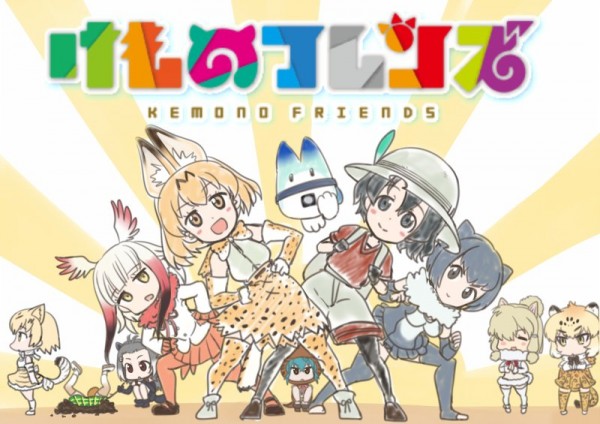
Kemono Friends


Number of Episodes: 13

What Wikipedia says: Japari Park is a large zoo home to extant species, endangered species, extinct species, cryptids and some legendary creatures. Due to a mysterious substance known as "Sandstar", many of the animals have become anthropomorphized into girls known as Friends (フレンズ Furenzu).

In the anime, a girl known only as Kaban wakes up in Japari Park with no recollection of who she is or how she got there and encounters a Serval friend. Together, they set out on an adventure to find out what kind of animal Kaban is, passing through multiple regions of Japari Park and meeting new Friends along the way.

What KoanMan says: If you like 'Dora the Explorer’ this is for you… complete with backpack and map. Kaban the human takes the place of Dora, and travels through an abandoned wildlife park with Serval (the serval), meeting other ‘friends’ who are modified endangered species of animal. Unfortunately, what could have been the highlight, the breakouts talking about the animals, seemed to use either the work experience underlings or random passers-by to read poorly scripted basic info on the animals.

This whole tale takes on the same dreary, tedious pace of ‘Straight Title Robot Anime’, and is nothing short of laborious viewing. Characters are basic at best, music is average, and plot is barren. Director Tatsuki must have worked hard to break the mould for the final episode as it managed to achieve something close to mediocre, though that is as good as it got.

So How Does it End? (Spoiler free):  OK. Disappointingly wide open for season 2.

Overall Grade:  KoanMan gives this tiresome series a solid D.

Addendum by tTPO: I sometimes wonder if KoanMan and I see the same series at times. While I can understand his thoughts on the repetitive nature of Staight Title Robot Anime (where the repitition was embraced as part of the plot but was still...repetitive) I don't see this so much on Kemono Friends. While looking Dora-esque on the outside, there is a vast depth of mystery to why the world is what it is, and what is going on out there. Sort of like Attack on Titan but with much less action and dismemberment, and a lot more kawaii. 


Where KoanMan sees dreary, tTPO (and Mrs tTPO) sees compelling. Can't wait for KoanMan to see Girl's Last Tour. :) Grade B+


Saturday, 24 November 2018

Shirobako


Number of Episodes: 24 & 2 (truly great) OVAs

What Wikipedia says: Aoi Miyamori and her four best friends, Ema Yasuhara, Shizuka Sakaki, Misa Tōdō, and Midori Imai, were all part of their school's animation club, promising to make an anime together. Years later, Aoi is now working as a production assistant for the animation production company, Musashino Animation, where Ema also works as an animator, while Shizuka, Misa, and Midori are working as a voice actress, 3D computer graphic, and an aspiring writer respectively. The story mainly focuses on Aoi and her team at Musashino Animation as they work on two different anime projects; an original anime series and a manga adaptation, facing the various obstacles that each project brings with them. 


The title Shirobako refers to videos that are distributed to the production staff members prior to their release. These videos were at a time distributed as VHS tapes enclosed in white boxes and are still referred to as "white boxes" (thus the meaning of shirobako) despite the fact that the white enclosures are no longer in use.

What KoanMan says: Shirobako, written by Kenji Sugihara, is very different from most anime - it is more reality documentary, and very educational. Interestingly, Shirobako means the white boxes that contained the VHS video tapes used by production crew. As such, it s a detailed and comprehensive look at the duct ion of anime, and the pressures and challenges faced in the delivery of an animated series. KoanMan found this fascinating.

There is, however, no action until you get to the Specials (OVA's), which are also extremely well done, each creating an entire world, defining characters and providing a satisfying story, and each Special is unrelated to each other, except that they are made by the same fictional Musashino Animation.

In the body of the series the characters are well drawn, and exhibit all the traits and foibles likely to be well-known in a cloistered industry. The affably gastronomic Musashino Animation President, Masato Marukawa, the production and various animation staff, and the dedicated newby and later production desk Aoi Miyamori and her eager anime club friends, and the capable though, at times distracted and procrastinating director, Seiichi Kinoshita, are all uniquely interesting.

The real series director Tsutomu Mizushima has captured the mood well, with good music, steady pace and provides a tantalising view of a world that KoanMan realises must exist to create the Japanese animation the world watches, though had honestly never thought about, nor encountered directly.
 

So How Does it End? (Spoiler free): The series itself ends in a satisfying way, with room for another season. On the other hand the OVAs leave the viewers hanging and wishing for more. I would still watch them though and dream about what could have been.  

Overall Grade: No action, but KoanMan still gives this an A. 

Addendum by tTPO: This is a compelling series for anyone who watches anime. It gives an insight into the creative process and there are many thinly veiled references to real life series, studios and people (a bit like Robert Altman's 1992 movie The Player did for Hollywood) which further increase the enjoyment of the series. tTPO got some but am pretty sure there were still many more that were missed. The story does not need much artificial assistance to keep moving - the tight deadlines that are part of the anime production process keep the pace and drama up from beginning to end. tTPO would lump this in a rough trilogy of series (the other two being New Game and Re: Creators) that come at the creative process of anime / manga / games from slightly different angles but are all watchable, complimentary and give insight to the creative and production process. 

In any case tTPO also gives this an A.

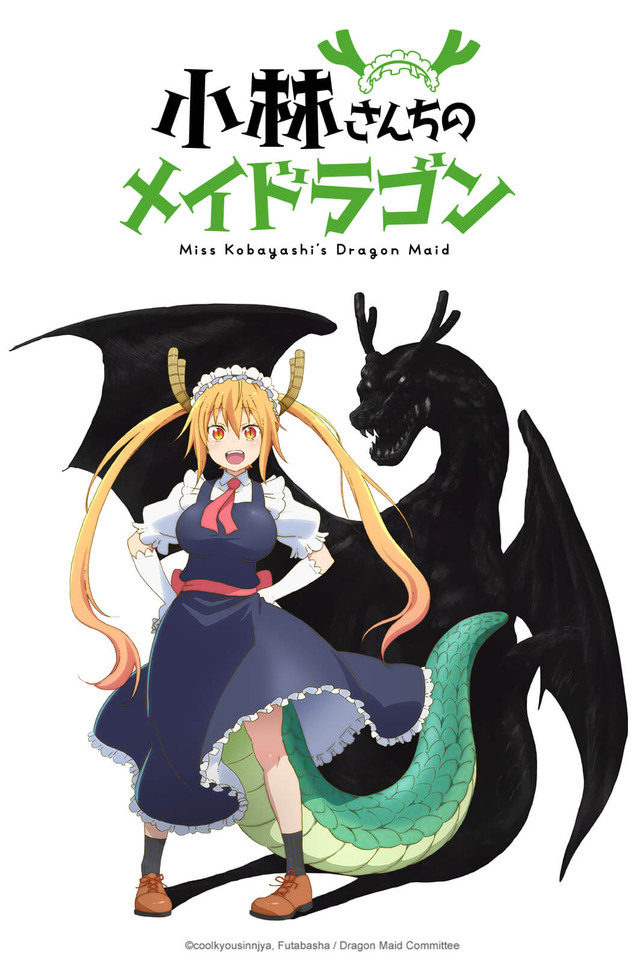
Miss Kobayashi's Dragon Maid

aka Kobayashi-san Chi no Meidoragon


Number of Episodes: 13 + 1 OVA

What Wikipedia says: As office worker Kobayashi gets ready for work, she is greeted by a large dragon right outside her front door. The dragon immediately transforms into a human girl in a maid outfit, and introduces herself as Tohru. It turns out that during a drunken excursion into the mountains the night before, Kobayashi had encountered the dragon, who claims to have come from another world. Subsequently, Kobayashi had removed a holy sword from Tohru's back, earning her gratitude. With Tohru having no place to stay, Kobayashi offers to let the dragon stay at her home and become her personal maid, to which she agrees. As Kobayashi has forgotten her drunken offering, she is initially reluctant to allow the dragon into her home despite her previous promise, but a mix of guilt and the usefulness of Tohru's dragon abilities convinces Kobayashi to accept her. Despite being efficient at housework, Tohru's unorthodox methods of housekeeping often end up scaring Kobayashi and bringing more trouble than help. Additionally, Tohru's presence attracts other dragons, gods, and mythical beings to her new home.

What KoanMan says: As with many anime, there is an interesting entry to the story that becomes clear over the course of the series, as the emotionally flat Miss Kobayashi (whist sober at least) catches up with her own life events. At times trite, and at others a little cheesy, the slightly convoluted plot unfolds to reveal different, and yet surprisingly similar characters, each with their own method of escape and identity-denial.

Director Yasuhiro Takemoto keeps the pace steady, integrating fan-service right into the characters in a story that does not take itself too seriously, and keeps the whole production light-hearted.

So How Does it End? (Spoiler free):  Do slice of life series ever end? In any case, satisfactorily with plenty of room for season 2.

How About the Music? Music and mood is good, in particular, the jealousy and rage scenes are surprisingly well done, with no doubt as to what the characters are feeling.

Overall Grade: An easy watch and good entertainment that will not tax the cerebrum. KoanMan gives Miss Kobayashi and her infatuated maid a B.


Addendum by tTPO: Despite the extreme moe, generally successful comedy and currently fashionable fantasy setup, this is a remarkably emotionally honest and engaging series. The decision to separate the overt fan service from the slowly developing yuri relationship between Kobayashi and Tohru ends up lending more weight to the relationship than would be expected in this otherwise pretty lightweight series. I cared, and so did Mrs tTPO (who is not the greatest yuri fan). Recommended. B+

Saturday, 31 December 2016

Amagami SS & Amagami SS+


Number of Episodes: 26 with 2 OVAs / 13 with 8 OVAs / Special Episodes

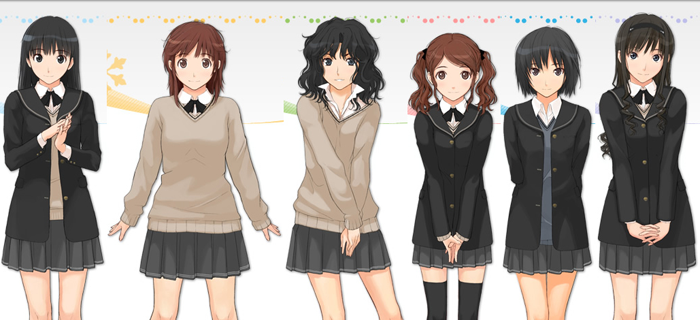
What Wikipedia says: The series follows Junichi Tachibana, a second year high school student from Kibitou High who dislikes celebrating Christmas due to a past incident two years ago when his date stood him up on Christmas Eve which left him heartbroken. However, this Christmas will be different as his encounter with one of these six girls, Haruka Morishima, Kaoru Tanamachi, Sae Nakata, Ai Nanasaki, Rihoko Sakurai and Tsukasa Ayatsuji will finally open up his heart to love again. The anime adaptation is rather unusual as it is divided into several story arcs where each arc focuses on one of the main heroines who will become Junichi's love interest. 
 
On August 13, 2011, a second season of Amagami SS was announced.[4] The second season, titled Amagami SS+ plus, aired on January 5, 2012 to March 29, 2012.

What KoanMan says:
Amagami SS and Amagami SS+ Plus are unique take on the serial (not parallel) romantic escapades of a schoolboy Tachibana Jun'ichi, apparently spawned from the PS2 dating game of the same name. His character seems to morph into whatever each of the six female love interests seem to need. And as each separate story unfolds with the girls, different aspects of his personality and theirs are brought to the fore. The storyline is well-paced and interesting in its diversity, with director Hiraike Yoshimasa keeping the relationship unique and engaging in its own right. No easy task. Well done.

Morishima Haruka is the senior class goddess, Nakata Sae is shy, quiet one with great taste in clothing, swimmer Nanasaki Ai and the strict class president Ayatsuji Tsukasa are the four that seem to stretch him the most from his natural state. These contrast well with his two childhood friends, the free-spirited and independent Tanamachi Kaoru, and the “overweight” and somewhat retiring Sakurai Rihoko, who accept him more as himself. One says “overweight” as the Japanese determination of this concept differs significantly from that of this round-eyed Gaijin - perhaps the term “not emaciated” might be a better fit for Rihoko’s still-slim figure. 
 
All characters are very well articulated, and even those in the periphery, like his caring but exasperated sister Tachibana Miya (who gets her own OVA - tTPO), and his porn-addicted, sushi-chef-trainee friend Umehara Masayoshi, who are perfect counterweights to the plot.
 
How About the Music? Music is fair, though art director Takahashi Maho has some fine scenery.

So How Does it End? (Spoiler free): In many different, and generally satisfying ways.

Overall Grade:
KoanMan enjoyed these series, and did not feel lost, nor bored throughout. Very enjoyable. The score for this collective is a solid A.

Addendum by tTPO:
Koanman
got this mostly right. This is an excellent harem series that removes some of the 'main protagonist with many girlfriends' issues by simply dealing with each of the different girls in a parallel universe fashion. tTPO enjoyed the original series a bit more than the sequel simply because the original series being 26 episodes, gave the strories just a bit more breathing space. Having said that, if you watch the first season you cannot fail to watch to second I think to see where the relationships continued to (or failed to as the case may be). Where Koanman got it wrong was the music - the changing OPs (as sung by the different girls) in season one, with few exceptions, were great and added (for tTPO) to the different flavour of the arcs. As it is just a bit long and season two not quite as good as season 1, tTPO gives this a B+. Definitely one of the more watchable harem series.

Tuesday, 22 November 2016

Miss Monochrome

Number of Episodes: 13+2 OVAs+13+13


What tTPO says: Sadly in the absence of decent synopsis tTPO has to write one. Miss Monochrome is a reclusive android who, with the help of her loyal robotic vacuum cleaner Ruu-chan, starts working towards being a top-selling idol with only a superifcial idea of how to achieve this. Career challenges and often left-of-field hilarity ensures.

What KoanMan says: Miss Monochrome is the brain-child of Yui Horie, a voice actor and singer, and one wonders if the character travels a similar road to that of her creator, and indeed of many seeking fame. Endearingly dedicated and tireless in her per suit of fame and "standing out more", Miss Monochrome embodies the never-say-die, never-quit, onwards-and-upwards, just-keep-swimming....etc etc attitude that determines a successful human (and is critical to the path of the Japanese idol - tTPO). And three seasons attests to the popularity of such a figure. 


Episodes are short (4 minutes in season 1), although they lengthen considerably to as much as 7 minutes in seasons Two and Three. If you like short bite-sized episodes, then these tiny morsels are for you.

KoanMan is in two minds about this series. The story of dedication and persistence of a bland monochromatic in a world of colour is inspiring. It is also a bit "monotonous" (pardon the pun). KoanMan watched several episodes at a time, and perhaps this was not a good idea. Spacing them over time may help? Either way, the historical back-story has more interest than the main story line.

How About the Music? The music is also limited. If you like it, good, if you don't like the music, you will get to like it or not like it in every episode.

So How Does it End? (Spoiler free): With some resolution. But the story continues.

Overall Grade: It is good to watch if you don't want to think hard and have severely limited time. Overall, KoanMan give this a C+.

Addendum by tTPO:
Once again KoanMan just does not get it. The music is great catchy J-pop (yes I got the album) and the brevity of the episodes fits well with the simple idea not overstaying its welcome. As a consequence the unexpected backstory gives a bit more weight to an otherwise light anime. The occasional slightly surreal episodes with little regard for continuity are also a welcome break and put a smile on tTPO's face.
Maybe KoanMan got it right when he said this was not one to marathon too much. In any case a fast game is a good game in this blog. I give it a B. 

Sunday, 24 January 2016

School Live!


Number of Episodes: 12

What Wikipedia says: Yuki Takeya is a cheerful school girl who, along with her friends Kurumi Ebisuzawa, Yūri Wakasa, and Miki Naoki, is a member of the Megurigaoka Private High School's School Living Club. As Yuki seeks out fun school activities every day while living at school, the other girls work to keep her safe, because in reality, they are the sole survivors of their school after a zombie outbreak overruns the city.

What KoanMan says: A "cutesy" first episode, with what appeared to be very little substance, had KoanMan wondering "why watch this"? Then the second episode starts to show small cracks in the delightful world of Yuki Takeya. Cracks that reveal a world of ZOMBIES!! Awesome! 

School Live! is a carefully crafted journey into the lives of Yuki Takeya, Yuuri Wakasa (club president), Kurumi Ebisuzawa (shovel wielding tough girl), Miki Naoki (troubled junior), Megumi Sakura (class teacher) and the ever-perky Taroumaru (the club canine mascot), and by perky, KoanMan means annoying. Oh, and about a billion other local residents and school-goers..... the "z-o-m-b-i-e-s"..... (say that with a ghoulish voice). In keeping with most Zombie apocalypse stories, there is an endless supply of undead corpses that need dismemberment. However, unlike most of these stories, this one delves much more deeply into the minds and feelings of those few remaining alive. It is this story that really carries this series, although the pace a few flat spots, and is never rushed nor particularly action-packed. That said, a lot happens, and the flash-back style fits well and adds to the journey. Kurumi is a favourite - anyone who has their own gold-plated shovel for beheading has be cool right? Or at least respected..... And Yuuri is the warm heart of the group that keeps everything together at all times. 

How About the Music? The music is OK, and mostly fits the mood. [tTPO: The OP is fantastically moe and gives little indication of the true nature of the show.]

So How Does it End? (Spoiler free): It is not a let down.

Overall Grade: 
With a bit more action and faster pace this could easily have been an A. So close..... KoanMan liked this, and gives a solid B.

Addendum by tTPO:
tTPO has just a little more patience than KoanMan, maybe because Koanman has a tendency to marathon and tTPO watch a week at a time. In any case tTPO and Mrs tTPO were big fans of this series, and while is may have missed that little bit of magic that makes and A, it was not far off. A-.

Friday, 16 October 2015

Flowers of Evil

aka Aku no Hana 


Number of Episodes: 13

What Wikipedia says: The story follows a middle school student named Takao Kasuga who's forced into a "contract" by fellow student Sawa Nakamura, after being caught stealing the gym clothes of his crush Nanako Saeki, and the series of events afterwards that follow these three characters. The title of the manga comes from Charles Baudelaire's Les Fleurs du Mal.

What KoanMan says: KoanMan has some mixed feelings about "Aku no hana". Firstly, it bears mentioning that the "rotoscope" technique used makes the look of this series unique. It is a method of animating real film images projected onto a frosted screen and originally each image was hand-traced to create the final animated image, although computer software has now been developed to convert images. Besides the style, it allows animation to present characters with natural movement, and it delivers here. A more more normal animation format was originally tabled, however, to allow the audience to focus on the story/characters and not the actors, director Hiroshi Nagahama used the rotoscope technique.

The story is itself unusual. The central character Takao Kasuga is a hyper-anxious, hyper-reactive, moronic simpleton who rarely thinks much beyond himself. If one can tough out the first few grindingly tedious episodes, the slow, agonising pace actually becomes tolerable, and almost unnoticeable by about Ep7. Sawa Nakamura is his rebellious muse, challenging him to confront himself and her perceived view of him, while Nanako Saeki is the muse he imagines inside his own head. The main characters are very well developed with a realistic approach. Other characters are not important to the myopic worlds of the main characters, and are not explored, not do they need to be.

How About the Music? Music at open and close is good, and is completely unrelated to the "Aku no hana" song released in 1990 by Japanese rock band Buck-Tick. In fact the opening and closing credits contain almost all the music in the series, and thinking back, KoanMan did not notice anything other than mood audio at any other time.

So How Does it End? (Spoiler free): After a dragging, painful start, the simple plot is executed with a storyline that somehow managed to keep KoanMan watching to the end. An interesting watch, more for the moods it engenders that had KoanMan reminiscing about the internal angst associated with teenage life. Ahhhhh, the angst...... Beyond that there was little in the characters to connect with, and perhaps the intent in this "Aku no hana Part 1" series is to do just that, or simply to engender the keen desire to strangle the characters? Not sure.

Overall Grade: Interesting, moody, different - gets a B. Laboriously slow and Takao is an imbecile - gets a D. 


It all adds up to a C.

Addendum by tTPO: tTPO liked this more than KoanMan and it is clearly going to be a polarising series for viewers. There is little doubt that Takao is a largely spineless fool, but doing dumb things, being self-involved and being bored is pretty much what teenage life is about. Whether watching this immensely slow car crash makes good television is debateable, but I found somewhat compelling the brave directorial decisions about the rotoscopy (which immediately put off Mrs tTPO), the universally unlikeable characters, the long stretches without dialogue (which peaked with an epic 8 minutes of nothing in Episode 8) and repeated views of the decaying town. I also appreciated the positively atypical depiction of largely functional and caring parents who, in contrast to most anime series, are actually at home and involved with their offspring.  

The OP /ED are worth a special mention as being quite disturbed and I think set the tone of the series well.

In summary: Interesting, moody, different. Laboriously slow and Takao is an imbecile. It all adds up to an A-. 

I can only hope there is a second season so I can see the wreckage finally come to rest. 

Sunday, 1 March 2015

Sora no Woto

aka Sound of the Sky


Number of Episodes: 12 + 2 OVAs

What Wikipedia says: "Sound of the Sky revolves around a young girl named Kanata Sorami who is inspired to join the military after witnessing a rendition of "Amazing Grace" by a mysterious trumpeter of the Helvetian Army. Becoming a bugler, she is assigned to the 1121st Platoon stationed in the town of Seize in Helvetia, where she is taken into the care of 2nd Lt. Filicia Heideman, M/Sgt. Rio Kazumiya and the rest of the 1121st Platoon. The story takes place in a post-apocalyptic world after a great war regressed humanity's technological capabilities back to early-to-mid 20th century standards."

KoanMan says:  KoanMan thoroughly enjoyed this short and sweet series. The characters are well developed, and interact well, with well defined personalities and the right amount of cohesion and abrasion between those characters, while they are all still "comrades".

The plot is at once simple, and complex, with a depth to the storyline and the world in which they live that echoes well beyond the last episode. One wanted more, and certainly there is plenty of room in this new world for another series.


How About the Music? The music is simply great. The production team did very well integrating an esoteric suite of music that must have involved a very broad musical knowledge, or extensive research at the very least. Superb.


So How Does it End? (Spoiler free): Very satisfactorily. If in a slight rush.

Overall Grade: KoanMan rates this an A.

Addendum (by tTPO): This series felt more like a long movie than it did a series. The production values were outstanding, the detail of the city stunning, (as KoanMan said) the music, which is fundamental to the series, is outstanding, and the backstory of the world at once both epic and also unknowable. As with the characters the details of how the world got to be as it is now have been lost and as viewers we can only guess these details that are hinted at. In some series this would be frustrating but in Sora no Woto not so much, even with musicians inexplicably taking over as the mainstay of military communicaton (over say flags, or lights, or any other more efficient means of communication that may not get drowned out by the sound of war). It just doesn't matter because thats just how it is. Overall, the series is to a large extent a slice of life series which acquires a plot towards the end. Some may complain it all happens a bit fast but its all there and the OVAs return the series to its somewhat more innocent roots. Amazing Grace has never sounded so simple nor so good. Grade A.

Friday, 3 October 2014

Locodol

aka Futsū no Joshikōsei ga Locodol Yattemita ("Normal High School Girls Tried Being Locodols")

Number of Episodes: 12 + OVA

What Wikipedia Says: In the town of Nagarekawa, Nanako Usami, an ordinary high school girl, is approached by her uncle to become a local idol or "Locodol", partnering with upperclassman Yukari Kohinata to form the idol unit, Nagarekawa Girls. As the girls use their talent to promote Nagarekawa and their businesses, they are joined by Yui Mikoze, who acts as the local mascot, and Mirai Nazukari, who serves are Yui's substitute.

What TTPO says: This is a harmless slice of life series with cute (but not overly so) girls trying their hardest to do their best for each other and the town they live in. While their manager is just a little on the creepy side at times there are just no bad people in this show whatsoever - 24 carat hearts abound. This lack of tension could have been a recipe for boredom, but the writers manage to avoid many of the obvious idol cliches (and thankfully most fanservice) and keep the characters pretty well grounded - idol work is a lot of work and not so much glamour in this series and our main protagonists are not on a rocket racing to the top anytime soon. There are even genuine cliffhanger endings to some episodes.

How About the Music?  For a show about locodols the music is pretty low key but I can say the  insert song which we finally see at the end of the series is worth the wait - ridiculously happy and with lyrics that summarise the philosphy (if you can call it that) of the series. Do yourself a favour and don't click on it now - just watch the series. The ED ("Mirai Shoujotachi" by Nagaregawa Girls) is also worth a listen.

So how does it end? (Spoiler Free.): Appropriately. The OVA comes in soon after the end of the series and is a nice bookend to the series while clearly stating Nanako and Yukari have a long way to go and there is clearly room for a second season. 


Overall Grade: This was not an ambitious series but is was refreshingly fun and honest watching, well paced, and a welcome break from some of the more gritty actions series we have been watching of late. Grade B+.

Wednesday, 6 August 2014

The Melancholy of Haruhi Suzumiya + The Disappearance of Haruhi Suzumiya movie

Number of Episodes: 24 + movie


What Wipipedia says: "The story follows the narrator and male protagonist Kyon, a cynical and incredulous student entering high school who is dragged along by the title character and female protagonist Haruhi Suzumiya (who is Kyon's classmate). She is an eccentric girl seeking supernatural phenomena and figures such as aliens, time travelers, and espers. With Kyon's reluctant help, Haruhi establishes a club called the SOS Brigade, to investigate mysterious events. Haruhi later recruits three additional members: the laconic bibliophile Yuki Nagato, the shy and timid Mikuru Asahina, and the extremely friendly transfer student Itsuki Koizumi. These members soon reveal themselves (to Kyon) to be the types of extraordinary characters that Haruhi is seeking. The three additional members have been sent by their various organizations to observe Haruhi, who is unaware of her own destructive reality warping powers and to prevent these powers from being unleashed. This leaves Kyon the task of maintaining the illusion of a normal life for Haruhi."

KoanMan says: KoanMan watched this series in the broadcast order, which meant some initial confusion re plot and characters. Starting with the least watchable episode straight up meant that if one did continue onto the next episode, it was all good from Ep2 onwards. In the end, watching in this way did make it a more interesting watch, as one felt just a little behind the storyline, trying to keep up with changes in direction that at the time presented as totally random. In retrospect, they still seem a little random, almost like they threw the episodes into a hat and let chance reveal the next episode. Character development did, however, seem perfectly done this way, so there must be some "method to the madness".

On that note, KoanMan found the characters difficult to associate with early on; the whining and sedentary Kyon, the OTT Haruhi Suzumiya, the uber-quiet bookworm Yuki Nagato, the "yes-man" Itsuki Koizumi, and the cutesy mascot girl Mikuru Asahina. Unusually, for KoanMan, all these characters grew on one, to the point where even Ep12 to Ep19 [Ttpo: that would be the infamous Endless Eight episodes] were watchable! Far more so than Straight Title Robot. The reader will know what this means by Ep13, suffice it to say that Ep13 to Ep18 could have been condensed by more brutal editing, however, this would beg the question....Would it have been the same series? Would it have had the same impact? The jury is out at this time.

The movie certainly had a far more cohesive plot and better direction to the story, most likely as it was based on The Disappearance of Haruhi Suzumiya, the 4th in a series of light novels by Nagaru Tanigawa. Thoroughly enjoyable, but do watch the series first.

How about the music?: The music was OK for the first few episodes, then the same music seemed to get better, and by the end, the very same music was something I looked forward to each episode. How did this happen?

Overall Grade: Between the unusual jumbling of episodes, well out of the story's chronological sequence, the mysteriously improving, though unchanging, music, and characters that grow on you, coupled with good delivery of a good story mean that series director Tatsuya Ishihara, and movie directors Tatsuya Ishihara and Yasuhiro Takemoto have done well.

KoanMan gives these series and movie a collective A. 


Ttpo says: This series is not perfect but is brilliant. The fan service gets a little grating sometimes and the bullying of Mikuru occasionally a little uncomfortable. But these are minor gripes in a series that balances big questions in a deep world spanning mystery with day to day slice of life triviality with seeming ease. I loved the music (esp OP1, OP2 and insert song God Knows), and also the cheesy (and the oft mimicked) choreography over the ED1 (see here in live format by the seiyuu).

There are some very brave directional issues that KoanMan has already pointed out but these serve to further differentiate this series from the also-rans. The movie is everything good about the series in slighly higher resolution and is excellent from beginning to end, though without having first seen the series much would be lost to the casual viewer. An A for sure.

Wednesday, 29 January 2014

Wanna be the Strongest in the World

aka Sekai de Ichiban Tsuyoku Naritai!


Number of Episodes: 12

What Wikipaedia says: "Sekai de Ichiban Tsuyoku Naritai! follows the story of Sakura Hagiwara, a pop idol and member of the fictional japanese idol group Sweet Diva that impulsively decides to turn into a pro-wrestler in order to avenge another fellow Sweet Diva member who got a beating from a female wrestler."

tTPO says: This show clearly divided the blogosphere into people that thought it crass fan-service filled torture porn, and me. Once you get past the gratuitous crotch and cleavage shots, prolonged scenes of entwined female bodies inflicting pain on each other, and endless moans of pain which could be easily mistaken for pleasure, you actually have a quite reasonable shounen (fighting) series with interesting characters, something quite resembling a plot and a well developed background. There was even some genuine drama, and also a good plot twist towards the end.

As with most shounen series it often comes down to a 'fight-of-the-week' plot structure but given the nature of the series this should not be surprising. It is quite satisfying to see that the main character (minor spoiler warning) is not an instant legend with it taking a long time and a large number of losses before things start turning around. So long so that it does beg the question why she was not retired (or solved some of her technique issues) much earlier than she did because once these were sorted she got significantly better (end spoiler warning). The fact that this was the main plot weakness I think speaks volumes about this show. Which is mostly good. Mostly.


How About the Music?: The OP ("Beautiful Dreamer" by Kyōko Narumi) is a bit meh. The ED ("Fan Fanfare!!!" by Sweet Diva) is marginally better being a thematically consistent bit of girl group J-pop with some get up and go. But the song itself is just OK.


So How Does it End? (Spoiler Free): This has a good solid ending, dealing with the main issues facing the main characters, and leaves it wide open (pun intended) for a second series. I liked it.

Overall Grade: C+. If not for the obvious issues above, you could happily sit down with your daughter and watch this. Maybe they ought to make an edited version with more tastefully edited fights. The episodes would probably only be about 10 minutes long you could still enjoy the show I think, and many people may enjoy it more. As it stands you will have the headphones on and hope your significant other doesn't catch you watching it. Unless your significant other also enjoys this sort of thing.


KoanMan says: Are you between animes? Are you waiting the interminable chronological distance that is the week between episodes of your current viewing? Like dramatic, anime-style boobs and butt? Then Wanna Be The Strongest In The World!, or Sekai de ichiban tsuoku naritai!, may be just the thing.

With a plot as scanty as the clothing, this series has superficial character development, cheesy music, and a cast composed of super-hot babe’s. This one will not tax your cerebrum, although the sado-masochistic tones may appeal to some. This version of wrestling certainly seems to involve a lot of pain. There is also some dancing and singing, but mostly pain. And hot babes.

Director Rion Kujo has really fleshed out Kazuho Hyodo’s script (pardon the pun) with potent visuals, based on Kiyohito Natsuki’s manga illustrations, that animate ESE's Wanna Be The Strongest In The World! manga. Beyond the optic athleticism, clearly tailored to those who enjoy the female form, there is very little else. KoanMan found it a reasonable way to pass the time, but only if you can agree with the first few questions asked herein.

KoanMan rates Wanna Be The Strongest In The World! a C.

Note: There is some low-grade nudity (boobs), so if you are uncomfortable with your kids seeing that/them, you will need to decide what is appropriate yourself. Everything else is clothed, though very little is left to the imagination.

Friday, 3 January 2014

Miss Monochrome, the Animation

Number of Episodes: 13


What Wikipaedia Crunchyroll says: "In this short animated series, Miss Monochrome is an android who decides to try and become a top idol singer in the ever growing competitive market."

tTPO says: I love me a short anime series. And by that I mean the magic 4 minute ones. Including the credits. That is not to say they are all good by any means but I find it pleasantly surprising what can be fit into such a short time frame. It just goes to show how much fat there can be in a full length show.

Miss Monochrome is mostly a lightweight slice of life series, but along the way they manage to squeeze in very decent slabs of humour (mostly based around Miss Monochrome's being an android in a human world), pathos (not least of which is for Ru-chan, her robotic vaccum cleaner) and an epic backstory (which only takes part of a couple of episodes - economic storytelling at its best).

How About the Music?: Here is the irony. Miss Monochrome is an original design by singer and voice actress Yui Horie (who also voiced Miss Monochrome via heavily effected autotune on her voice) so she could, amongst other things, compete with virtual idols. Very post-modern.


There is only one song, the ED ("Poker face" by, er, Yui Horie), and it is a sweet bit of J-pop.

So How Does it End? (Spoiler Free): Satisfactorily. With lots of room for a season 2.

Overall Grade: There is much joy in this show, and for tTPO, its hard to argue with the 4 minute investment. B+

Saturday, 14 September 2013

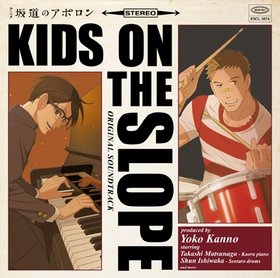
Kids on the Slope

aka Sakamichi no Apollon


Number of Episodes: 12

What Wikipedia says: "The beginning of summer, 1966; because of his father's job situation, freshman high school student Kaoru Nishimi moves by himself from Yokosuka to Sasebo in Kyushu to live with relatives. Until then, Kaoru was an honor roll student who tended to keep to himself, but meeting notorious "bad boy" Sentaro Kawabuchi starts to change him. Through his devil-may-care classmate, Kaoru learns how much fun it is to play jazz and finds the first person he can call a real friend."


KoanMan says: Every once in a while, a story catches you in an unexpected way.  This is an engaging and personal story, and somehow kept KoanMan riveted throughout, without the need for explosions, violence or carnage.  KoanMan generally loves those things, and yet they were not required here due to the strength of the story-line.

It begins in a fairly standard way, with an isolated young teen, Kaoru, arriving in a small provincial  town.  Tough-guy Sentaro, and classic girl-next-door Ritsuko, befriend Kaoru, and so begins a troubled journey through their developing relationships to each other and those around them.  These characters almost became part of KoanMan's life during this series, they are that well developed.  This is remarkable given the limited number of episodes in which to get this done. 

Pace is excellent, and the storyline cohesive and complete, thank you director Shinichiro Watanabe.

How About the Music?: The music is a standout as well.  The opening title song is seriously catchy, and some of the jazz that features within the series had this KoanMan tapping and swinging to the beat.  Composer Yoko Kanno has done well.

Overall Grade: Well crafted, free-flowing, short and sweet.... KoanMan cannot give anything other than an A.  


Addendum (by tTPO): I can't do much else but agree with KoanMan's assessment of this series. There is just the right balance of justice and injustice, things that go right and things that go wrong, joy and sadness, failure and redemption and all in an amazingly paced pocket sized series. Also, while the jazz is not a central theme to the story, it is the canvas on which this story is painted and it works just so well. I want to explore more jazz because of it. Ultimately, while this is a million miles away from their previous pairing on Cowboy Bebop, Shinichirō Watanabe and Yoko Kanno deserve nothing but an A for this.

Monday, 1 April 2013

Girls and Panzer

aka Girls und Panzer


Number of Episodes: 12 + 2 catch-up episodes + 5 OVAs

What Wikipedia says: "Girls und Panzer...is a 2012 Japanese anime television series created by Actas...Takaaki Suzuki, who has earlier acted as a military history advisor for Strike Witches and Upotte, has revealed that he is involved in the production of the anime...The story takes place in a universe where girls participate in Sensha-dō (lit. "Way of the Tank"), the art of operating tanks, as a traditional martial art. Miho Nishizumi, a girl who has had a bad experience with Sensha-dō, transfers to Ōarai Girl's High School to get away from it. However, soon after joining, the school revives Sensha-dō and Miho, being the only student with any experience in operating a tank, is ordered to take part. Despite being initially reluctant, Miho soon comes to enjoy Sensha-dō again and, joined by her new friends; Saori, Hana, Yukari and Mako, enters a national Sensha-dō championship where they face off against various other schools."

tTPO says: After a few false starts it seems we finally have the definitive schoolgirl x miliary anime. Reading the blurb you could be fooled into thinking this is just another poor excuse for a show with too much gratuitous fan service and not enough of anything else. What you get is completely the reverse. There is so much this show gets right it is hard to know where to start.

For starters, the technical research by Suzuki-san is impeccable. The variety and scope of tanks that appear in the show is fantastic and for anyone even vaguely interesting in the history of the tank there is much here to see and learn. Certainly for me, as new tanks appeared that I was unfamiliar with I googled them soon after watching the episode to find out their historical role.

Without giving too much away, the show takes place in an alternative history where schooling occurs...differently. It may not necessarily be realistic (neither are the mechanics of tankery, though this is explained a bit more in the catch-up x.5 episodes) but the third OVA expands and how this came about. While a certain amount of willing suspension of disbelief required to watch the show, it is clear that the Girls und Panzer reality has actually been pretty well thought through. Between the accuracy of the hardware and the depth to the setting, there is clearly a lot of love for the series, as well as respect for the audience, from the creators.

Keeping that in mind there is remarkably little fan service in the show and that only adds to the appeal. There just isn't time for those sorts of distractions. The only time we get mild fan service is in OVAs 1 and 2 and this keeps it well away from the main series. But for those that want it then you are catered for as well. The rest of us can just skip over it.

There is a huge cast of characters for a 12 episode series, and to an extent I mentally grouped these into the various tank teams to try and keep up. The most well developed not surprisingly are Miho and her team, and they all get little arcs away from the main story which, considering how quickly this series moves from beginning to end, is just amazing. Even with the lack of development, the non-core characters still remain often memorable, including Saki on the first-year team, who never says a word throughout the series (but ironically has a considerable fan following in Japan). (Edit and spoiler warning: She does say a single line in the last episode.) There really are no annoying characters - there are many many hearts of gold here. K-on!! with tanks anyone?

The pacing of the core-episodes of this show are also near perfect (if you forget about the catch-up episodes which were a result of production running late) with the show moving fast where it needs to advance the plot, and slow when it needs time to breathe.

The plot itself is pretty straightforward (with a couple of reveals along the way) but this is not the focus of the show really - we all know how it will finish but the key is how they get there. The tank action is magnificent with the right amount of tension and each of the tankery battles stand out in their own way. Again, a bit of willing suspension of disbelief is required here but by now this is not an issue - just sit back and enjoy the ride. We did.

How About the Music?: The OP ("Dream Riser" by ChouCho) and ED ("
Enter Enter MISSION!" by Fuchigami Mai & Iguchi Yuka & Kayano Ai & Nakagami Ikumi & Ozaki Mami) are just perfect accompaniments to the series and set the tone perfectly. That's all there is to it. 

So How Does it End? (Spoiler Free): As expected. But it's the journey that counts.

Overall Grade: Perfect feel-good action entertainment with enough depth to keep you discussing and thinking about it afterwards. My only gripe is the lack of t-shirts available right now. Grade A from myself and Mrs tTPO. Roll on season 2. (Edit: Looks like we won't be getting a season 2 but will will be getting an OVA - the battle with Anzio - and a full length movie. Would have preferred season 2 but much much better than nothing!)


Koanman's thoughts: Who likes tanks? Come on.... Show of hands please..... Well I do, and for a goodly portion of my juvenile years they held my attention. The tanks really are the feature here, and to see them filled with school girls is a good thing! The attention to detail is superb, with most tanks displaying the quirks and flaws that plagued the original items during the 1930's and 40's. It also features some very rare tanks - for those interested it is a feast (check the girls' favourite tanks). There is even a nice reference to Heinz Guderian - well done.

The plot is a little light-on, and the characters could be developed a lot more, particularly given the large number of them!  I am certainly hoping for another full series, as this one was so full of tank action it left little time for full exploration of the world in which they live and background to their story. It starts way slow, and very girly, but by Ep3 it is really getting good and continues to accelerate through to the end with very little breathing time. The action is a joy to watch. The girls are heartwarming and they love tanks - this is the first military girl anime that gets it right for me. More please.

KoanMan gives this an A. 


(By the way, I love "the angler-fish dance". The first time I saw it, it made no sense at all. After a second go later in the series.... it still made no sense but I just cannot get enough of it. I don't know why I love it, I just do. KM.)

Tuesday, 2 October 2012

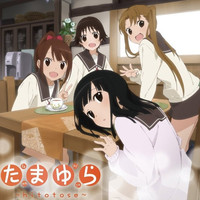
Tamayura: Hitose & Tari Tari


Number of Episodes: 12+OVA (Tamayura: Hitose) & 13 (Tari Tari)

What Wikipedia says: "Tamayura centers around a young girl named Fu Sawatari who moves to Takehara, Hiroshima to begin her first year of high school. Her late father grew up in Takehara and this is her first time back in the town in five years. Fu enjoys photography and is often engrossed with taking pictures with her father's old Rollei 35S film camera. A shy girl, Fu tries her best to make friends early on, spurred on by her childhood friend Kaoru Hanawa. She quickly becomes friends with two other girls, Maon Sakurada and Norie Okazaki."

"(Tari Tari) centers around five Japanese high school students who are too young to be called adults, but who no longer think of themselves as children. Wakana Sakai once took music lessons, but she withdrew from music after losing her mother. Konatsu Miyamoto is a positive-thinking girl who loves singing and spends time after school at the vocal music club. Sawa Okita is a spirited archery club member who dreams of becoming a horse rider. Taichi Tanaka is a chronically late badminton team member who lives with his college student sister. "Wien" just transferred into Wakana's class after 12 years abroad in Austria. Music brings Wakana, Konatsu, Sawa and the others together into an ensemble during their last summer in high school."

tTPO says:  These series share a bunch of similarities in that they are both school-based coming-of-age slice of life stories, have characters still coming to terms (in part) with dead parents, and that still manage to get a bit of a plot arc in there. The main difference is the younger age of the Tamayura cast (first year high school) compared with the Tari Tari cast (last year high school) and this is reflected in some of the challenges the characters face, and how they deal with them.  

Good qualities shared by both include generally unannoying characters (any annoyances tend to improve by later episodes) and good pacing. As each character arc came and went I did find myself caring which is important, because without that, a slice of life series can quickly become just tedious (much like Big Brother, though less embarassing). 

Another quality shared by both is the visuals. PA Works (producers of possibly the prettiest anime series ever Hanusaka Iroha) **almost** outdid themselves (was the budget just that little bit less?) with Tari Tari - the detail, lighting, reflections and textures are just gorgeous. Tamayura's animation is not quite as good but makes up for it with the photographic bent of the series leading to a bunch of brilliant images. 

Having said all of that, I now read other blogs have suggested Tari Tari feels like Hanusake Iroha crossed with Tamayura, and I don't think this is too far off the mark. +1 to that idea. If you like one, I think you will like both. 
 
How About the Music?: Tamayura had so many EDs I'm just going to ignore them. The OP though ("Okaerinasai" by Maaya Sakamoto) is just friggin' perfect with just the right amount of girliness, pretty melody and nostalgia. 

Tari Tari's OP ("Dreamer" by AiRI) on the other hand is VERY similar in feel to, yes you guessed it, Hanusake Iroha's. Different singer though but it seems pretty clear they were after the same thing. And while I make it sound bad it is not so much - the sing itself is a nice uptempo bit of melodic J-pop. The ED ("Shiokaze no Harmony" by Shirahamazaka High School Chorus Club) is more like some of the insert music, which while very appropriate to the series is a bit 'Broadway' for my tastes.

So how does it end? (Spoiler Free): Both of these series have their own (rather similar) conclusion but it worked well for each of them given the style of the series and the focus on personal growth. I have just read Tamayura: Hitose has been given a second season and given the younger age of the characters this was always a possbility. Tari Tari's ending was a bit more complete and did not leave much room for a follow up. I would not be expecting a sequel. 


Overall Grade: These series are short and to the point slice of life series with generally appealing characters dealing with their own issues. The animation is easy on the eye, and, by and large, fan service free. While not outstanding, these genre pieces have few real faults (except maybe the continuity issues of the disappearing headmaster at the end of Tari Tari). B for both.

Tuesday, 18 September 2012

Planetes


Number of Episodes: 26

What Anime News Network Wikipedia says: " In the year 2075, mankind has reached a point where journeying between Earth, the moon and the space stations is part of daily life. However, the progression of technology in space has also resulted in the problem of the space debris, which can cause excessive and even catastrophic damage to spacecrafts and equipment. This is the story of Technora's Debris Collecting section, its EVA worker, Hachirota "Hachimaki" Hoshino, and the newcomer to the group, Ai Tanabe.
"

What tTPO says: This is a special series. If you went on the description above (itself is really an injustice to the scale of the series) and the first few episodes you would be questioning whether it was worth continuing or not - standalone episodes loaded with apparent anime caricatures. But you would then miss out on a rare anime experience.


The characters which at first appear so shallow bloom over the course of the series. Some change markedly for good or ill, others less so but gain a backstory that explains why they are the way they are. And the secondary characters, that in other series may be discarded in one-shot episodes, start to recur and have their own arcs, as small as they may be. But inherently you can't appreciate this snowballing of richness and development of the bigger world of the story until many episodes have passed.


The bigger story itself doesn't really start till the second half of the series with the first half a series of (near) standalone episodes with sometimes a slice-of life feel laying the groundwork which is essential to later development. As big as the story gets though (and it is a decent story), it is really just a vehicle for the characters.

Of note are a few other aspects of the series. Firstly, because it ends up taking place over the course of about 18 months, the episodes more often than not fail to immediately follow one another. This means that it is not uncommon for one episode to end on a cliffhanger, then the next episode start sometime after, with the cliffhanger explained in hindsight. Or for an episode to start halfway through an event we have not seen yet, with the details filled out later on. The result of this is a story where the viewer is left a little disoriented as to how the story got where it is (in a good way). But you are not left hanging and things are explained sooner or later. Both this and the character arcs reminded me in some ways of Babylon 5.

Secondly the science in the series is hard. No giant robots, FTL drives or big laser weapons. Just the hard slog of humanity leaving the planet a bit at a time. The research by the author and production team just shows and they succeed (within the bounds of an anime) to make this future as plausible as possible. The designs to my eye all looked great. If you like your science fiction over your science fantasy, this is a show for you.

Lastly the series asks some serious questions about space, its development and the future directions we may take as a planet. Some of these are not pretty but we need art to make us think about these things before it is too late.

How About the Music?  Meh. The music was mostly unobtrusive (except for the final episode ED that reminded me overwhelmingly of Code Geass - which all makes sense now since Hitomi was responsible for the offending, though not offensive, music in question) but in truth the flavour of the show seemed to get on just fine without it being a focus. And this from a guy that likes his anime music. The OP was "Dive in the Sky" by Mikio Sakai and the ED 1-25 "Wonderful Life" also by Mikio Sakai
.

So how does it end? (Spoiler Free.): Loose ends virtually all wrapped up with only a couple of small unanswered questions of minor consequence. The thoroughness of the end of the last episode (as well as the music) was again very reminiscent of Code Geass, and this was no bad thing. Did I mention some of the production team were the same as Code Geass?

Overall Grade: Grade A-. The strength of this show is also its weakness - if the ball got rolling just a bit faster this would have been an A but that's not how this series rolls. But the science, the unusual structure (for an anime), the asking of big questions, the shameless and brave main character development and the care given to even minor characters means that this definitely deserves a seat at the table reserved for the best.