Showing posts with label Grade B. Show all posts

Tuesday, 21 April 2020

Kantai Collection

aka KanColle


Number of Episodes: 12 + Movie (KanColle: the Movie)

What Wikipedia says: In a world where humanity faces the threat of the abyssal fleet which has taken over the seas, special human girls who don weaponized outfits and possess the spirit of historical naval vessels known as kanmusu (艦娘, literally "fleet girls" or "ship girls") are the only ones capable of countering them. The kanmusu live together at a naval base, where they spend their everyday lives as they begin training for battle.

The series features the destroyer Fubuki as the main character, with the storyline based on her point of view. Fubuki arrives at the naval base, where she meets other girls that she will eventually fight alongside. Despite lacking adequate combat training, she is recommended into the Third Torpedo Squadron by the admiral, and quickly finds herself sortied into battle. Upon being rescued by Akagi in a dangerous situation, Fubuki strives to do her best in order to train, with the hopes of eventually being able to fight alongside Akagi.  

What KoanMan says: It took some time for this to gel with KoanMan. The concept of girls skating around on water and firing guns strapped on detracted somewhat from KoanMan’s enjoyment. It is a key element of the story, that the girls are warships, and some will love it. One found the mysterious “Abyssals” intriguing, and somehow the concept worked better with them. The plot is predictable, but moves well without feeling too slow, nor rushed.

The action moved well, with good animation and some epic tropical scenery that helped the story along, blending well with steady character development and the maritime setting. Director Keizou Kusakawa does an adequate job following the trials and tribulations of the special destroyer Fubuki and the other girls.

Interestingly, theme music was left to producer WEST GROUND (an alias of Flying Dog music producer Makoto Nishibe).

So How Does it End? (Spoiler free): The movie is both darker and a little more confusing than the series, and while probably less satisfying as a result, it really does try to make make sense of the ridiculous world that is KanColle, and resolve the major plot lines. [tTPO]

Overall Grade: Some risks were taken to make this, and it became more engaging as it moved through the episodes. Overall KoanMan gives this a B.

What tTPO says: Another entry in the anime genre of "she's a girl, but she's also a..." (gun? plan? ship? superweapon?) this managed to connect with tTPO, and encouraged me to go and look up how actual history played out in WWII (compared with the reimagined version in this anime). Unlike some reviewers who took exception to the revisionist history tTPO didn't find this disturbing, because, you know, it's an anime, with girls in short skirts, not a documentary on the History channel. The cast of thousands were largely one dimensional, and it's no future classic, but it was well paced, well drawn, has a a few platonic yuri tones, and me and Mrs tTPO enjoyed it. B.


Wednesday, 24 July 2019

Saikano, The Last Love Song on this Little Planet

aka Saishuu Heiki Kanojo (translated into English as Ultimate Weapon Girlfriend)


Number of Episodes: 13

What Wikipedia Anime News Network says: Shuji and Chise are two Hokkaido high school students barely starting a relationship with each other. Then, with no warning, a squadron of bombers from an unknown country destroy the city of Sapporo. All hope is lost when suddenly, the bombers are destroyed by a small red light floating across the sky. At this point, Shuji finds out that the one responsible for eliminating the enemy forces is Chise, who reveals herself as a cyborg engineered for mass-destruction. 


What KoanMan says: This sounds like it would be great. It sounds like it would be packed with action. It sounds like a schoolboy's wet dream…

However… it is “sorry”, “dummy”, “idiot”, a little bleak, and more “sorry”. Much more “sorry”.

The take-home message: don’t judge a book by its cover. The feel of this series is dominated by the story-line, which meanders through the relationship of the main protagonists, high-schoolers Chise and Shuuji. Plenty is left out, and much is assumed as the plot plods along at a dreary pace. Brief glimpses of excitement are thwarted as the story is dragged back to its original pace, and yet it somehow flows steadily and consistently - just don’t expect to be thrilled by director Mitsuko Kase's anime rendition of Shin Takahashi’s manga.

The basic animation smacks of low budget, and possibly indicates a lack of artistic interest on the part of the production team (lead by Naoko Takahashi), although the artistic effects in the opening and closing credits were uncharacteristically well done. 

How About the Music? The music generally is average, and the music for the opening and closing were in keeping with the general mood, although those more musically attuned may find the 1/8th flat notes of the singer irritating, but it does add a little more to the disjointed feel generally. Perhaps sound director Keiichirou Miyoshi has achieved the desired audience response? KoanMan is unsure.

So How Does it End? (Spoiler free):  All endings are not created equal and while there won't be a sequel anytime soon, the ending perhaps lacks a little clarity. Reading the last chapter or two of the manga explains things a little more fully and is recommended. [tTPO]

Overall Grade: If you are after a borderline existential story that does not require adrenaline, then this could meet your needs. Despite the flaws KoanMan kept watching through to the end, indicating a certain something, perhaps the futility… ohhh the futility…

KoanMan rates this a C.

What tTPO says:  tTPO has a soft spot for romantic anime. What I have not said previously is I also have a soft spot for slow moving existential post apocolyptic romantic anime also, and Saikano fits this description. There is little to enjoy here as the glacial car crash that is this anime grinds to its conclusion, and yet like any car crash, I found it difficult to look away. The basic artwork (it was 2002 when it was produced) and muted colours that annoyed KoanMan I thought appropriate for this often emotionally cold production. 

Needless to say I rate it a bit higher than KoanMan, though Mrs tTPO would agree with him. I considered the possibilty I was wrong. Not possible though, is it? Grade B-.

Sunday, 25 November 2018

Cells At Work


Number of Episodes: 13

What Wikipedia says:  The story takes place inside the human body, where trillions of anthropomorphic cells each do their job to keep the body healthy. The series largely focuses on two such cells; a rookie red blood cell, AE3803, who often gets lost during deliveries, and a relentless white blood cell, U-1146, who fights against any germs that invade the body.

What KoanMan says: Are you looking to learn a bit about the blood and immune system? Do you want to bond with characters like life-long friends? Cells at Work may be the educational anime for you.

There is a lot of information portrayed in an easy to digest way, with more heavy detail given in freeze panes that you can pause and ponder as you go. A little artistic licence is applied to achieve a good story (dendrites and nutrients, and the landscape in general), although if you know what I’m talking about then I need say no more as you already know, and if you don’t know, then it really matters not - do some study :). Never-the-less, KoanMan particularly enjoyed the portrayal of Naive cells becoming activated with awesome, though very specific, powers, and Red Blood Cell's introduction of her apprentice to White Blood Cell. Golden moments.

The characters at first seem a little bland at first, though go on to create an unexpected bond, and before long KoanMan found a growing concern for the main protagonists, particularly Red Blood Cell.

So How Does it End? (Spoiler free):  Life never ends. Or does it?

How About the Music? Akane Shimizu’s manga has been well adapted into anime by director/writer Kenichi Suzuki and writer Yuko Kakihara. Kenichirō Suehiro's music fits the scenes moment by moment quite well, and although the opening and closing music is average, the music is not why you watch this anime.

Overall Grade: Overall, a good watch. KoanMan give this a solid B.

Addendum by tTPO:
Cells at Work is medicine seen through the lens of manga / anime. To be honest it is hard for tTPO (and KoanMan for that matter) to be entirely objective about this series since we both have medical training and can appreciate how cleverly and, by and large, accurately the physiology and pathophysiology have been presented. (For a medical doctor's thoughts on this see here.) This just adds to the appreciation and entertainment value of this otherwise well done series. Who would have thought that a growing relationship between two blood cells would be so riveting? Grade B+.


PS: Despite the educational value this may not be one for the kids. The amount of blood and violence in the immune response to infection is considerable.

Megalobox


Number of Episodes: 13

What ANN says: In the not too distant future, boxing has become a sport enhanced by “Gear,” machine exoskeletons worn over the shoulders and arms to allow boxers to punch farther and harder than before. Known as “Megalobox,” the sport is popular as both a regular sporting event and as one during which underground bets are laid, with dramatic differences between the fanbases. Junk Dog, a young Megaloboxer, is struggling both to make a name for himself in the underground fights as well as with whether he's really happy with his current situation. When he hears that the upscale Shirato Group is sponsoring a worldwide Megaloboxing tournament in a special arena, he's largely ambivalent, seeing it as both not worth it and beyond his grasp. But he's getting tired of the rigged fights he's forced to participate in. Then he encounters Yuri, the reigning champ of the sport, and might change his mind.


What Wikipedia says: Megalo Box (メガロボクス Megaro Bokusu) is a 2018 anime television series created in commemoration of the 50th anniversary of the manga Ashita no Joe.It is produced by the studio TMS Entertainment, who also produced the second Ashita no Joe anime in 1980.

What KoanMan says: Gritty, grungy, unkempt and seedy, Megalobox captures the rough and brutal nature of this boxing underworld. Inspired by Ashita no Joe, director Yo Moriyama brings Chikara Sakuma’s story to life in authentic fashion, following Joe, a young upstart with a simple dream, and tenacious spirit.

The plot moves steadily and builds to an intense climax, with good music, good character development, and a slightly rough, worn style that fits perfectly with the story - like old sweaty gym shoes and gloves long past their prime. A tribute to masculinity and fairness, struggle and ambition, that may not be well understood in the politically correct, tree-hugging society of today, it is never-the-less a timeless and enduring tale.

So How Does it End? (Spoiler free):
Well. No sequels here. 

Overall Grade: KoanMan gives this a solid A.

Addendum by tTPO: Not surprisingly, Megalobox is unashamedly old school with the animation style more consistent with 1998s Cowboy Bebop than anything more recent. The basic linear nature of the plot reflects this also but this is not a drawback with the pacing of the series kept just right. The inevitable climax avoids cliches and the ending was, for tTPO at least, both not quite what I expected, but very consistent with the characters motivations. 


With all of that, this series was almost faultlessly executed, but with nothing profoundly original to say the rating remains a solid B from me.

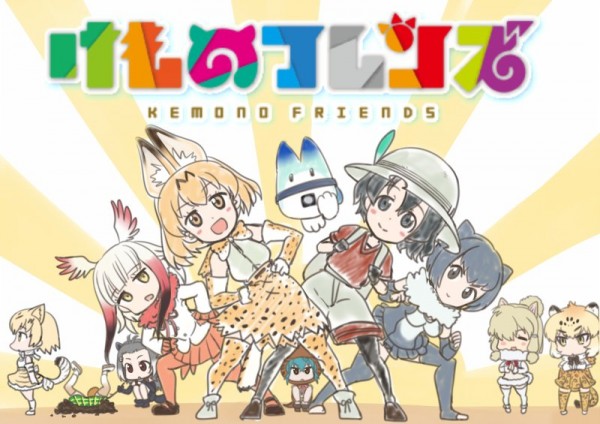
Kemono Friends


Number of Episodes: 13

What Wikipedia says: Japari Park is a large zoo home to extant species, endangered species, extinct species, cryptids and some legendary creatures. Due to a mysterious substance known as "Sandstar", many of the animals have become anthropomorphized into girls known as Friends (フレンズ Furenzu).

In the anime, a girl known only as Kaban wakes up in Japari Park with no recollection of who she is or how she got there and encounters a Serval friend. Together, they set out on an adventure to find out what kind of animal Kaban is, passing through multiple regions of Japari Park and meeting new Friends along the way.

What KoanMan says: If you like 'Dora the Explorer’ this is for you… complete with backpack and map. Kaban the human takes the place of Dora, and travels through an abandoned wildlife park with Serval (the serval), meeting other ‘friends’ who are modified endangered species of animal. Unfortunately, what could have been the highlight, the breakouts talking about the animals, seemed to use either the work experience underlings or random passers-by to read poorly scripted basic info on the animals.

This whole tale takes on the same dreary, tedious pace of ‘Straight Title Robot Anime’, and is nothing short of laborious viewing. Characters are basic at best, music is average, and plot is barren. Director Tatsuki must have worked hard to break the mould for the final episode as it managed to achieve something close to mediocre, though that is as good as it got.

So How Does it End? (Spoiler free):  OK. Disappointingly wide open for season 2.

Overall Grade:  KoanMan gives this tiresome series a solid D.

Addendum by tTPO: I sometimes wonder if KoanMan and I see the same series at times. While I can understand his thoughts on the repetitive nature of Staight Title Robot Anime (where the repitition was embraced as part of the plot but was still...repetitive) I don't see this so much on Kemono Friends. While looking Dora-esque on the outside, there is a vast depth of mystery to why the world is what it is, and what is going on out there. Sort of like Attack on Titan but with much less action and dismemberment, and a lot more kawaii. 


Where KoanMan sees dreary, tTPO (and Mrs tTPO) sees compelling. Can't wait for KoanMan to see Girl's Last Tour. :) Grade B+


Saturday, 24 November 2018

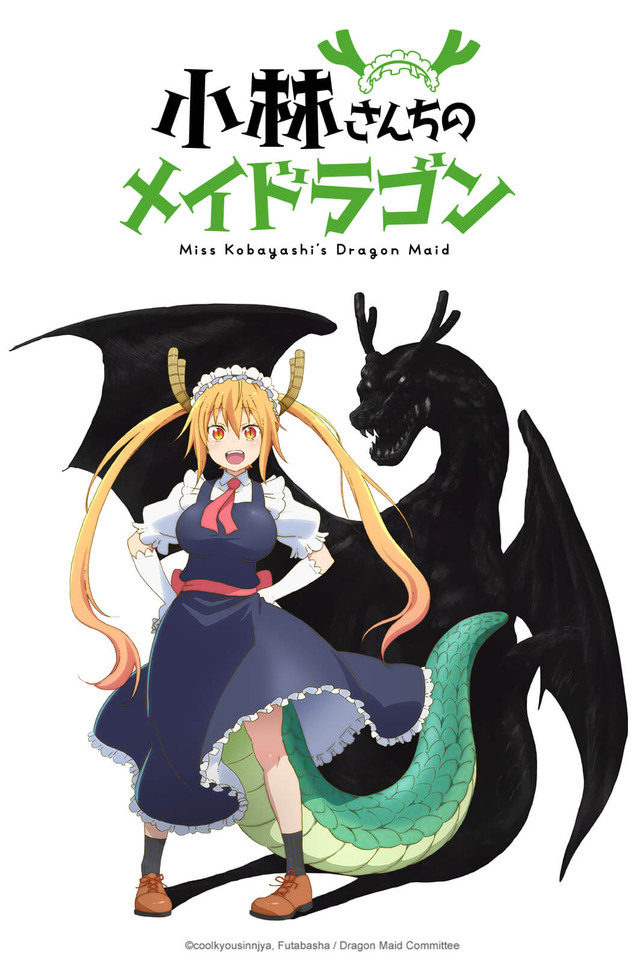
Miss Kobayashi's Dragon Maid

aka Kobayashi-san Chi no Meidoragon


Number of Episodes: 13 + 1 OVA

What Wikipedia says: As office worker Kobayashi gets ready for work, she is greeted by a large dragon right outside her front door. The dragon immediately transforms into a human girl in a maid outfit, and introduces herself as Tohru. It turns out that during a drunken excursion into the mountains the night before, Kobayashi had encountered the dragon, who claims to have come from another world. Subsequently, Kobayashi had removed a holy sword from Tohru's back, earning her gratitude. With Tohru having no place to stay, Kobayashi offers to let the dragon stay at her home and become her personal maid, to which she agrees. As Kobayashi has forgotten her drunken offering, she is initially reluctant to allow the dragon into her home despite her previous promise, but a mix of guilt and the usefulness of Tohru's dragon abilities convinces Kobayashi to accept her. Despite being efficient at housework, Tohru's unorthodox methods of housekeeping often end up scaring Kobayashi and bringing more trouble than help. Additionally, Tohru's presence attracts other dragons, gods, and mythical beings to her new home.

What KoanMan says: As with many anime, there is an interesting entry to the story that becomes clear over the course of the series, as the emotionally flat Miss Kobayashi (whist sober at least) catches up with her own life events. At times trite, and at others a little cheesy, the slightly convoluted plot unfolds to reveal different, and yet surprisingly similar characters, each with their own method of escape and identity-denial.

Director Yasuhiro Takemoto keeps the pace steady, integrating fan-service right into the characters in a story that does not take itself too seriously, and keeps the whole production light-hearted.

So How Does it End? (Spoiler free):  Do slice of life series ever end? In any case, satisfactorily with plenty of room for season 2.

How About the Music? Music and mood is good, in particular, the jealousy and rage scenes are surprisingly well done, with no doubt as to what the characters are feeling.

Overall Grade: An easy watch and good entertainment that will not tax the cerebrum. KoanMan gives Miss Kobayashi and her infatuated maid a B.


Addendum by tTPO: Despite the extreme moe, generally successful comedy and currently fashionable fantasy setup, this is a remarkably emotionally honest and engaging series. The decision to separate the overt fan service from the slowly developing yuri relationship between Kobayashi and Tohru ends up lending more weight to the relationship than would be expected in this otherwise pretty lightweight series. I cared, and so did Mrs tTPO (who is not the greatest yuri fan). Recommended. B+

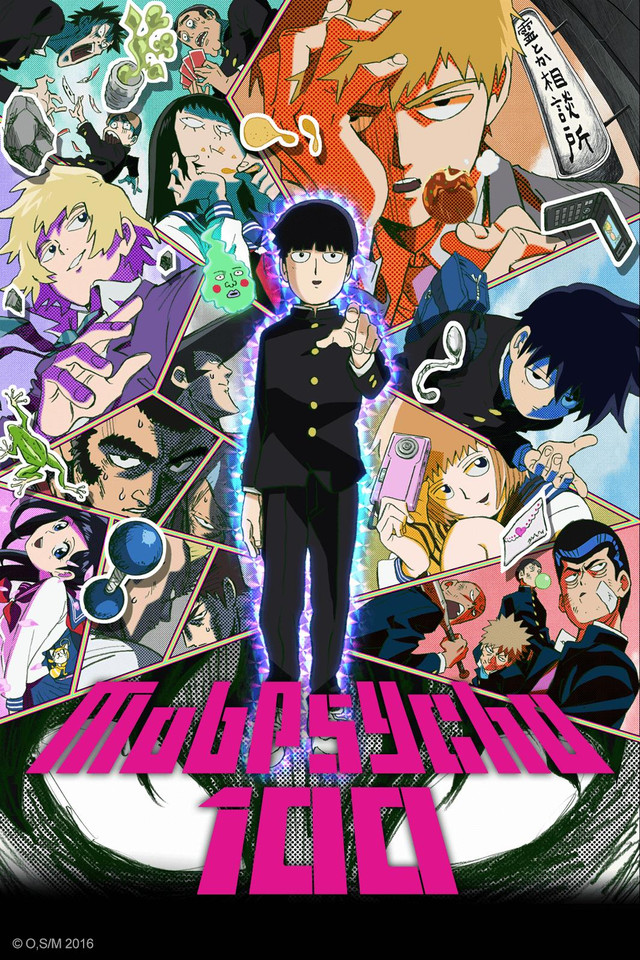
Mob Psycho 100


Number of Episodes: 12

What Wikipedia says: Shigeo Kageyama is an average middle school boy, nicknamed Mob (モブ Mobu) (meaning "background character") for lacking a sense of presence. Although he looks like an inconspicuous person, he is in fact a powerful esper. As he grows older, Mob realizes that his psychic powers are strengthening and becoming more dangerous. To avoid his power getting out of control, he constantly lives a life under an emotional shackle. Mob wants to live a normal life just like the others, but a barrage of trouble keeps coming after him. With the suppressed emotions growing inside Mob little by little, his power threatens to break through its limits.

What KoanMan says: "Mob Psycho 100", by Yuzuru Tachikawa and produced by ONE, is a similar style of animation to One Punch Man by the same, though visually a little rough. The storylines are vaguely similar, however they present different viewing experiences. Characters centre on Mob, who is a socially clueless super-being, who follows a meandering plot through his personal development. Lots of action and likeable, though shallow, personalities make this an enjoyable watch, without much brain owner required. 

So How Does it End? (Spoiler free):
Well rounded, but with plenty of room for season 2 (coming late 2018/early 2019).

How About the Music? The music is OK, and the Japanese phonetic counting in English in the opening credits song is very cute. 

Overall Grade: Mob Psycho 100 is an enjoyable, non-taxing, short series, and is a good way to pass time, with some great visual ideas. Koan Man gives this a C.
 
Addendum by tTPO: This is one of those series where KoanMan doesn't quite know what he is talking about. While this is no One Punch Man, it is no C either, either enough humour, action and originality (a rare commodity) to well justify a B.

Saturday, 31 December 2016

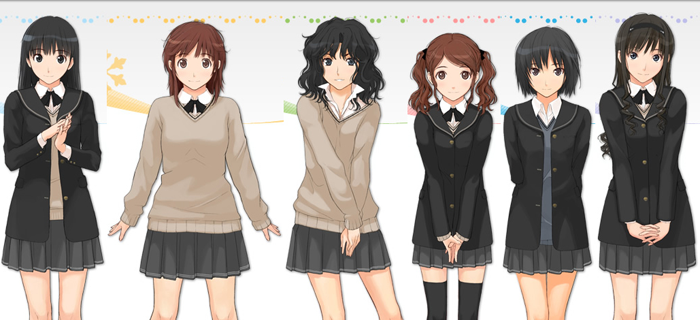
Amagami SS & Amagami SS+


Number of Episodes: 26 with 2 OVAs / 13 with 8 OVAs / Special Episodes

What Wikipedia says: The series follows Junichi Tachibana, a second year high school student from Kibitou High who dislikes celebrating Christmas due to a past incident two years ago when his date stood him up on Christmas Eve which left him heartbroken. However, this Christmas will be different as his encounter with one of these six girls, Haruka Morishima, Kaoru Tanamachi, Sae Nakata, Ai Nanasaki, Rihoko Sakurai and Tsukasa Ayatsuji will finally open up his heart to love again. The anime adaptation is rather unusual as it is divided into several story arcs where each arc focuses on one of the main heroines who will become Junichi's love interest. 
 
On August 13, 2011, a second season of Amagami SS was announced.[4] The second season, titled Amagami SS+ plus, aired on January 5, 2012 to March 29, 2012.

What KoanMan says:
Amagami SS and Amagami SS+ Plus are unique take on the serial (not parallel) romantic escapades of a schoolboy Tachibana Jun'ichi, apparently spawned from the PS2 dating game of the same name. His character seems to morph into whatever each of the six female love interests seem to need. And as each separate story unfolds with the girls, different aspects of his personality and theirs are brought to the fore. The storyline is well-paced and interesting in its diversity, with director Hiraike Yoshimasa keeping the relationship unique and engaging in its own right. No easy task. Well done.

Morishima Haruka is the senior class goddess, Nakata Sae is shy, quiet one with great taste in clothing, swimmer Nanasaki Ai and the strict class president Ayatsuji Tsukasa are the four that seem to stretch him the most from his natural state. These contrast well with his two childhood friends, the free-spirited and independent Tanamachi Kaoru, and the “overweight” and somewhat retiring Sakurai Rihoko, who accept him more as himself. One says “overweight” as the Japanese determination of this concept differs significantly from that of this round-eyed Gaijin - perhaps the term “not emaciated” might be a better fit for Rihoko’s still-slim figure. 
 
All characters are very well articulated, and even those in the periphery, like his caring but exasperated sister Tachibana Miya (who gets her own OVA - tTPO), and his porn-addicted, sushi-chef-trainee friend Umehara Masayoshi, who are perfect counterweights to the plot.
 
How About the Music? Music is fair, though art director Takahashi Maho has some fine scenery.

So How Does it End? (Spoiler free): In many different, and generally satisfying ways.

Overall Grade:
KoanMan enjoyed these series, and did not feel lost, nor bored throughout. Very enjoyable. The score for this collective is a solid A.

Addendum by tTPO:
Koanman
got this mostly right. This is an excellent harem series that removes some of the 'main protagonist with many girlfriends' issues by simply dealing with each of the different girls in a parallel universe fashion. tTPO enjoyed the original series a bit more than the sequel simply because the original series being 26 episodes, gave the strories just a bit more breathing space. Having said that, if you watch the first season you cannot fail to watch to second I think to see where the relationships continued to (or failed to as the case may be). Where Koanman got it wrong was the music - the changing OPs (as sung by the different girls) in season one, with few exceptions, were great and added (for tTPO) to the different flavour of the arcs. As it is just a bit long and season two not quite as good as season 1, tTPO gives this a B+. Definitely one of the more watchable harem series.

Tuesday, 22 November 2016

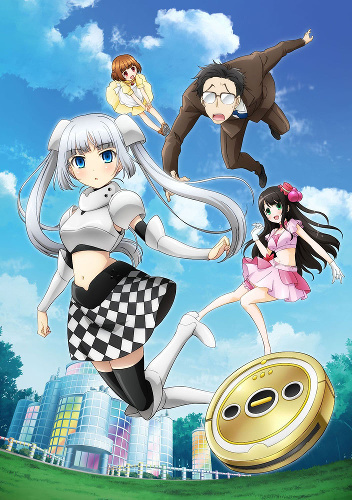
Miss Monochrome

Number of Episodes: 13+2 OVAs+13+13


What tTPO says: Sadly in the absence of decent synopsis tTPO has to write one. Miss Monochrome is a reclusive android who, with the help of her loyal robotic vacuum cleaner Ruu-chan, starts working towards being a top-selling idol with only a superifcial idea of how to achieve this. Career challenges and often left-of-field hilarity ensures.

What KoanMan says: Miss Monochrome is the brain-child of Yui Horie, a voice actor and singer, and one wonders if the character travels a similar road to that of her creator, and indeed of many seeking fame. Endearingly dedicated and tireless in her per suit of fame and "standing out more", Miss Monochrome embodies the never-say-die, never-quit, onwards-and-upwards, just-keep-swimming....etc etc attitude that determines a successful human (and is critical to the path of the Japanese idol - tTPO). And three seasons attests to the popularity of such a figure. 


Episodes are short (4 minutes in season 1), although they lengthen considerably to as much as 7 minutes in seasons Two and Three. If you like short bite-sized episodes, then these tiny morsels are for you.

KoanMan is in two minds about this series. The story of dedication and persistence of a bland monochromatic in a world of colour is inspiring. It is also a bit "monotonous" (pardon the pun). KoanMan watched several episodes at a time, and perhaps this was not a good idea. Spacing them over time may help? Either way, the historical back-story has more interest than the main story line.

How About the Music? The music is also limited. If you like it, good, if you don't like the music, you will get to like it or not like it in every episode.

So How Does it End? (Spoiler free): With some resolution. But the story continues.

Overall Grade: It is good to watch if you don't want to think hard and have severely limited time. Overall, KoanMan give this a C+.

Addendum by tTPO:
Once again KoanMan just does not get it. The music is great catchy J-pop (yes I got the album) and the brevity of the episodes fits well with the simple idea not overstaying its welcome. As a consequence the unexpected backstory gives a bit more weight to an otherwise light anime. The occasional slightly surreal episodes with little regard for continuity are also a welcome break and put a smile on tTPO's face.
Maybe KoanMan got it right when he said this was not one to marathon too much. In any case a fast game is a good game in this blog. I give it a B. 

Sunday, 24 January 2016

School Live!


Number of Episodes: 12

What Wikipedia says: Yuki Takeya is a cheerful school girl who, along with her friends Kurumi Ebisuzawa, Yūri Wakasa, and Miki Naoki, is a member of the Megurigaoka Private High School's School Living Club. As Yuki seeks out fun school activities every day while living at school, the other girls work to keep her safe, because in reality, they are the sole survivors of their school after a zombie outbreak overruns the city.

What KoanMan says: A "cutesy" first episode, with what appeared to be very little substance, had KoanMan wondering "why watch this"? Then the second episode starts to show small cracks in the delightful world of Yuki Takeya. Cracks that reveal a world of ZOMBIES!! Awesome! 

School Live! is a carefully crafted journey into the lives of Yuki Takeya, Yuuri Wakasa (club president), Kurumi Ebisuzawa (shovel wielding tough girl), Miki Naoki (troubled junior), Megumi Sakura (class teacher) and the ever-perky Taroumaru (the club canine mascot), and by perky, KoanMan means annoying. Oh, and about a billion other local residents and school-goers..... the "z-o-m-b-i-e-s"..... (say that with a ghoulish voice). In keeping with most Zombie apocalypse stories, there is an endless supply of undead corpses that need dismemberment. However, unlike most of these stories, this one delves much more deeply into the minds and feelings of those few remaining alive. It is this story that really carries this series, although the pace a few flat spots, and is never rushed nor particularly action-packed. That said, a lot happens, and the flash-back style fits well and adds to the journey. Kurumi is a favourite - anyone who has their own gold-plated shovel for beheading has be cool right? Or at least respected..... And Yuuri is the warm heart of the group that keeps everything together at all times. 

How About the Music? The music is OK, and mostly fits the mood. [tTPO: The OP is fantastically moe and gives little indication of the true nature of the show.]

So How Does it End? (Spoiler free): It is not a let down.

Overall Grade: 
With a bit more action and faster pace this could easily have been an A. So close..... KoanMan liked this, and gives a solid B.

Addendum by tTPO:
tTPO has just a little more patience than KoanMan, maybe because Koanman has a tendency to marathon and tTPO watch a week at a time. In any case tTPO and Mrs tTPO were big fans of this series, and while is may have missed that little bit of magic that makes and A, it was not far off. A-.

Wednesday, 4 November 2015

Elfen Lied


Number of Episodes: 13

What Wikipedia Anime News Network says: "The Diclonius, a mutated homo sapien that is said to be selected by God and will eventually become the destruction of mankind, possesses two horns in their heads, and has a "sixth sense" which gives it telekinetic abilities. Due to this dangerous power, they have been captured and isolated in laboratories by the government. Lucy, a young and psychotic Diclonius, manages to break free of her confines and brutally murder most of the guards in the laboratory, only to get shot in the head as she makes her escape. She survives and manages to drift along to a beach, where two teenagers named Kouta and Yuka discovers her. Having lost her memories, she was named after the only thing that she can now say, "Nyuu," and the two allow her to stay at Kouta's home. However, it appears that the evil "Lucy" is not dead just yet... "

What tTPO says: This is an extreme series - extreme violence and gore, nudity, and much victimisation of innocents. This alone is enough to turn many people off, and understandably so. As Koanman points out below, character development is not profound for most and the plot, based on a much longer manga, ends up being hard to follow at times as to everyone's motivations. 


Despite all of these imperfections it is a compelling and thought provoking series that treads similar thematic ground to Shiki in that it questions human nature and asks the same question - who are the monsters here?

How About the Music? I'll let KoanMan talk about this. 


So How Does it End? (Spoiler free): The ending is not made perfectly clear, but it is emotionally satisfactory and surprisingly, just a little optimistic.

Overall Grade: This is an imperfect series, and not an easy ride. But somewhere in there is a story that needed to be told and questions that needed to be asked. Grade B

Addendum by KoanMan: Elfen Lied has loads of cool ideas and concepts, starting with the visuals right from the beginning, and coupled with the hauntingly brilliant choice of theme song by music director Katsunori Shimizu, "Lilium", by Kumico Noma. The closing theme "Be My Girl", by Cheiko Kawabe, is also a good choice, and certainly finishes each episode on a light note.

The plot is interesting, if not somewhat convoluted. This is where the first half of the series feels a little disjointed, and the storyline does not flow well from one scene to the next. Everything is there, but just a bit clunky. The invisible hand thing doesn't really appeal.

Similarly, character development falls short. All the elements are there, however, director Mamoru Kanbe just misses the mark. The main female characters all have plenty of quirks that could have generated legendary status, however, Kouta comes across as plain weak. That said, Yuka comes across weird and jealous, Mayu is a bit of a non-event, and Nana is confused, although with daddy issues, this at least gives her some interest. 


Lucy/Nyu is the only character that really gets development, all the others get attempts at development. Lucy starts as a killing fiend humming a cutesy song, a disturbing blend of efficient murderous innocence. Then, as her dual personality becomes obvious it seems she becomes moody and bitter... No cutesy malevolent humming at all. KoanMan is not sure why she was a innocent and happy cute killing machine at first, then a dark and moody cute killing machine later.

KoanMan really wants to love this series, although it just doesn't quite get there. It is OK, but it could have been so much more- a solid B for this one.

Saturday, 10 October 2015

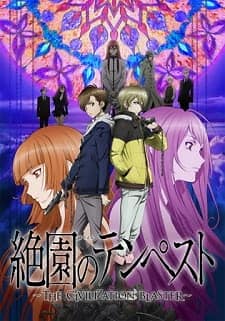
Zetsuen no Tempest

 aka Blast of Tempest


Number of Episodes: 24

What Wikipedia says: "The story revolves around Mahiro Fuwa, a teenager whose sister was mysteriously murdered one year before, and his friend Yoshino Takigawa. Mahiro is contacted by Hakaze Kusaribe, the leader of the Kusaribe clan who was left stranded on an unknown deserted island by her followers, and agrees to help Hakaze in exchange for her help to find out the culprit for the death of his family. Upon learning of his friend's intentions, Yoshino joins him on his quest to stand against the Kusaribe clan who intends to awaken the "Tree of Exodus" whose power can bring ruin to the entire world. 

Several dialogues and plot elements in Zetsuen no Tempest pay homage to two works of William Shakespeare, Hamlet and The Tempest, which are two stories about retribution, albeit with completely opposing outcomes."

KoanMan says: Logic, magic, and really powerful trees. This series is an interesting tale of two average high school friends, Yoshino Takigawa and Mahiro Fuwa, that find themselves tormented by the murder of Aika Fuwa. Events then escalate from normal to holocaust as magic is used as a weapon in the war between two trees representing opposing philosophies on human civilization and its future. The boys are quickly introduced to Hakaze Kusaribe, the princess Mage of the Tree of Genesis.

There is a lot of time for characters to develop, although most characters have an unusual quirk somewhere in their make-up which adds a little light-hearted fun to proceedings.

Logic is a central pillar of the story, and besides magic, mostly holds up. Dialogue is important, with one discussion spanning several episodes. It is so well done, KoanMan barely realised until 3 episodes into this conversation that it was one conversation. The pace is a little on and off, and the story is a little disjointed, although overall the story ebbs and flows well. Plot is convoluted though does follow a solid central direction.

How About the Music?
Music is OK, with opening and closing credits music quite average, however, the inclusion at times of selected classical music pieces added greatly to the mood. This was not consistent enough throughout the series for KoanMan and this could have been a stand-out feature if done well.

Special mention goes to Michiru Oshima for his orchestral arrangement of Beethoven's "Tempest (mvt 3)" - fantastic. 

Overall Grade: KoanMan liked this series, and it gets extra marks for keeping interest throughout some very long blocks of dialogue. Zetsuen no Tempest gets a B. 


Addendum (by tTPO): Both tTPO and Mrs tTPO like this series a lot. The long slabs of adversarial dialogue taking place in small areas that punctuated the series had more ebbs and flows than many many more physical fights and as such made a refreshing change for the medium. It really did reflect the theatrical themes on which the story was based. The plot was complex without being too complex or self indulgent and the only letdown for tTPO was the inevitability of main conclusion which was not bad by any means, but given the excellent journey to get there was just not quite as good. 

Blast of Tempest gets a B from us too. 


Friday, 3 October 2014

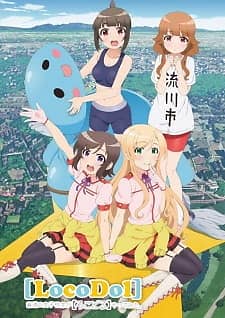
Locodol

aka Futsū no Joshikōsei ga Locodol Yattemita ("Normal High School Girls Tried Being Locodols")

Number of Episodes: 12 + OVA

What Wikipedia Says: In the town of Nagarekawa, Nanako Usami, an ordinary high school girl, is approached by her uncle to become a local idol or "Locodol", partnering with upperclassman Yukari Kohinata to form the idol unit, Nagarekawa Girls. As the girls use their talent to promote Nagarekawa and their businesses, they are joined by Yui Mikoze, who acts as the local mascot, and Mirai Nazukari, who serves are Yui's substitute.

What TTPO says: This is a harmless slice of life series with cute (but not overly so) girls trying their hardest to do their best for each other and the town they live in. While their manager is just a little on the creepy side at times there are just no bad people in this show whatsoever - 24 carat hearts abound. This lack of tension could have been a recipe for boredom, but the writers manage to avoid many of the obvious idol cliches (and thankfully most fanservice) and keep the characters pretty well grounded - idol work is a lot of work and not so much glamour in this series and our main protagonists are not on a rocket racing to the top anytime soon. There are even genuine cliffhanger endings to some episodes.

How About the Music?  For a show about locodols the music is pretty low key but I can say the  insert song which we finally see at the end of the series is worth the wait - ridiculously happy and with lyrics that summarise the philosphy (if you can call it that) of the series. Do yourself a favour and don't click on it now - just watch the series. The ED ("Mirai Shoujotachi" by Nagaregawa Girls) is also worth a listen.

So how does it end? (Spoiler Free.): Appropriately. The OVA comes in soon after the end of the series and is a nice bookend to the series while clearly stating Nanako and Yukari have a long way to go and there is clearly room for a second season. 


Overall Grade: This was not an ambitious series but is was refreshingly fun and honest watching, well paced, and a welcome break from some of the more gritty actions series we have been watching of late. Grade B+.

Wednesday, 12 March 2014

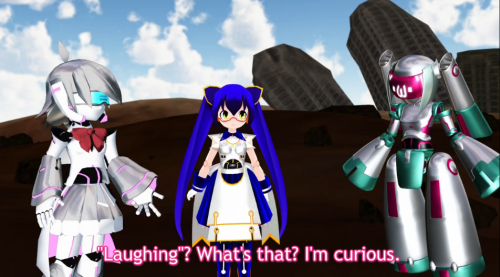
Straight Title Robot Anime

Number of Episodes: 12 (13:30 minute episodes)


What Wikipaedia says: 
The story is set in the year Mobile Century 8013 where humans no longer inhabit the planet Earth. However, remaining military robots continue to fight for unknown purpose(s). Three non-combatant robots, Fuji, Kato, and Mori attempt to end the war that lasted for 7 millennia by investigating on human laughter.

KoanMan says:
KoanMan is not really sure about this series. It is definitely not an action, not terribly serious, and is not fast-paced. It will not tax the viewer. What it is, seems to be a repetitive documentary on humour/comedy. Despite this, KoanMan actually blitzed this whole series in just 2 sittings, and the small differences between episodes became the feature that kept one watching. How many different scenarios will still lead to the same annihilation of the planet in a continual robot war several thousand years in duration? Well, a lot, as it happens - and perhaps this is the point. The "futility of hostility"...History repeating itself...

The female worker-bee robots, Fujii, Mori and Kato carry the exploration of laughter, with random voice-overs by a particularly dandy male (DELETED - Possible spoiler) narrator (DELETED - Possible spoiler). The characters do develop in interesting ways, a quiet feature of the series that requires some close attention.

How About the Music?: The music is frenetic during the high action opening sequence and the "experiments", and, well, actually that's about it.

Overall Grade:
KoanMan has mixed feelings. The series is s-l-o-w. However, the episodes are short, and there are not many of them. For the TPO these are positives, as are the characters themselves and KoanMan found some potential here, and the pinnacle of the series, Episode 11, without which it would have been rated much harder. As it was, it simply slowed right down to a C.

tTPO says:  I took a different view to this series than KoanMan. While at first glance it seems an awful lot like the Endless 8 from Haruhi (though mercifully shorter and more varied) there is steady character development, that by the time the end hits (and it does hit surprisingly hard considering the rest of the series) I cared about the characters. The repititous nature of the episodes I found really quite educational about the nature of comedy and so for me, while the structure of each episde was very similar, the content varied enough to keep me interested. I think to be fair though you could remove about 5 or 6 episodes from the middle of this series and not lose too much.

This is no Attack on Titan but I enjoyed this more than (the apparently heartless) KoanMan. With the short episode format working its favour I give it a B.

Friday, 3 January 2014

Miss Monochrome, the Animation

Number of Episodes: 13


What Wikipaedia Crunchyroll says: "In this short animated series, Miss Monochrome is an android who decides to try and become a top idol singer in the ever growing competitive market."

tTPO says: I love me a short anime series. And by that I mean the magic 4 minute ones. Including the credits. That is not to say they are all good by any means but I find it pleasantly surprising what can be fit into such a short time frame. It just goes to show how much fat there can be in a full length show.

Miss Monochrome is mostly a lightweight slice of life series, but along the way they manage to squeeze in very decent slabs of humour (mostly based around Miss Monochrome's being an android in a human world), pathos (not least of which is for Ru-chan, her robotic vaccum cleaner) and an epic backstory (which only takes part of a couple of episodes - economic storytelling at its best).

How About the Music?: Here is the irony. Miss Monochrome is an original design by singer and voice actress Yui Horie (who also voiced Miss Monochrome via heavily effected autotune on her voice) so she could, amongst other things, compete with virtual idols. Very post-modern.


There is only one song, the ED ("Poker face" by, er, Yui Horie), and it is a sweet bit of J-pop.

So How Does it End? (Spoiler Free): Satisfactorily. With lots of room for a season 2.

Overall Grade: There is much joy in this show, and for tTPO, its hard to argue with the 4 minute investment. B+

Thursday, 2 January 2014

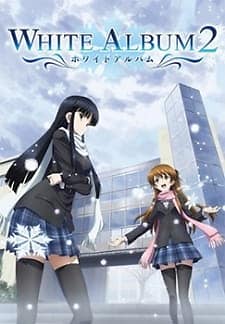
White Album 2

Number of Episodes: 13


What Wikipaedia Anime News Network says: "Fall, when graduation is only half a year away.

Haruki Kitahara, the final member of the light music club that dissolved, plays his guitar by the window after school in preparation for the school festival. It was the one and only adventure of a good student who spent two diligent years on his studies.

But when a flowing piano melody and a voice as a clear as bell harmonize with his guitar… He goes from being alone, to being two, then three in the light music club, as the semester he dreamed of, no, hoped for, began."

tTPO says:
Set 10 years after the original White Album series, this new series has nothing to do with the old series except that it a) takes place in the same fictional universe and some of the songs from the original series appear here, b) it is based on a visual novel and c) it involves awkward romance and drama.

Having said that, there is lots to like about the series. There is a great dramatic (almost Shakespearean) arc in the pacing peaking midway through the series with the music club concert, before which is the glorious honeymoon period, but after which...not so much. The story is much more direct and less complex than the original White Album, and the focus remains on the basic love triangle that is the heart of the series. This is a good thing and enables better character development within the 12 episodes. And with the main characters still at school the mistakes they make and decisions they make ring naiive and true. (Teenagers don't need that much help to make their lives more dramatic than they need to be so is it any wonder these things are set at school? Who am I kidding? Adults still make plenty of bad decisions!).

How About the Music?:
The music that is the canvas for the series also very appropriate though as a guitar player even with a few days practice I am not sure the solo Haruki pulls out at the concert is going to sound as good as it does considering his level of general guitar ineptitude. And the programming of the backing tracks for the original song they play - given they only had 24 hours to write and rehearse this when did Iizuke get a chance to do this? Especially the cracking sequenced bass line? Whatever. I'm being picky.

White Album, Powder Snow and Sound of Destiny from the first series all feature contextually. The OP ("Todokanai Koi '13" by Rena Uehara) and main ED ("Sayonara no Koto" by Rena Uehara) are largely inoffensive bits of J-rock and J-pop respectively that are improved subjectively by the series they are associated with. 

So How Does it End? (Spoiler Free):
There is much done right here (see my previous thought on the importance of having losers in any harem series), especially a couple of timely flashbacks - one in the second last episode and cleaver musical one at the very end - as well as a monologue from Setsuna that fill in whatever gaps were left with respect to the characters and their motivations. But there is a certain inevitability to the ending (despite its appropriateness) that takes away just a little from the drama and leaves a worse taste ("Er, that's it?") in my mouth than there should have been. 

As I write this though all is not lost. Apparently this is but one part of a bigger story with further plot 2 and 5 years down the track. This to me is also a good thing and I can only hope the rest of this gets animated.

Overall Grade:
Good show, but in a way I find difficult to describe, somehow not quite as good as it could have been. B. (Though this may improve with the completion of the story.)

Tuesday, 26 November 2013

White Album

Number of Episodes: 13+13


What Wikipaedia the Nihon Review (there are no decent synopses out there for this show so props to TypicalIdiotFan for this) says: "After 20 years of life, Fuji Touya finds himself in his second year of college, dating an up-and-coming idol singer named Morikawa Yuki, estranged from his father, and surrounded by “Goddesses”. These “Goddesses” are women that Touya has met throughout his life, who have all helped him in some way when he needed it. Unlike most other people, Touya has a hard time letting go of these special women, and his kindness to them has created some confusing and frustrating relationships. These bonds, especially with his beloved Yuki, are starting to become dramatic and strained, and eventually something is going to have to give…"


tTPO says: I like this series set in 1986. No, it is not perfect (ongoing communication problems form a large amount of drama - it's a wonder anyone survived the 80's) and yes, it is 26 episodes which means I had to forego some sleep as I binge-watched it over a week or so, but it was worth it. Comparisons with School Days are inevitable as both fall into a more tragic harem subgenre where a) the characters are more often than not flawed (especially the lead, though he could not do it without the willing help of the harem) and b) it's not always going to end well for a lot of people. In the case of White Album though, the car crash is slower, has more people on board at the time and doesn't end as badly.

Unlike may reviews that saw this series in two parts many years ago I watched it all in a short period of time and found the two parts* (shot by different directors apparently) still a pretty coherent series. I can't say it was always straightforward - there are without doubt some convoluted aspects but fortunately these are not usually essential to the main plot. Some but not all became clearer in subsequent episodes. What I did appreciate though were the character arcs - very few people stood still from start to finish, and many possibilities for where things were going were kept open till the near end and it was this that kept the episodes rolling and my sleep diminishing.


* With the appearance of White Album 2, and sequel to this series with completely new characters, it does get confusing with White Album, second season, also sometimes referred to as White Album 2, which was just the second half of this series.

How About the Music?: For a series so based around music I found the OP and EDs appropriate but not compelling.
Should I have expected more from idol based J-Pop set in 1986 though? 

Having said that, the main insert songs (even with their 80's flavourings) were a bit better and "White Album" (as sung by Aya Hirano - the voice of Haruhi) the song in particular eventually became a bit of an ear worm. The duet performance of "Powder Snow" at the end I think also rose above the limitations of the song itself (note this link contains spoilers as well as a song - different version with no spoilers here). 

So How Does it End? (Spoiler Free): Mostly well. While most plot threads are sorted out, the final ending is left just a bit open. A bit of deduction (and internet research) allows narrowing down of the likely outcome without too much difficulty. The pacing was certainly much more even compared with School Days and even provided a motivation for many of the series' events though I can't vouch for the psychological validity of it! And yes, there were clues along the way for the astute viewer.

Overall Grade: Imperfect, but still compelling. B+

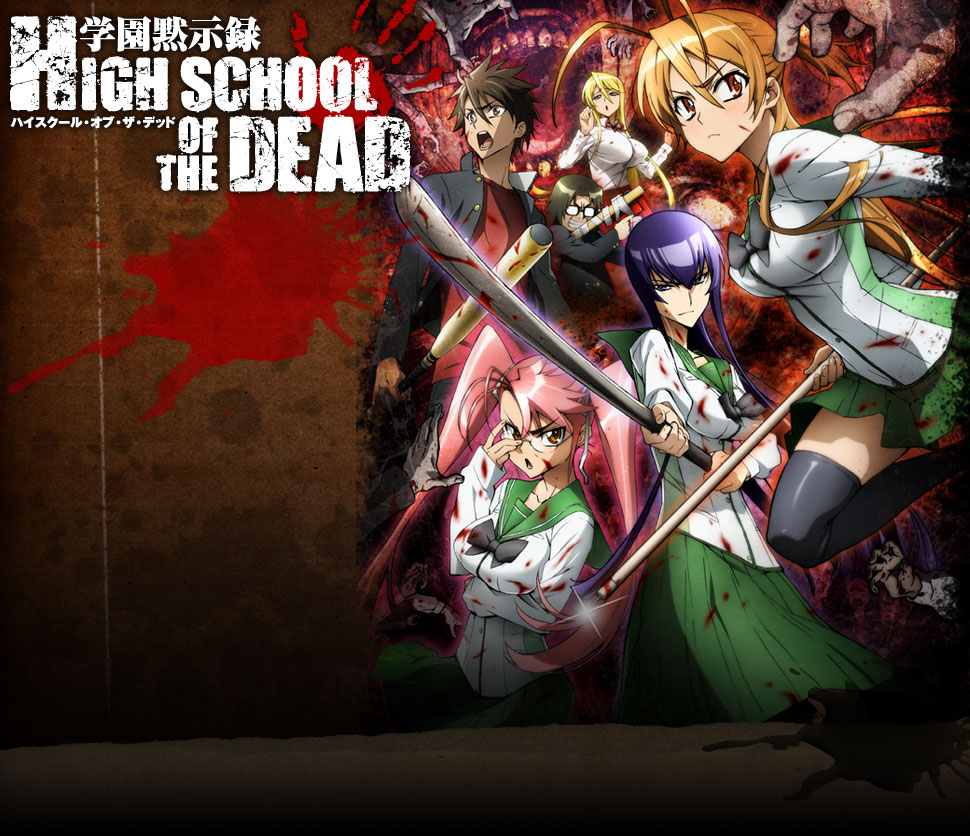
High School of the Dead

Number of Episodes: 12 + 1 OVA


What Wikipedia says: "Highschool of the Dead is an anime series adapted from the manga of the same name written by Daisuke Sato and illustrated by Shoji Sato. The series is set in the present day, beginning as the world is struck by a deadly pandemic that turns humans into zombies. The story follows Takashi Komuro, a student at Fujimi High School who survived the initial outbreak along with several of his classmates and the school nurse, and occasionally jumps to the perspective of other characters. As the group tries to survive the zombie apocalypse, they must also face dangerous fellow survivors and the decay of their own moral codes."

KoanMan says: The director of "Highschool of the Dead" Tetsuo Araki certainly had booty on his mind when he rendered this anime, originally penned by Manga author Daisuke Satō.

The plot is reasonably simple, this is a Zombie movie after all.  However it is surprising, that terribly cheesy moments, complete with the silly sound effects, are interspersed with moments of intense gravity. The character and relationship development is great with the formation of their erstwhile "family" one of the most enjoyable aspects. The personalities are different enough to add real texture to the story.

The OVA is not important to the general story, but includes a little humour.

How About the Music?: Beyond the copious décolletage, the opening sequence music, "Highschool of the Dead" by Kishida Kyoudan and the Akeboshi Rockets (live version at the link), is fantastic! KoanMan realises this is completely personal, but it fits perfectly with the post-modern pop style of the visuals, and goes well with the Zombie apocalypse theme. There are more EDs than you can poke a stick at (each episode has a different one) so I'm sure there is something for everyone here.

So How Does it End? (Spoiler Free): Satisfactorily. But the journey is very much a continuing one.

Overall Grade: KoanMan gives this a solid B. One is male, of course. Roll on Season 2.

Addendum (by tTPO): HOTD is not without its flaws - there is a recap episode at episode 4 (is that some kind of record?) and as a show focussing on teenagers it fails to escape the trope that most adults are useless and as KoanMan has outline already, there are more than a few cheesy moments. It does succeed though at many things. The animation is great, the scale of the disaster is awesome thought the journey is personal, and by the end of the series there has been more than a little development of the main characters. But most importantly, for a show which is defined to a large extent by the fan service, the creative team seem to have really given some thought to how can we do this differently, and I think they succeeded. Not all the time mind you (note the obligatory bathhouse episode and the unneccessary OVA) but they did the near impossible in making some gratuitous fan service interesting. Put oll of this together and you have and entertaining and above-average series. B+

Sunday, 23 December 2012

Sword Art Online


Number of Episodes: 25

What Wikipedia Anime News Network says: "The players of a virtual reality MMORPG, Aincrad Online, are trapped and fighting for their very lives. After it is announced that the only way to leave the game is by beating it, Kirito—a very powerful swordsman—and his friends take on a quest to free all the minds trapped in Aincrad."

tTPO says: This series is a pleasant distraction that conveniently takes up the first two major arcs from the light novels the anime is based on. In that respect it is really two shorter series though there is some resolution for both in the final episode. But I get ahead of myself. 


The series really promises and delivers no less than suggested in the blurb above. There are good action sequences, the virtual worlds are imaginitive and well thought out, the pacing is just so, and there is plenty of romantic and non-romantic love (the family aspect of this was a pleasant surprise) between the major players that feels about right, and keeps the harem fan inside me happy. I think it is this latter aspect (the love that drives the main characters) that engenders the rather heated support for this series.

So far as flaws go there is is just a little much deus ex machina for my liking and the triumph of 'will' over just about anything, including programming. I have a number of friends in the IT business who assure me life is not this simple. And the second villain, in contrast with the first (who is actually quite complex), is annoyingly underdeveloped and clichéd. But at the end of the day this is a fairly lightweight affair so you just go with the flow and it's all OK. It's not Neon Genesis. Don't overthink it.

How About the Music?:  OP1 "crossing field" by LiSA is a pleasant but otherwise unremarkable bit of J-rock.  OP2 ("INNOCENCE" by Eir Aoi) is cut from the same mould but for mind has a bit more get up and go. 


ED1 ("Yume Sekai" by Haruka Tomatsu) is a pleasant song reflecting more the romance in the series. Has am easy on the ear modulation just before the prechorus. ED2 ("Overfly" by Luna Haruna) takes the same road but again with a bit more rock. 

Really, there is not a bad theme in this 4.

So how does it end? (Spoiler Free): More than satisfactorily. Major plot threads are all sorted out, even if some of them are a bit silly, and there is still room for a sequel.  


Overall Grade: Nothing really new here, but it does have plenty of heart (and I rate that) and the execution was generally pretty good. B-.

Friday, 7 December 2012

School Days

 
Number of Episodes: 12+3 OVAs

What Wikipedia Anime News Network says: " Makoto Ito rides the train to and from school every day. However, at the beginning of his second term, he falls in love with a beautiful girl that also rides the train. Unfortunately, she barely knows of his existence. Her name is Kotonoha Katsura, and though they attend the same school, they are not in the same class. In an attempt to catch her eye, Makoto enlists the aid of a close female friend of his: Sekai Saionji. She helps him, despite the fact that she — unbeknownst to Makoto — is in love with him. Thus the three are bound in a love triangle of life-changing proportions."

tTPO says (Warning! It is hard to discuss this series without being just a little spoilerish!): Holy crap. This is the first series in a long time I have had troubles finishing, not because it was so bad, but because I did not want to see the train crash that was coming. But I did make it, though it was not easy. 


The blogosphere is sharply divided on this series - either it is somewhat flawed genius, or it is just very very disappointing, especially the ending. My experience was that School Days falls into the former category, and would like to think it was a deliberate decision on the behalf of the director Keitaro Motonaga. The problem, I think, with people that dislike this series is not the series itself, but their expectation of what it should have been. Calling this another harem show would be like calling Puella Magi Madoka Magica another magical girl anime.

School Days is based on a erotic 'visual novel', or a type of 'choose-your-own-adventure' type games. Of 21 possible endings, 18 of these were good endings, with the protagonist ending up happy with 1 (or more) girls. You can see that when Keitaro was given this project, it would have been easy to have made a fan-service laden series with many cute girls and a proverbial happy ending. However, this was not the decision that he made. 

Instead we get a series with a remarkable lack of fan service, a bunch of flawed and generally unlikeable characters, and a deconstruction of the harem genre. It reminded me in feel and structure (and this admittedly may be a bit of a stretch) of Polanski's Macbeth, with Makoto in the titular role. Like that film it starts out modestly then rapidly (some say too fast but I think the timing was spot on) escalates to extremes. It should not be surprising though, giving the self-centred mind of the average teenager, that unlike Macbeth, Makoto takes little responsibility for his actions even up to the end, and spurns the last opportunities for possible redemption. 

So how should I describe this to avoid disappointment? It is a harem show. There is a little romance, but not much (and enough that I would not tag it as such) - most of the relationships are very dysfunctional. There is plenty of drama. But the tag that gives a bit away, but would also set the expectations right, would be horror. 

When you watch the series, this should be no surprise, since to anyone with a bit of life experience will know where this out of control train is heading.  And train wrecks are usually not pretty.  

How About the Music?: School Days is another series with had so many EDs I'm just going to ignore them. The OP ("Innocent Blue" by Devicehigh) on the other hand, again much like Puella Magi Madoka Magica, is (intentionally?) bland, leaving no clue as to the true nature of the series. 


So how does it end? (Spoiler Free): Well that is the big question and no details here, but...not at all happily. And contrary to popular belief the ending is not sudden - the groundwork is laid for this over several episodes. But it does wrap things well. Prices were paid. I don't think we'll be seeing a sequel.  

Overall Grade: How do I grade a show is flawed (how did everyone keep getting access to the roof when there was only one key?), I have no desire to rewatch and indeed struggled to watch once, but does such a good job of tearing apart the genre is was based on? A- apparently. But you have been warned. 


Addendum: Just finished watching the OVAs and it is a bit of a rollercoaster. One is a very similar episode to the first episode. The next is a very traditional harem episode set in an alternate, happier and more cliche universe around Valentine's Day. Hilarity ensues. The third, and I think the best, is a very much odder alternate universe where 4 of the girls are poorly paid superheroes. Or magical witches. This is a genuinely funny episode (welcome relief after the series itself) that skewers transforming heroes, magical girls, the nature of heroes and villains, visual novel plots in addition to School Days itself. In a fit of irony there is a fair amount of gratuitous fan service. And in between all of this there are just brief moments of seriousness with what appears to be commentary on School Days itself. I could hear the director saying 'This is fiction guys. Don't try this at home." Or I could have been imagining things. But I like to think not. 

Koanman's thoughts:  Welding.

You know you shouldn't look at it, you know it will damage your vision, but you just cannot look away.

This series is welding.

It builds slowly, with loads of "sorry" and frustration, but certainly builds well to the inevitable. It was amazingly well done, there are not many examples of any kind of entertainment that can engender that level of emotional cringing; and sustain it for such a prolonged period.... Genius!

Music is really good, and you have to believe the music director really does have a sense of humour. It is very well matched to the mood of the scene in most instances. The only music I really detested was the 80's tinsel reject track in the opening credits. I could not sit through it even on the first pass without tears welling in my ears. I didn't know that was even possible.

After an entire series developing the characters, leading us slowly and labouriously through the continuing angst that School Days, I did not feel the ending fit with the personalities at all. It was very sudden, and a complete change in genre. Possibly the idea was to release all the pressure that had been building, but it did not work for me.

KoanMan would, for the series generally give an A, but for the ending a C. Overall this is a B.