Showing posts with label Mystery. Show all posts

Tuesday, 21 April 2020

Kantai Collection

aka KanColle


Number of Episodes: 12 + Movie (KanColle: the Movie)

What Wikipedia says: In a world where humanity faces the threat of the abyssal fleet which has taken over the seas, special human girls who don weaponized outfits and possess the spirit of historical naval vessels known as kanmusu (艦娘, literally "fleet girls" or "ship girls") are the only ones capable of countering them. The kanmusu live together at a naval base, where they spend their everyday lives as they begin training for battle.

The series features the destroyer Fubuki as the main character, with the storyline based on her point of view. Fubuki arrives at the naval base, where she meets other girls that she will eventually fight alongside. Despite lacking adequate combat training, she is recommended into the Third Torpedo Squadron by the admiral, and quickly finds herself sortied into battle. Upon being rescued by Akagi in a dangerous situation, Fubuki strives to do her best in order to train, with the hopes of eventually being able to fight alongside Akagi.  

What KoanMan says: It took some time for this to gel with KoanMan. The concept of girls skating around on water and firing guns strapped on detracted somewhat from KoanMan’s enjoyment. It is a key element of the story, that the girls are warships, and some will love it. One found the mysterious “Abyssals” intriguing, and somehow the concept worked better with them. The plot is predictable, but moves well without feeling too slow, nor rushed.

The action moved well, with good animation and some epic tropical scenery that helped the story along, blending well with steady character development and the maritime setting. Director Keizou Kusakawa does an adequate job following the trials and tribulations of the special destroyer Fubuki and the other girls.

Interestingly, theme music was left to producer WEST GROUND (an alias of Flying Dog music producer Makoto Nishibe).

So How Does it End? (Spoiler free): The movie is both darker and a little more confusing than the series, and while probably less satisfying as a result, it really does try to make make sense of the ridiculous world that is KanColle, and resolve the major plot lines. [tTPO]

Overall Grade: Some risks were taken to make this, and it became more engaging as it moved through the episodes. Overall KoanMan gives this a B.

What tTPO says: Another entry in the anime genre of "she's a girl, but she's also a..." (gun? plan? ship? superweapon?) this managed to connect with tTPO, and encouraged me to go and look up how actual history played out in WWII (compared with the reimagined version in this anime). Unlike some reviewers who took exception to the revisionist history tTPO didn't find this disturbing, because, you know, it's an anime, with girls in short skirts, not a documentary on the History channel. The cast of thousands were largely one dimensional, and it's no future classic, but it was well paced, well drawn, has a a few platonic yuri tones, and me and Mrs tTPO enjoyed it. B.

Sunday, 13 October 2019

Girl's Last Tour

aka Shōjo Shūmatsu Ryokō


Number of Episodes: 12

What Wikipedia says: The series follows two girls, Yuuri and Chito, as they navigate the ruins of civilization after an unknown apocalypse, and as they travel in their Kettenkrad, they seek food and supplies while surviving day-to-day.  

What KoanMan says: 


Talent hits a target no-one else can hit
Genius hits a target no-one else can see

- Schopenhauer

Girls’ Last Tour, like the quote above, is going to amaze those for whom it resonates, and will fall flat and mean nothing for others. It affected KoanMan deeply. It gets an A.

One immediate questions: why?

The story follows the journey of two girls, Chito and Yuuri, through a post-apocalyptic world in an endless search for food, shelter, and the higher levels in a multilayered hyper-urban cityscape. And like the philosophy of Schopenhauer, it is at once neither right nor wrong, neither positive nor negative, it simply is. Although, while Schopenhauer used negative language to relate his insights, Girls’ Last Tour presents a certain loss while simultaneously exploring the joy of simple pleasures. A hot bath, hunger giving way to a good meal. The shining spear of light that shines in the midst of desolation seems all the brighter for it, in spite of it, or perhaps because of it?

Chito and Yuuri are extremely well developed, and while very different, cling to each other for fundamental survival. The space afforded by their situation allows for far more depth than can usually be achieved in anime, like the view at the top of a mountain, with the entire world played out beneath, more is visible and the vastness is revealed without the distraction of detail. The manga, crafted by Tsukumizu, is faithfully reproduced in the anime directed by Takaharu Ozaki and written by Kazuyuki Fudeyasu. The background and scenery is superbly rendered and well supported musically by Kenichiro Suehiro and Jin Aketagawa as sound director. Tsukumizu’s contrasting 'cute versus bleak' creates an interesting dissonance in both the art-style and the story that is expanded in the anime over the manga.

So How Does it End? (Spoiler free):  Much like the rest of the anime, there is still the spectre of just the faintest hope in the ending. For better or worse the manga pushes on further. You may or may not wish to go down that road. [tTPO]

Overall Grade: Girls’ Last Tour emanates an existential aura that provokes serious introspective thought. It did for KoanMan at least. It gets an A.

What tTPO says:  tTPO (and Mrs tTPO) also found GLT an extrordinarily affecting anime. In recommending it to KoanMan, who has not got the greatest track record for enjoying slow moving anime, I was unsure as to if it would get through to him. I shouldn't have worried because this anime gets so much right, despite the glacial pacing which is so essential to the feel, it is hard not to appreciate it. Very few anime are as bitter, nor as sweet, as GLT. A+. It's just that good.

Wednesday, 24 July 2019

Saikano, The Last Love Song on this Little Planet

aka Saishuu Heiki Kanojo (translated into English as Ultimate Weapon Girlfriend)


Number of Episodes: 13

What Wikipedia Anime News Network says: Shuji and Chise are two Hokkaido high school students barely starting a relationship with each other. Then, with no warning, a squadron of bombers from an unknown country destroy the city of Sapporo. All hope is lost when suddenly, the bombers are destroyed by a small red light floating across the sky. At this point, Shuji finds out that the one responsible for eliminating the enemy forces is Chise, who reveals herself as a cyborg engineered for mass-destruction. 


What KoanMan says: This sounds like it would be great. It sounds like it would be packed with action. It sounds like a schoolboy's wet dream…

However… it is “sorry”, “dummy”, “idiot”, a little bleak, and more “sorry”. Much more “sorry”.

The take-home message: don’t judge a book by its cover. The feel of this series is dominated by the story-line, which meanders through the relationship of the main protagonists, high-schoolers Chise and Shuuji. Plenty is left out, and much is assumed as the plot plods along at a dreary pace. Brief glimpses of excitement are thwarted as the story is dragged back to its original pace, and yet it somehow flows steadily and consistently - just don’t expect to be thrilled by director Mitsuko Kase's anime rendition of Shin Takahashi’s manga.

The basic animation smacks of low budget, and possibly indicates a lack of artistic interest on the part of the production team (lead by Naoko Takahashi), although the artistic effects in the opening and closing credits were uncharacteristically well done. 

How About the Music? The music generally is average, and the music for the opening and closing were in keeping with the general mood, although those more musically attuned may find the 1/8th flat notes of the singer irritating, but it does add a little more to the disjointed feel generally. Perhaps sound director Keiichirou Miyoshi has achieved the desired audience response? KoanMan is unsure.

So How Does it End? (Spoiler free):  All endings are not created equal and while there won't be a sequel anytime soon, the ending perhaps lacks a little clarity. Reading the last chapter or two of the manga explains things a little more fully and is recommended. [tTPO]

Overall Grade: If you are after a borderline existential story that does not require adrenaline, then this could meet your needs. Despite the flaws KoanMan kept watching through to the end, indicating a certain something, perhaps the futility… ohhh the futility…

KoanMan rates this a C.

What tTPO says:  tTPO has a soft spot for romantic anime. What I have not said previously is I also have a soft spot for slow moving existential post apocolyptic romantic anime also, and Saikano fits this description. There is little to enjoy here as the glacial car crash that is this anime grinds to its conclusion, and yet like any car crash, I found it difficult to look away. The basic artwork (it was 2002 when it was produced) and muted colours that annoyed KoanMan I thought appropriate for this often emotionally cold production. 

Needless to say I rate it a bit higher than KoanMan, though Mrs tTPO would agree with him. I considered the possibilty I was wrong. Not possible though, is it? Grade B-.

Sunday, 25 November 2018

Kemono Friends


Number of Episodes: 13

What Wikipedia says: Japari Park is a large zoo home to extant species, endangered species, extinct species, cryptids and some legendary creatures. Due to a mysterious substance known as "Sandstar", many of the animals have become anthropomorphized into girls known as Friends (フレンズ Furenzu).

In the anime, a girl known only as Kaban wakes up in Japari Park with no recollection of who she is or how she got there and encounters a Serval friend. Together, they set out on an adventure to find out what kind of animal Kaban is, passing through multiple regions of Japari Park and meeting new Friends along the way.

What KoanMan says: If you like 'Dora the Explorer’ this is for you… complete with backpack and map. Kaban the human takes the place of Dora, and travels through an abandoned wildlife park with Serval (the serval), meeting other ‘friends’ who are modified endangered species of animal. Unfortunately, what could have been the highlight, the breakouts talking about the animals, seemed to use either the work experience underlings or random passers-by to read poorly scripted basic info on the animals.

This whole tale takes on the same dreary, tedious pace of ‘Straight Title Robot Anime’, and is nothing short of laborious viewing. Characters are basic at best, music is average, and plot is barren. Director Tatsuki must have worked hard to break the mould for the final episode as it managed to achieve something close to mediocre, though that is as good as it got.

So How Does it End? (Spoiler free):  OK. Disappointingly wide open for season 2.

Overall Grade:  KoanMan gives this tiresome series a solid D.

Addendum by tTPO: I sometimes wonder if KoanMan and I see the same series at times. While I can understand his thoughts on the repetitive nature of Staight Title Robot Anime (where the repitition was embraced as part of the plot but was still...repetitive) I don't see this so much on Kemono Friends. While looking Dora-esque on the outside, there is a vast depth of mystery to why the world is what it is, and what is going on out there. Sort of like Attack on Titan but with much less action and dismemberment, and a lot more kawaii. 


Where KoanMan sees dreary, tTPO (and Mrs tTPO) sees compelling. Can't wait for KoanMan to see Girl's Last Tour. :) Grade B+


Saturday, 24 November 2018

Made in Abyss


Number of Episodes: 13

What Wikipedia says: Made in Abyss is a series about a young girl who finds and befriends a humanoid robot and descends with him into the titular Abyss in search of her mother.

What KoanMan says: When KoanMan began watching, the cute chibi style generated expectations of a quaint little story, with little kids walking in green fields. Don’t be fooled, there are indeed little kids, though they are walking into the ‘Abyss’, definitely not taking a ‘walk in the park’. The plot build slowly at first, setting the scene, before building in intensity and drama as they descend.

When one says ‘they’, one means the main characters Riko and Regu, two young children on what is referred to as an adventure. Characters seem a little bland initially, though they grow in depth and intensity as the story unfolds. Character development is so successful that the emotional attachment and revulsion that occurs with various characters is almost palpable for the viewer… or KoanMan at least.

Director Masayuki Kojima has done a tremendous job with a lush, colourful style contrasting with bleak environments, with each scene well rendered to amplify the mood of each situation.


So How Does it End? (Spoiler free):  All good, but hanging for season 2. (tTPO).

How About the Music?
The rich and dramatic soundscape created by You Yamada is nothing less than spectacular, and this is coupled well to great musical accompaniment.
 
Overall Grade: After early reservations, this anime morphed into a stand-out - a visual, auditory and emotional feast.

Watch it.

Totally A.

KoanMan


Addendum by tTPO: When I initially read the synopsis of Made in Abyss I was underwhelmed and did not care to watch it. And then the series finished. And then the reviews started rolling in. So then I watched it with Mrs tTPO and we were so glad we did. It took a little encouragement to get KoanMan to stick with it for the first few episodes, but after that, well, you can read for yourself. 

So be patient - the payoff is well worth it. A.

Monday, 17 July 2017

Gangsta


Number of Episodes: 12+ 1 recap episode

What Wikipedia says: The series revolves around two "Handymen" who take on jobs for both the mob and the police force that no one else can handle. The two, named Worick Arcangelo and Nicolas Brown, work in the town of Ergastulum, which is full of mafia, hoodlums, prostitutes, and dirty cops.

What KoanMan says: As the name suggests, this is a story of mafioso, and the associated lifestyle, focussing on two men who have survived the rubble of their lives. They are “The Handymen”. Nic and Worick survive on their particular skills, which make them both dangerous and valued, thereby also requiring neutrality amongst the various criminal organisations…. Good storyline, and pace that starts slow, building to a climax...

So How Does it End? (NOT Spoiler free):  ...that does not ever happen.

The reader should be aware that Manglobe, the company that produced the anime, went bankrupt in late 2015. The series ends part-way through, at Ep 12. Just when it was really getting going…. To be clear, there is no end to the anime - just no more episodes. The manga will have to suffice, although the gods of fortune have not been smiling there either, as the author, Kohske, has been ill since 2015 and has not been able to continue the Gangsta manga since then.

Be that as it may, GANGSTA is an enjoyable watch was only marred by a few minor issues. The main points were repeated a few times early on, and the “recap” Ep 9.5 seemed redundant. Some animation appears to be of lesser quality. 


How About the Music? KoanMan found the music, by Tsutchie, to be spot-on for the sleazy underworld feel that series director Koichi Hatsumi was going for. 
 
Overall Grade: Interesting characters that develop well throughout, an intriguing plot, and interesting twists in the story-line make this abortive series worth a watch, though all more frustrating for the lack of an ending. KoanMan scores this a C, though with a complete series it may well have been a B or even an A. Who knows?….

Addendum by tTPO:  Grade D. It's not that tTPO did not like this series while it was there, but I cannot recommend the investment in viewing time without some sort of payoff at the end. The journey alone is good, but unlike say, Spice and Wolf (which KoanMan still needs to see), it's not enough to justify watching. Save your efforts for Black Lagoon or Darker than Black.

Sunday, 12 February 2017

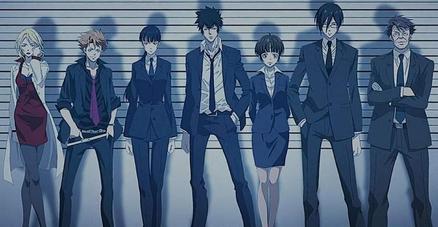
Psycho Pass & Psycho Pass 2


Number of Episodes: 22 & 11 (this review ignores the rerun 1st season compilation) and 1 movie

What Wipipedia says: The story takes place in an authoritarian future dystopia, where omnipresent public sensors continuously scan the mental states of every passing citizen. Collected data on both present mentality and aggregated personality data is used to gauge the probability of that citizen committing a crime, the rating referred to as that citizen's Psycho-Pass. Authorities are alerted whenever excessive ratings are detected, and officers of the Public Safety Bureau are dispatched with weapons called "Dominators", energy pistols that modulate their power in response to the target's Psycho Pass. The story follows Akane Tsunemori and Shinya Kogami among other members of Unit One of the Public Safety Bureau's Criminal Investigation Division.
 

What KoanMan says: Psycho-Pass is a detective/police action sci-fi that delivers on its brief. Supervising Director Katsuyuki Motohiro knew what he was doing when he employed the writer of Puella Magi Madoka Magica, the talented Gen Urobuchi. Interestingly, rather than give director Naoyoshi Shiotani artistic carte blanche, Motohiro gave him a brief to ensure everything they did could be adapted into a live action film. Well-read creator Tow Ubukata's story has been brought to life in a cohesive, well defined and complex plot. Arguments for and against the control of the state are played out in a dramatic style that keeps one coming back for more each episode.

Character development is organic, with personalities being revealed "on the job", as Investigators, Akane Tsunemori and Noguchika Ginoza direct their attack dogs, the Enforcers, primarily Shinya Kogami. They track their villains through a Sibyl-sanitised, and somewhat frightening, future Japan throughout seasons 1 and 2, and venture overseas in the movie. The apt name may be an acknowledgement of the multiple personality book and 1976 movie, "Sybil". The references do not stop there, with everyone from Plato and Marcel Proust to George Orwell and the Bible, getting a look in. Characters are believable and dedicated, and present their part of the story's societal comment with very few light-hearted moments, which might make this intellectually heavy for some. Good news is, there is plenty of action if one prefers to sit back and simply be entertained. 


How About the Music? Opening and closing credits music is great in series 1 and the movie, though sound director Yoshikazu Iwanami may have gone a little too heavy with series 2. Otherwise, the music throughout is well suited.

So How Does it End? (Spoiler free): Both seasons 1 and 2 end satisfactorily though there is still enough in this rich world for more.

Overall Grade: A thoroughly enjoyable series, on so many levels. KoanMan gives Psycho-Pass a well-earnt A.

Addendum by tTPO: tTPO agrees. This is a series dense with ideas but with a distinct identity from Ghost in the Shell, probably its nearest comparison. There are some genuinely tense and shocking moments, moreso in season 1 for me, which I think mark a quality production. Season 2 was a bit weaker than season 1, but still well worth the time watching. A-.


Saturday, 10 October 2015

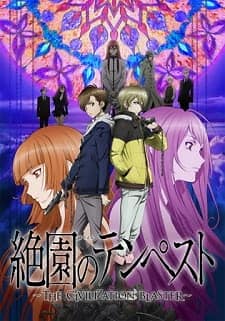
Zetsuen no Tempest

 aka Blast of Tempest


Number of Episodes: 24

What Wikipedia says: "The story revolves around Mahiro Fuwa, a teenager whose sister was mysteriously murdered one year before, and his friend Yoshino Takigawa. Mahiro is contacted by Hakaze Kusaribe, the leader of the Kusaribe clan who was left stranded on an unknown deserted island by her followers, and agrees to help Hakaze in exchange for her help to find out the culprit for the death of his family. Upon learning of his friend's intentions, Yoshino joins him on his quest to stand against the Kusaribe clan who intends to awaken the "Tree of Exodus" whose power can bring ruin to the entire world. 

Several dialogues and plot elements in Zetsuen no Tempest pay homage to two works of William Shakespeare, Hamlet and The Tempest, which are two stories about retribution, albeit with completely opposing outcomes."

KoanMan says: Logic, magic, and really powerful trees. This series is an interesting tale of two average high school friends, Yoshino Takigawa and Mahiro Fuwa, that find themselves tormented by the murder of Aika Fuwa. Events then escalate from normal to holocaust as magic is used as a weapon in the war between two trees representing opposing philosophies on human civilization and its future. The boys are quickly introduced to Hakaze Kusaribe, the princess Mage of the Tree of Genesis.

There is a lot of time for characters to develop, although most characters have an unusual quirk somewhere in their make-up which adds a little light-hearted fun to proceedings.

Logic is a central pillar of the story, and besides magic, mostly holds up. Dialogue is important, with one discussion spanning several episodes. It is so well done, KoanMan barely realised until 3 episodes into this conversation that it was one conversation. The pace is a little on and off, and the story is a little disjointed, although overall the story ebbs and flows well. Plot is convoluted though does follow a solid central direction.

How About the Music?
Music is OK, with opening and closing credits music quite average, however, the inclusion at times of selected classical music pieces added greatly to the mood. This was not consistent enough throughout the series for KoanMan and this could have been a stand-out feature if done well.

Special mention goes to Michiru Oshima for his orchestral arrangement of Beethoven's "Tempest (mvt 3)" - fantastic. 

Overall Grade: KoanMan liked this series, and it gets extra marks for keeping interest throughout some very long blocks of dialogue. Zetsuen no Tempest gets a B. 


Addendum (by tTPO): Both tTPO and Mrs tTPO like this series a lot. The long slabs of adversarial dialogue taking place in small areas that punctuated the series had more ebbs and flows than many many more physical fights and as such made a refreshing change for the medium. It really did reflect the theatrical themes on which the story was based. The plot was complex without being too complex or self indulgent and the only letdown for tTPO was the inevitability of main conclusion which was not bad by any means, but given the excellent journey to get there was just not quite as good. 

Blast of Tempest gets a B from us too. 


Tuesday, 10 March 2015

Nanana's Buried Treasure

aka Ryūgajō Nanana no Maizōkin

Number of Episodes: 11

What Wikipedia says: On the "Special Student Zone" artificial island – Nanaejima, the story centers on a beautiful, optimistic, but NEET (not in education, employment or training) girl Nanana Ryūgajō, who was mysteriously killed in her own apartment.
Ten years later, a boy named Juugo Yama was forced to transfer to a high school on the island. With only a certain amount of money to live on, Juugo chooses a low-rent apartment that happens to be haunted by the ghostly Nanana, who is bound to her former home and unable to move on. Juugo and members of the school's adventure club join a "treasure hunt royale" on the island for the Nanana Collection, treasures that possess mysterious powers.

tTPO says: This is just a disappointing series. Maybe the whole thing was designed as a glorified advertisement for the light novels but if that was the plan I still don't want to read them. Even if I could read kanji. So what were the problems? For me it was probably two things - the treasure-of-the-week format (tough to avoid when this is the central tenent of the show),  but mostly the fact the series not only went nowhere after 11 episodes, but had time to put in distracting side plots in that trip to nowhere.
You would think, when plotting out an 11 episode anime that someone may have said "Hey, we only have 11 episodes here. We had better keep things tight." I am pretty sure this conversation never happened.  
On the upside, the characters are not all cookie cutter cliches, including the somewhat conflicted protagonist Juugo. It was this, as well as the (vain) hope there would be some form of resolution for Nanana that kept me watching.

How About the Music? Meh. 

So How Does it End? (Spoiler free): In desperate,desperate need of more episodes to give the plot some semblance of  resolution.

Overall Grade: Better than Amnesia, but still a D. A second season to pull this together may result in a revision but till then, still a D. 

Sunday, 1 March 2015

Sora no Woto

aka Sound of the Sky


Number of Episodes: 12 + 2 OVAs

What Wikipedia says: "Sound of the Sky revolves around a young girl named Kanata Sorami who is inspired to join the military after witnessing a rendition of "Amazing Grace" by a mysterious trumpeter of the Helvetian Army. Becoming a bugler, she is assigned to the 1121st Platoon stationed in the town of Seize in Helvetia, where she is taken into the care of 2nd Lt. Filicia Heideman, M/Sgt. Rio Kazumiya and the rest of the 1121st Platoon. The story takes place in a post-apocalyptic world after a great war regressed humanity's technological capabilities back to early-to-mid 20th century standards."

KoanMan says:  KoanMan thoroughly enjoyed this short and sweet series. The characters are well developed, and interact well, with well defined personalities and the right amount of cohesion and abrasion between those characters, while they are all still "comrades".

The plot is at once simple, and complex, with a depth to the storyline and the world in which they live that echoes well beyond the last episode. One wanted more, and certainly there is plenty of room in this new world for another series.


How About the Music? The music is simply great. The production team did very well integrating an esoteric suite of music that must have involved a very broad musical knowledge, or extensive research at the very least. Superb.


So How Does it End? (Spoiler free): Very satisfactorily. If in a slight rush.

Overall Grade: KoanMan rates this an A.

Addendum (by tTPO): This series felt more like a long movie than it did a series. The production values were outstanding, the detail of the city stunning, (as KoanMan said) the music, which is fundamental to the series, is outstanding, and the backstory of the world at once both epic and also unknowable. As with the characters the details of how the world got to be as it is now have been lost and as viewers we can only guess these details that are hinted at. In some series this would be frustrating but in Sora no Woto not so much, even with musicians inexplicably taking over as the mainstay of military communicaton (over say flags, or lights, or any other more efficient means of communication that may not get drowned out by the sound of war). It just doesn't matter because thats just how it is. Overall, the series is to a large extent a slice of life series which acquires a plot towards the end. Some may complain it all happens a bit fast but its all there and the OVAs return the series to its somewhat more innocent roots. Amazing Grace has never sounded so simple nor so good. Grade A.

Sunday, 5 October 2014

Little Busters! + Little Busters! Refrain + Little Busters! EX

Number of Episodes: 26 + 13 + 8

What Wikipedia MyAnimeList says: "When tragedy struck Riki Naoe as a child, he was rescued from grief over his parents' deaths when four other kids "recruited" him for their group—the "Little Busters." Now in high school, Riki and the other Busters are still fast friends, and though their vision of being heroes for justice may have faded, they'd still do anything for each other. Which is why Riki is now on TWO special missions. The not so secret one: recruiting new members so the Busters can form a baseball team. Preferably FEMALE recruits, as the current dude/babe ratio is an inconvenient 4 to 1. The OTHER mission, though. That's the strange one. Because Riki and Rin, the group's singular girl, are receiving odd messages, delivered by cats, concerning the existence of a "secret world" and assigning them tasks they have to complete. Were their youthful dreams of being crusaders not so fanciful after all? Or is there something even more vital at stake? Between steeling his courage to talk to girls, dealing with his own narcolepsy and facing his feelings concerning Rin, Riki may just need the strength of a superhero to solve the ultimate mystery of the Little Busters!"

What TTPO says: It's hard to know where to start with this series. In the past I seem to have been a little plagued by some really good anime series with disappointing endings, which inevitably leave just a little sour taste in the mouth afterwards. Little Busters! turns this around. The first 26 episodes are really just a pretty average setup for the next much more emotionally intense 13 (Requiem) leaving the 8 OVAs (EX) the icing on the cake. And this is where the problem lies - can the TTPO really afford to get through 26 episodes which are by and large just average to get to the meat of the series? 

Well, there is a large cast and it took most of the first 26 episodes to just introduce and spend enough time with them to then care about what happens in Requiem. Which is important, because as with many of Key's previous productions (this show is also a visual novel adaptation) there is a fair amount of hardship the characters go through before they (and I) got to the end, and this improved the emotional payoff. Bittersweet is a good word to use to describe this, and is a word I will shamelessly use again in this review. The other good thing about the characters was they were all distinct - I did not have to try too hard to remember who did what in the mini-arcs that make up the first series. There are implied harem overtones to the story but these are not well developed nor are the focus of the story.

The OVAs are an interesting bunch focusing on 3 side characters from the main story with 3 mini-arcs that occur variously before and after the events of Refrain. While in no way essential to the plot they flesh out the world and these characters well, and I generally preferred them and their far more focussed nature to the character overburdened original series. 

How About the Music? The music is largely by Jun Maede and once again he manages to create music that is catchy without being trite, and still manages to trigger a near pavlovian response of bittersweet emotions associated with the series. The OP ("Little Busters!" by Rita) and ED ("Alicemagic" by Rita) are standouts, and almost up the the standard of the music of Angel Beats. Note quite though. 

So how does it end? (Spoiler free): As previously stated the events of Refrain which is like one long ending to the series are what make the series are good as it is. Very satisfying indeed. 

Overall Grade: If you had plenty of time of your hands I would give this a B or maybe a B+. But half a good series does not a good series make, even when it is the most important bit that is good. So in answer to my own question above, no I don't think I can in good faith recommend this if you are time pressed, and for that this will be the series probably remain the series I will have enjoyed the most to ever get a D.

Wednesday, 6 August 2014

The Melancholy of Haruhi Suzumiya + The Disappearance of Haruhi Suzumiya movie

Number of Episodes: 24 + movie


What Wipipedia says: "The story follows the narrator and male protagonist Kyon, a cynical and incredulous student entering high school who is dragged along by the title character and female protagonist Haruhi Suzumiya (who is Kyon's classmate). She is an eccentric girl seeking supernatural phenomena and figures such as aliens, time travelers, and espers. With Kyon's reluctant help, Haruhi establishes a club called the SOS Brigade, to investigate mysterious events. Haruhi later recruits three additional members: the laconic bibliophile Yuki Nagato, the shy and timid Mikuru Asahina, and the extremely friendly transfer student Itsuki Koizumi. These members soon reveal themselves (to Kyon) to be the types of extraordinary characters that Haruhi is seeking. The three additional members have been sent by their various organizations to observe Haruhi, who is unaware of her own destructive reality warping powers and to prevent these powers from being unleashed. This leaves Kyon the task of maintaining the illusion of a normal life for Haruhi."

KoanMan says: KoanMan watched this series in the broadcast order, which meant some initial confusion re plot and characters. Starting with the least watchable episode straight up meant that if one did continue onto the next episode, it was all good from Ep2 onwards. In the end, watching in this way did make it a more interesting watch, as one felt just a little behind the storyline, trying to keep up with changes in direction that at the time presented as totally random. In retrospect, they still seem a little random, almost like they threw the episodes into a hat and let chance reveal the next episode. Character development did, however, seem perfectly done this way, so there must be some "method to the madness".

On that note, KoanMan found the characters difficult to associate with early on; the whining and sedentary Kyon, the OTT Haruhi Suzumiya, the uber-quiet bookworm Yuki Nagato, the "yes-man" Itsuki Koizumi, and the cutesy mascot girl Mikuru Asahina. Unusually, for KoanMan, all these characters grew on one, to the point where even Ep12 to Ep19 [Ttpo: that would be the infamous Endless Eight episodes] were watchable! Far more so than Straight Title Robot. The reader will know what this means by Ep13, suffice it to say that Ep13 to Ep18 could have been condensed by more brutal editing, however, this would beg the question....Would it have been the same series? Would it have had the same impact? The jury is out at this time.

The movie certainly had a far more cohesive plot and better direction to the story, most likely as it was based on The Disappearance of Haruhi Suzumiya, the 4th in a series of light novels by Nagaru Tanigawa. Thoroughly enjoyable, but do watch the series first.

How about the music?: The music was OK for the first few episodes, then the same music seemed to get better, and by the end, the very same music was something I looked forward to each episode. How did this happen?

Overall Grade: Between the unusual jumbling of episodes, well out of the story's chronological sequence, the mysteriously improving, though unchanging, music, and characters that grow on you, coupled with good delivery of a good story mean that series director Tatsuya Ishihara, and movie directors Tatsuya Ishihara and Yasuhiro Takemoto have done well.

KoanMan gives these series and movie a collective A. 


Ttpo says: This series is not perfect but is brilliant. The fan service gets a little grating sometimes and the bullying of Mikuru occasionally a little uncomfortable. But these are minor gripes in a series that balances big questions in a deep world spanning mystery with day to day slice of life triviality with seeming ease. I loved the music (esp OP1, OP2 and insert song God Knows), and also the cheesy (and the oft mimicked) choreography over the ED1 (see here in live format by the seiyuu).

There are some very brave directional issues that KoanMan has already pointed out but these serve to further differentiate this series from the also-rans. The movie is everything good about the series in slighly higher resolution and is excellent from beginning to end, though without having first seen the series much would be lost to the casual viewer. An A for sure.

Saturday, 30 March 2013

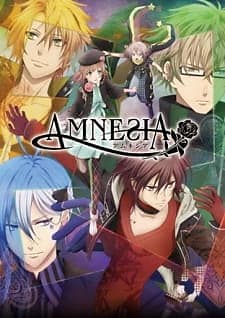
Amnesia


Number of Episodes: 12

What Anime News Network Wikipedia says: "A girl wakes up after having collapsed with no memory of who she is with a spirit that only she can see for company. No-one can know that she has amnesia is it made evident that it has not been caused by her body or mind. The heroine, surrounded by handsome gents in the cafe she works at, must piece together her life with the help of her spirit companion."

tTPO says: And so it begins. It seemed interesting enough. Until you realise the main protagonist is not getting her memories back, and remains vague, distant and amazingly uninteresting for nearly all of the show. Ironically enough, the male (harem) characters all tease us with the fact she is not as lively as she used to be before she lost her memories. Sadly we never get to see that potentially involving character we may have had some empathy with.

The five main male characters have at least a little depth to them. Bar one though they are all pretty unlikeable because they are either extradimensional and impotent, or have a varying degree of psychological pathology. The only sane guy (Ken) gets shoveled into a single episode only. 


If I was being kind I would say the character design was a bit interesting, especially the eyes. And the Clamp style elongated characters. But that's hardly a reason to spend 4 hours watching the series.

How About the Music?: There is a bright light here. The OP ("Zoetrope" by Nagi Yanagi) is actually a bit of dark powergirl rock that may be the next most interesting thing in the series aside from the drawing of the irises. The ED ("Recall" by Ray) is from the same genre but doesn't work as well as the OP. 


So How Does it End? (Spoiler Free): Awfully. Never before have I seen such a literal use of deus ex machina. It is a resolution. But a very bad one.

Overall Grade: This is a series that sucks you in at the beginning, hoping there may be some development. But there isn't. Amnesia flips you the bird and you will never get that time back. Grade D. Just execrable. 

Saturday, 12 January 2013

Phi Brain: Puzzle of God

  
Number of Episodes: 25 + 25 (second season)

What Wikipedia MyAnimeList says: "Kaito Daimon would be a completely average high school student except for one thing: he's a 'demon' at solving puzzles. Kaito is so brilliant, in fact, that when he's asked to take some 'special' tests of his unique ability, he immediately suspects that the test itself is a test. Kaito suddenly finds himself caught up in a lethal Philosopher's Puzzle made by the sinister group POG, a murderous maze of trap upon trap, where failing to solve the secret correctly will result in death! Fortunately, Kaito's skills prove up to the first test, both for himself and his childhood friend Nanoha, who is also caught up in the deadly scheme. But now that he has been designated as a Solver, he is pulled into a new life where he must travel the world with other Solvers, attempting to solve the latest deadly riddles left by POG. There's a new conundrum around every corner and each deception could lead to death, but once a riddle has been posed, you can count on Kaito to unfold, unravel and unlock it!"

tTPO says: Phi Brain was a series that caught us out. It had some initially interesting characters, and the puzzles presented were imaginative (albeit outrageously unrealistic) and always seemed on the verge of going somewhere and then just didn't. By the time we thought it probably wasn't worth following it was too late and then we just watched through to the end to see what happened. And then got disappointed. As somewhat of a joke we then skipped the entre second season and just watched the last episode of the second season, only to find that with the exception of of a couple of new bad characters (who more than resembled the bad characters from the first season) almost nothing else had changed. In 50 episodes the characters in Code Geass changed the world. In 26 episodes the characters in Neon Genesis changed the world.  In 50 episodes of Phi Brain the most that changed was Nonoha's hairstyle. It made me very happy we did not bother with season 2.

How About the Music?: The OP ("Brain Diver" by May'n) is a bit of an rocking ear worm, and having seen the video for this there is little doubt that this song, especially the full version, is better than the show it precedes. The ED ("Hologram" by Natsumi Kiyoura) is also not a dud and a pleasant bit of brassy acoustic pop.

So how does it end? (Spoiler Free): Season 1 ended like there was going to be a season 2. The smaller story was wound up and the big story kept going. Season 2 wound up much the same way. Unsatisfying, and with a near complete hit of the reset button, all ready for seasons 3-569 where nothing else happens either. Am I being unfair? No.

Overall Grade: Phi Brain is not craptacular in a Guilty Crown kind of way, but still manages to kill the viewer in a death of 1000 cuts by taking so long to go not very far. D. Unless you really, really, REALLY like puzzles.


Tuesday, 26 June 2012

Dusk Maiden of Amnesia

aka Tasogare Otome × Amunejia


Number of Episodes: 12

What Wikipedia says: "The story revolves around a first-year middle school student, Teiichi Niiya who had just enrolled at Seikyou Private Academy. When he gets lost in one of the school's old building, he meets a girl named Yuuko Kanoe who reveals herself as a ghost with no memories. Teiichi then decides to investigate her death by looking through the school's seven mysteries revolving around her. Throughout the story, Teiichi and Yuko discover the truth about these ghost stories and help those who are troubled."

tTPO says: I must admit I was a bit unsure of this series when it started as it didn't really seem to know where it was going initially - comedy was mixed in with gratuitous fan service next to the romance, suspense, mystery and mild supernatural horror. However Mrs tTPO and I stuck with it and were glad we did. As the series progressed and more was revealed the plot and the feel of the show came more coherent, focusing more on the main characters and plot. In the process of doing this it lost much of the trivial fan service and comedy (though not quite) and gained more drama and atmosphere. The pacing at the end was pretty good and I am glad this was not a 24 episode series.

How About the Music?: The OP (Choir Jail by Konomi Suzuki) comes from the Evanescence / Paramore school of rock power ballads with female vocals. This is not my favourite genre but dammit if the song is not a) appropriate and b) a bit catchy.

The ED (Karandorie / Calendrier by Aki Okui) has a folky village waltz feel to it, and reminded me an awful lot of the opening theme to Spice and Wolf (Tabi no Tochuu). This is not necessariy a bad thing though (and I may be biased here) I felt the waltz time probably suited the medieval feel of Spice and Wolf better.

So how does it end? (Spoiler Free): As well as it possibly could have. The ending carried significant emotional weight and was consistent with its own internal logic, and I don't think you can ask for more than that. Though we were left thinking whether the final outcome was actually going to be the best outcome for Teiichi long term.

Overall Grade: This was another series that got a boost from a good ending. Despite the slightly wacky initial pacing and feel, stick with it - the latter half of the series more than makes up for it. Mrs tTPO and I agree: Grade B.

Monday, 23 April 2012

Another


Number of Episodes: 12 + OVA Prequel

What Wikipedia says: "In 1972, popular honors student Misaki died partway through the school year in Yomiyama North Middle School’s class 3-3. The rest of the students and teachers, devastated by the unexpected loss, decided to carry on as if Misaki were still alive, going so far as to keep the desk in the classroom and bringing it to the graduation ceremony. Yet no one could explain why Misaki was present on the graduation photo, deathly pale yet smiling with the rest.

In spring 1998, 15-year-old Kōichi Sakakibara arrives in Yomiyama from Tokyo, to stay with his grandparents while his father works in India. He transfers into Class 3-3, but misses the first few weeks by a pneumothorax of his left lung. While in the hospital, he receives a visit from some of his new classmates. Later, he meets a mysterious girl wearing the school uniform and an eyepatch, named Mei Misaki, who seems to be visiting the morgue.

Once recovered, Kōichi goes to school and tries to adapt. His aunt Reiko, a teacher at Yomiyama North, gives him a few pointers, but, like his peers, remains evasive when it comes to their behavior towards Mei, whom they treat as if she doesn't exist. Kōichi is further confounded by the air of mystery around Class 3-3 and its isolation from other classes, even practicing P.E. separately.

Tensions suddenly rise when one of Kōichi's classmates, Yukari Sakuragi, slips while running down the stairs and dies, impaled on the sharp end of her umbrella. This is one of many deaths related to Class 3-3 which have Kōichi and his friends Mei, Naoya Teshigawara, Tomohiko Kazami, and Yūya Mochizuki, trying to unravel the mystery of 1972’s Misaki and the senseless "Curse of Class 3-3"."

What tTPO says: This series is horror done (mostly) right. The heavy atmosphere and sense of suspense and forboding (think "The Others") dominate the majority of the episodes (even the beach episode which was an achievement in itself) and I mean this in a good way. It opens with several anime and horror genre cliche's that left me wondering about the substance of what was to follow but fortunately most of these were quickly subverted. What did then follow was a well paced unfolding of events and characters with deliciously gradual reveals that slowly built up the fairly detailed plot that had me looking forward to the next episode. The mechanics of the curse I found generally consistent and understandable (though this blog is handy if there are any bits you miss) though I can't say this was always the case with repect to how it affected human behaviour. Some things apparently you just have to go with the flow. You'll see what I mean starting the end of episode 6.

How About the Music? If I close my eyes and listen to the OP (Kyoumu Densen by Ali Project) I can just imagine I am listening to the ED1 of Code Geass (Hero Youth Song, strangely enough also by Ali Project). This is not really a good thing. Ali Project should learn to write another song. Or maybe not since they have probably got some good pocket money from having done the themes to two different animes.

The ED ("anamnesis" by Annabel, though I am unsure of what a medical history has to do with the series) on the other hand is a perfect choice and captures the sadness of the series perfectly. Win. 

So how does it end? (Spoiler Free. Mostly. You are warned.): And now to the Achilles heel of the series. I have read some other reviews that thought that the ending of the manga was not as good as the anime. I have to disagree. That is not to say the ending is bad because the plot is pretty well resolved (with a recap on the clues in case you missed), but the feeling of the series goes from atmospheric horror, to slasher. Some characters die that really don't have to, and at least one characters death which is left pleasantly ambiguous in the manga is clarified in the anime, but ironically this just lead to more confusion (to me at least). And for a series that is so dependent on its tone and had executed the tone so well it is all a bit jarring for a series that was near perfect to that point.   :(

Overall Grade: Grade A-. If they just got the tone of the ending right this would have gone an A. So very close. Watch it anyway. Then read the last few episodes of the manga. 


(Addendum: Watch the OVA prequel. While this does not fix the ending issues it does flesh out very nicely where this all started. More of the good stuff and worth watching afterwards.)

What KoanMan says: It has been a while since KoanMan indulged in a good ghost story and "Another" is just that. The plot is a little light-on and moves slowly, although the body-count certainly helps distract from that. There is blood - and regularly.

However, the stand-out feature of this series is the mood. The director has used every trick in the "spooky" book to generate a great atmosphere, which continues throughout every episode. The music is great, and with exceptional sound effects, adds to the experience. The whole team has put in some serious effort here and it shows.

The characters could have done with more development, and with more clues could have been a mystery as well. The clues are there, although they were easily missed. Even in retrospect, they are sparse.... It would have added another dimension (pardon the pun).

The story is cohesive and finished well. A good watch without going overboard on the ghost theme - this type of story can be overdone though this was not the case here.

"Another" came very close to full marks, and with more plot and character development it could have been there. KoanMan gives this a solid B.  

Friday, 20 April 2012

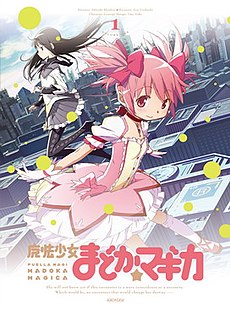
Puella Magi Madoka Magica

aka Mahō Shōjo Madoka Magika, Magical Girl Madoka of the Magus
Number of Episodes: 12

What Wikipedia says: "In this world, there exist strange creatures who have the power to grant one wish to a chosen girl. However, in exchange, that girl must then become a magical girl and use her powers to fight against witches, evil creatures born from darkness that are responsible for murders and suicides.

In the city of Mitakihara, a schoolgirl named Madoka Kaname and her friend Sayaka Miki are approached by a familiar named Kyubey, who offers to grant each of them one wish in return for making each of them a magical girl. Another magical girl named Homura Akemi tries to prevent Madoka from making such a deal, while Kyubey urges Madoka by telling her she will become the most powerful magical girl. However, contrary to the glamorous notions one would expect, a magical girl finds herself dealing with death, isolation, loss of humanity, agony over the value of her wish, and existential crisis. Madoka, following her friends, soon sees the darker side of being a magical girl, and because of knowing the truth about being a magical girl, she questions if she should become one as well."

What tTPO says: Holy crap. Just finished this and my mind is melting with the goodness of this series. For tTPO anything this good crammed into 12 episodes where the pacing never faulters is a great start. It seems that each episode has a reveal of some sort that changes the direction of the whole series and to keep this up for the whole series is just amazing. It really is a masterclass in pacing. 

Some anime series leave a lot to the imagination and for the viewer to do the work (see Mawaru-Penguindrum). This is not one of those series and it goes to great lengths to make sure (maybe with the exception of the last episode) the viewer knows what is going on. Usually not at the time you see it, so you still have time to puzzle it out yourself, but eventually most things are explained well. And boy does the plot all tie together nicely. Even the 'physics' of the show. I liked that. 

The animation of this was also facinating. On one hand you get the impression that the budget for this show was not a lot (I have no idea if this is the case or not) but what they did with artistic vision and imagination was just stunning, making this (in my limited experience) a unique visual presentation for the genre and anime generally. 

Lastly there is the feel of the show. Many other reviews talk about the deconstructive nature of this series and it is just so true. It really does dismember the magical girl genre in the face of 'reality' methodically and brilliantly. For me it ended up with the same sinking feeling as Watchmen when I first saw (then read) it. I am guessing the core themes of the superhero genre and the magical girl genre are not so far apart. 

How About the Music? The OP (Connect by ClariS, and while a video is hard to find this one is particularly awesome) is a fully serviceable bit of J-Pop that I think is improved by the series it fronts. Usually its the other way round but I do like this song. While on that note the opening credits are amusing in that they are typical for the genre but really only serve to lead the viewer astray as to the direction of the series. ED1 is a light J-pop song but only last 2 episodes before the series and the EDs tread a darker path. The ED2 (Magia by Kalafina) is a lot more epic in an emo-rock kind of way but did not work quite so well for me. ED3 (And I'm Home by Ai Nonaka & Eri Kitamura) only lasts a single episode (#9) but for me is the pick of the EDs. And then someone slowed it down by 8 times thus producing shoegaze epic which sounds even better (and uncannily like Slowdive). Who would have thought?

So how does it end? (Spoiler Free):  I did wonder how the hell this was going to end and they managed to do it on an epic scale in a way that actually made sense within the context of the story, and was not just a big hit of the reset button. In a strange way it ends up establishing the typical ground rules for the genre it deconstructs. If I had a complaint though it would be that the epic nature of the ending made it just a little less personal and consequently less involving with the characters we knew and loved. But that is a very minor complaint.

Overall Grade: Grade A. Ignore that fact this seems to be a show about magical girls. Just watch it. I'm talking to you Beukesy and Koanman. 

Addendum by Koanman:  Every now and then, a series provokes genuine thought, and this series is one of those.  It is nothing short of majestic in its scope.  It challenges the idea of universal morality, or confirms natural amorality, depending on your stance.  This series was riveting from start to finish, with interesting new additions to the plot constantly keeping things on the move.  The visual effects are second to none, at times disturbing, and yet appear fashioned from the simplest animation techniques. 

Madoka Kaname and her side-kick Sayaka Miki are super-sweet personalities, luckily balanced by some sincerely dark undertones.  Which brings us to Homura Akemi, who is a more interesting character that really does take the entire series to fully develop.  This is a real personal-power story, incorporating beautiful images at some times, and superb portrayals of anger at others.  There is a lot that one can associate closely with in this series.  It gets an A.

Wednesday, 11 April 2012

Kamisama Dolls


Number of Episodes: 13 + 6 bonus mini-episodes

What Wikipeda Anime News Network says: "
Kyouhei Kuga is a young man who has left his small hometown to escape from its anachronistic rules and traditions. He wants to try a new life in Tokyo as a simple university student. In the past he was a seki, title given to individuals who are able to control the mysterious kakashis. Considered as gods in the small Karakami village, the kakashi are ancient wooden wonders able to perform incredible feats. The escape of a seki from the provincial town abruptly brings to Tokyo a handful of other seki who are searching for him. Despite being so far away, Kyouhei is still haunted by the old laws and hatred between the two main families, the Kuga and the Hyuga."

tTPO says:
This series actually has a pretty interesting premise, and a bunch of good characters whose backgrounds and motivations are well explored. Well, except for one particularly annoying female but even her motivation is pretty clear. Where it all somes to pieces is the plot (such as it is). It just rolls along with events just sort of flowing into each other without any clear direction. Instead of a beginning, a middle and an end, it ends up being a middle, a beginning (told in pieces and probably the most interesting bit), followed by more middle, finally disappearing up its own backside in a series of amazingly irrelevant (even by their generally low standards) two minute 'specials'. Even the fanservice was unimaginative.

Yet another plot annoyance was that, given the initial secrecy associated with the dolls, there are a number of extremely public doll battles in and over Tokyo of which there seems to be no public consequence.

How About the Music?: The OP, "Fukanzen Nunshou" by Chiaki Ishikawa (this link is a fancover but finding the original is rather hard) is a refreshing flamenco piece, and significantly better than the series it fronts. The ED I struggle to describe aside from being interesting and no J-pop or rock. Worth a listen. And also better than the series. 

So how does it end? (Spoiler Free): Not well. This series can be added to the unfortunate group where there is little resolution to the story and if you get a second series (good luck) then you may or may not get some sort of satisfaction.

Overall Grade: 
Despite initial appearances, there is no satisfaction to be had with the plot or ending here, only frustration at what could have been. Of course if there is a second series I may need to re-evaluate this. I'm not holding my breath. And I'm not bothering with the manga. Grade D.

Tuesday, 21 February 2012

Mawaru-Penguindrum


Number of Episodes: 24

What Wikipeda says: "A terminally ill girl named Himari Takakura is miraculously saved from death by a strange spirit who resides in a penguin-shaped hat. However, in exchange for extending her life, the spirit tasks Himari's brothers, Kanba and Shouma, to seek out an item known as the Penguin Drum with assistance from a trio of strange penguins."

tTPO says: This series is very intelligent, steeped in philosophical ideas, chock full of symbolism, surreal, and just generally brilliant. It is a bit like a Dali painting in this respect, but herein lies the problem. While I appreciate Dali, I would be lying if I knew everything he was trying to communicate in his pieces. And it is much the same for me and Penguindrum. It just asked too much of the viewer, especially the time-pressed one.

While the core themes of the series (fate vs self determination, love vs loneliness) are definitely made clear early on, it takes about 13 episodes before we have a good idea what the actual plot of the series is actually about. And 13 episodes is just too long before getting some answers - I just felt I wanted a few answers before being barraged with more questions. Frustrating. I have no doubts there were subtle clues being dropped beforehand, and would fully expect a second go through the series would be quite a rewarding experience once you know what is happening. But for the tTPO a second run though the series is just not a reality.

Having said all that, the animation itself is clean and crisp. The characters are interesting, travel their own roads and develop well through the series. There was even a constant stream of background humour (which lighted up an otherwise quite dense series) with both the penguins and the public notices on the trains.

How About the Music?: Along with all the other production values the music was by and large great. The flavour of the music was interesting and reminded me very much of French pop, even though it was in Japanese. The EDs were different many weeks (there were 8 all up) and most of them were pretty good. Thankfully there were only 2 OPs, and while both good I liked the first one
("Noruniru" by Etsuko Yakushimaru Metro Orchestra) better than the second ("Boys, Come Back to Me" also by Etsuko Yakushimaru Metro Orchestra)

So how does it end? (Spoiler Free): Given the flavour of the show the ending could have been left hanging. Instead we get something that is emotionally satisfying and resolves more than a few plot points. Though not all. And if it did I would have been disappointed.

Overall Grade: The series has certainly polarised the blogosphere and for me will likely be the best ever series to get the worst recommendation. To get the most out of this you would likely need a good background in the arts and philosophy (or you could just look here or here), and enjoy your surrealism and symbolism. In this case you may call this a B and or even an A. But for the rest of us there is not much satisfaction in early part of the series, and we would probably need to watch it twice to get the most out of it, and do some research along the way about the symbolism. The TPO just does not have time for that.  Grade D.

Saturday, 22 October 2011

Denpa Onna to Seishun Otako


Number of episodes: 12 + OVA 

What Wikipedia says: Not much in the way of a decent synopsis, but myanimelist.net says "The story revolves around a highschool boy named Niwa Makoto. He lives with his aunt’s family since his parents are away on business. It is there where he meets his mysterious cousin of the same age Touwa Erio — who happens to tie a futon mattress around her upper body and is a self-proclaimed alien. Her staple food is pizza. Erio had been missing for half a year and was found floating in the sea. She doesn't remember anything about what happened during that period of time, but she began to think that it was the act of an alien and wanders the neighbourhood wrapped in the futon."

What tTPO says:
This is an extraordinarily kawaii (cute) looking and feeling series, as well as being gorgeously rendered. The series opens with the setup above and this, along with the extra moe feel, hooked me and Mrs tTPO in quite quickly. With Makoto being the usual transfer student we soon get to meet with new characters at the school and in the neighbourhood. In tune with the overall kawaii-ness there is nary a bad bone in any of these character's bodies and while this may sound like it makes for flat characterisations, all the main & secondary characters have their own story to tell. This keeps the hooks in, especially with Meme, Erio's mother and Makoto's aunt, who turns out to have a surprising amount of depth. And breasts. Did I mention there was a bit of fan service here? All pretty harmless though. The girls all have a soft spot for Makoto but not much drama is made over this making it very much a 'light' harem series and not the focus of the story. Unfortunately the basic premise of the series slips away as it progresses, leaving us more with a slice-of-life feeling rather than plot driven series. This is only emphasised by the introduction of a new female character in the latter part of the series who just ends up posing more questions about the extra-terrestrial nature of the series.

How about the music?: The music in this show is evil. When I first heard the OP I was in awe of the atonality of the singing. A few listens later though and I could not get it out of my head and now I just love it. The ED is too cute for it's own good (up there but not quite as good as the Dango song from Clannad) but is just as catchy and appropriate for the show. 

So how does it end? (Spoiler Free):  Bizarrely, the major plotline introduced in the beginning of the series is completely left hanging, as are a few sideplots. What does get finished are some mini-arcs along the way, one of which is very neatly plotted, which just shows they could have done it if they wanted to. Frustrating.  

Overall Grade: Grade B (Near miss). Truth be told this is not too near a miss but I liked the music, characters, the setup, and the outrageously moe animation enough that somehow it rates a bit better than a C. If only there was some resolution to the original mystery, then godammit, this would have been an excellent series!

NB: There is an extra DVD only episode coming out December 21st. I am not getting my hopes up too high for some resolution.

ADDENDUM: Having watched the OVA now my love for this show comes flooding back. It does not provide complete plot resolution (though it does tidy up the final baseball mini-arc) and indeed adds some more questions to the original mystery (which was not forgotten after all!). But goddamit it does provide a degree of emotional resolution (for the viewer at tleast, though not Niwa-kun) to the series that was sorely lacking from episode 12. It remains the most kawaii moe-packed show of recent memory, and is gagging for a second series. Maybe still not quite an A but the OVA certainly improved things: Grade B (plus).