Showing posts with label Grade C. Show all posts

Wednesday, 24 July 2019

Saikano, The Last Love Song on this Little Planet

aka Saishuu Heiki Kanojo (translated into English as Ultimate Weapon Girlfriend)


Number of Episodes: 13

What Wikipedia Anime News Network says: Shuji and Chise are two Hokkaido high school students barely starting a relationship with each other. Then, with no warning, a squadron of bombers from an unknown country destroy the city of Sapporo. All hope is lost when suddenly, the bombers are destroyed by a small red light floating across the sky. At this point, Shuji finds out that the one responsible for eliminating the enemy forces is Chise, who reveals herself as a cyborg engineered for mass-destruction. 


What KoanMan says: This sounds like it would be great. It sounds like it would be packed with action. It sounds like a schoolboy's wet dream…

However… it is “sorry”, “dummy”, “idiot”, a little bleak, and more “sorry”. Much more “sorry”.

The take-home message: don’t judge a book by its cover. The feel of this series is dominated by the story-line, which meanders through the relationship of the main protagonists, high-schoolers Chise and Shuuji. Plenty is left out, and much is assumed as the plot plods along at a dreary pace. Brief glimpses of excitement are thwarted as the story is dragged back to its original pace, and yet it somehow flows steadily and consistently - just don’t expect to be thrilled by director Mitsuko Kase's anime rendition of Shin Takahashi’s manga.

The basic animation smacks of low budget, and possibly indicates a lack of artistic interest on the part of the production team (lead by Naoko Takahashi), although the artistic effects in the opening and closing credits were uncharacteristically well done. 

How About the Music? The music generally is average, and the music for the opening and closing were in keeping with the general mood, although those more musically attuned may find the 1/8th flat notes of the singer irritating, but it does add a little more to the disjointed feel generally. Perhaps sound director Keiichirou Miyoshi has achieved the desired audience response? KoanMan is unsure.

So How Does it End? (Spoiler free):  All endings are not created equal and while there won't be a sequel anytime soon, the ending perhaps lacks a little clarity. Reading the last chapter or two of the manga explains things a little more fully and is recommended. [tTPO]

Overall Grade: If you are after a borderline existential story that does not require adrenaline, then this could meet your needs. Despite the flaws KoanMan kept watching through to the end, indicating a certain something, perhaps the futility… ohhh the futility…

KoanMan rates this a C.

What tTPO says:  tTPO has a soft spot for romantic anime. What I have not said previously is I also have a soft spot for slow moving existential post apocolyptic romantic anime also, and Saikano fits this description. There is little to enjoy here as the glacial car crash that is this anime grinds to its conclusion, and yet like any car crash, I found it difficult to look away. The basic artwork (it was 2002 when it was produced) and muted colours that annoyed KoanMan I thought appropriate for this often emotionally cold production. 

Needless to say I rate it a bit higher than KoanMan, though Mrs tTPO would agree with him. I considered the possibilty I was wrong. Not possible though, is it? Grade B-.

Saturday, 24 November 2018

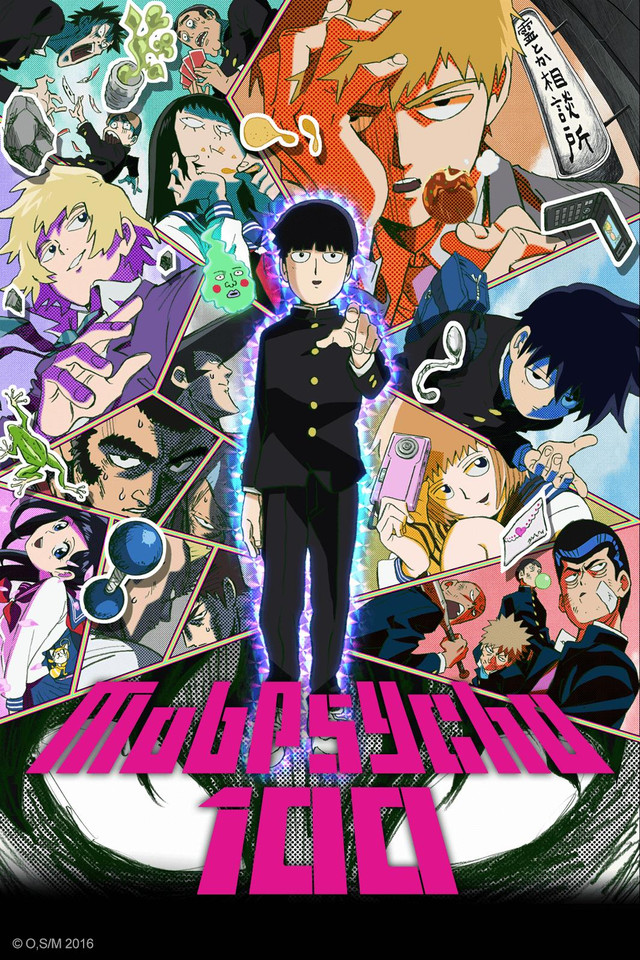
Mob Psycho 100


Number of Episodes: 12

What Wikipedia says: Shigeo Kageyama is an average middle school boy, nicknamed Mob (モブ Mobu) (meaning "background character") for lacking a sense of presence. Although he looks like an inconspicuous person, he is in fact a powerful esper. As he grows older, Mob realizes that his psychic powers are strengthening and becoming more dangerous. To avoid his power getting out of control, he constantly lives a life under an emotional shackle. Mob wants to live a normal life just like the others, but a barrage of trouble keeps coming after him. With the suppressed emotions growing inside Mob little by little, his power threatens to break through its limits.

What KoanMan says: "Mob Psycho 100", by Yuzuru Tachikawa and produced by ONE, is a similar style of animation to One Punch Man by the same, though visually a little rough. The storylines are vaguely similar, however they present different viewing experiences. Characters centre on Mob, who is a socially clueless super-being, who follows a meandering plot through his personal development. Lots of action and likeable, though shallow, personalities make this an enjoyable watch, without much brain owner required. 

So How Does it End? (Spoiler free):
Well rounded, but with plenty of room for season 2 (coming late 2018/early 2019).

How About the Music? The music is OK, and the Japanese phonetic counting in English in the opening credits song is very cute. 

Overall Grade: Mob Psycho 100 is an enjoyable, non-taxing, short series, and is a good way to pass time, with some great visual ideas. Koan Man gives this a C.
 
Addendum by tTPO: This is one of those series where KoanMan doesn't quite know what he is talking about. While this is no One Punch Man, it is no C either, either enough humour, action and originality (a rare commodity) to well justify a B.

Monday, 17 July 2017

Gangsta


Number of Episodes: 12+ 1 recap episode

What Wikipedia says: The series revolves around two "Handymen" who take on jobs for both the mob and the police force that no one else can handle. The two, named Worick Arcangelo and Nicolas Brown, work in the town of Ergastulum, which is full of mafia, hoodlums, prostitutes, and dirty cops.

What KoanMan says: As the name suggests, this is a story of mafioso, and the associated lifestyle, focussing on two men who have survived the rubble of their lives. They are “The Handymen”. Nic and Worick survive on their particular skills, which make them both dangerous and valued, thereby also requiring neutrality amongst the various criminal organisations…. Good storyline, and pace that starts slow, building to a climax...

So How Does it End? (NOT Spoiler free):  ...that does not ever happen.

The reader should be aware that Manglobe, the company that produced the anime, went bankrupt in late 2015. The series ends part-way through, at Ep 12. Just when it was really getting going…. To be clear, there is no end to the anime - just no more episodes. The manga will have to suffice, although the gods of fortune have not been smiling there either, as the author, Kohske, has been ill since 2015 and has not been able to continue the Gangsta manga since then.

Be that as it may, GANGSTA is an enjoyable watch was only marred by a few minor issues. The main points were repeated a few times early on, and the “recap” Ep 9.5 seemed redundant. Some animation appears to be of lesser quality. 


How About the Music? KoanMan found the music, by Tsutchie, to be spot-on for the sleazy underworld feel that series director Koichi Hatsumi was going for. 
 
Overall Grade: Interesting characters that develop well throughout, an intriguing plot, and interesting twists in the story-line make this abortive series worth a watch, though all more frustrating for the lack of an ending. KoanMan scores this a C, though with a complete series it may well have been a B or even an A. Who knows?….

Addendum by tTPO:  Grade D. It's not that tTPO did not like this series while it was there, but I cannot recommend the investment in viewing time without some sort of payoff at the end. The journey alone is good, but unlike say, Spice and Wolf (which KoanMan still needs to see), it's not enough to justify watching. Save your efforts for Black Lagoon or Darker than Black.

Tuesday, 22 November 2016

Miss Monochrome

Number of Episodes: 13+2 OVAs+13+13


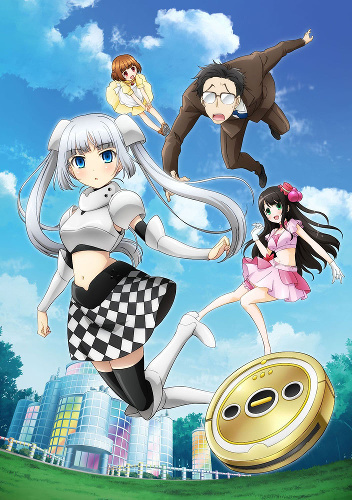
What tTPO says: Sadly in the absence of decent synopsis tTPO has to write one. Miss Monochrome is a reclusive android who, with the help of her loyal robotic vacuum cleaner Ruu-chan, starts working towards being a top-selling idol with only a superifcial idea of how to achieve this. Career challenges and often left-of-field hilarity ensures.

What KoanMan says: Miss Monochrome is the brain-child of Yui Horie, a voice actor and singer, and one wonders if the character travels a similar road to that of her creator, and indeed of many seeking fame. Endearingly dedicated and tireless in her per suit of fame and "standing out more", Miss Monochrome embodies the never-say-die, never-quit, onwards-and-upwards, just-keep-swimming....etc etc attitude that determines a successful human (and is critical to the path of the Japanese idol - tTPO). And three seasons attests to the popularity of such a figure. 


Episodes are short (4 minutes in season 1), although they lengthen considerably to as much as 7 minutes in seasons Two and Three. If you like short bite-sized episodes, then these tiny morsels are for you.

KoanMan is in two minds about this series. The story of dedication and persistence of a bland monochromatic in a world of colour is inspiring. It is also a bit "monotonous" (pardon the pun). KoanMan watched several episodes at a time, and perhaps this was not a good idea. Spacing them over time may help? Either way, the historical back-story has more interest than the main story line.

How About the Music? The music is also limited. If you like it, good, if you don't like the music, you will get to like it or not like it in every episode.

So How Does it End? (Spoiler free): With some resolution. But the story continues.

Overall Grade: It is good to watch if you don't want to think hard and have severely limited time. Overall, KoanMan give this a C+.

Addendum by tTPO:
Once again KoanMan just does not get it. The music is great catchy J-pop (yes I got the album) and the brevity of the episodes fits well with the simple idea not overstaying its welcome. As a consequence the unexpected backstory gives a bit more weight to an otherwise light anime. The occasional slightly surreal episodes with little regard for continuity are also a welcome break and put a smile on tTPO's face.
Maybe KoanMan got it right when he said this was not one to marathon too much. In any case a fast game is a good game in this blog. I give it a B. 

Friday, 16 October 2015

Flowers of Evil

aka Aku no Hana 


Number of Episodes: 13

What Wikipedia says: The story follows a middle school student named Takao Kasuga who's forced into a "contract" by fellow student Sawa Nakamura, after being caught stealing the gym clothes of his crush Nanako Saeki, and the series of events afterwards that follow these three characters. The title of the manga comes from Charles Baudelaire's Les Fleurs du Mal.

What KoanMan says: KoanMan has some mixed feelings about "Aku no hana". Firstly, it bears mentioning that the "rotoscope" technique used makes the look of this series unique. It is a method of animating real film images projected onto a frosted screen and originally each image was hand-traced to create the final animated image, although computer software has now been developed to convert images. Besides the style, it allows animation to present characters with natural movement, and it delivers here. A more more normal animation format was originally tabled, however, to allow the audience to focus on the story/characters and not the actors, director Hiroshi Nagahama used the rotoscope technique.

The story is itself unusual. The central character Takao Kasuga is a hyper-anxious, hyper-reactive, moronic simpleton who rarely thinks much beyond himself. If one can tough out the first few grindingly tedious episodes, the slow, agonising pace actually becomes tolerable, and almost unnoticeable by about Ep7. Sawa Nakamura is his rebellious muse, challenging him to confront himself and her perceived view of him, while Nanako Saeki is the muse he imagines inside his own head. The main characters are very well developed with a realistic approach. Other characters are not important to the myopic worlds of the main characters, and are not explored, not do they need to be.

How About the Music? Music at open and close is good, and is completely unrelated to the "Aku no hana" song released in 1990 by Japanese rock band Buck-Tick. In fact the opening and closing credits contain almost all the music in the series, and thinking back, KoanMan did not notice anything other than mood audio at any other time.

So How Does it End? (Spoiler free): After a dragging, painful start, the simple plot is executed with a storyline that somehow managed to keep KoanMan watching to the end. An interesting watch, more for the moods it engenders that had KoanMan reminiscing about the internal angst associated with teenage life. Ahhhhh, the angst...... Beyond that there was little in the characters to connect with, and perhaps the intent in this "Aku no hana Part 1" series is to do just that, or simply to engender the keen desire to strangle the characters? Not sure.

Overall Grade: Interesting, moody, different - gets a B. Laboriously slow and Takao is an imbecile - gets a D. 


It all adds up to a C.

Addendum by tTPO: tTPO liked this more than KoanMan and it is clearly going to be a polarising series for viewers. There is little doubt that Takao is a largely spineless fool, but doing dumb things, being self-involved and being bored is pretty much what teenage life is about. Whether watching this immensely slow car crash makes good television is debateable, but I found somewhat compelling the brave directorial decisions about the rotoscopy (which immediately put off Mrs tTPO), the universally unlikeable characters, the long stretches without dialogue (which peaked with an epic 8 minutes of nothing in Episode 8) and repeated views of the decaying town. I also appreciated the positively atypical depiction of largely functional and caring parents who, in contrast to most anime series, are actually at home and involved with their offspring.  

The OP /ED are worth a special mention as being quite disturbed and I think set the tone of the series well.

In summary: Interesting, moody, different. Laboriously slow and Takao is an imbecile. It all adds up to an A-. 

I can only hope there is a second season so I can see the wreckage finally come to rest. 

Wednesday, 12 March 2014

Straight Title Robot Anime

Number of Episodes: 12 (13:30 minute episodes)


What Wikipaedia says: 
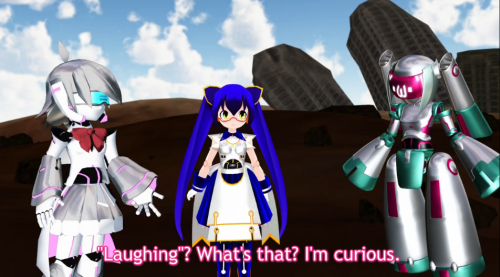
The story is set in the year Mobile Century 8013 where humans no longer inhabit the planet Earth. However, remaining military robots continue to fight for unknown purpose(s). Three non-combatant robots, Fuji, Kato, and Mori attempt to end the war that lasted for 7 millennia by investigating on human laughter.

KoanMan says:
KoanMan is not really sure about this series. It is definitely not an action, not terribly serious, and is not fast-paced. It will not tax the viewer. What it is, seems to be a repetitive documentary on humour/comedy. Despite this, KoanMan actually blitzed this whole series in just 2 sittings, and the small differences between episodes became the feature that kept one watching. How many different scenarios will still lead to the same annihilation of the planet in a continual robot war several thousand years in duration? Well, a lot, as it happens - and perhaps this is the point. The "futility of hostility"...History repeating itself...

The female worker-bee robots, Fujii, Mori and Kato carry the exploration of laughter, with random voice-overs by a particularly dandy male (DELETED - Possible spoiler) narrator (DELETED - Possible spoiler). The characters do develop in interesting ways, a quiet feature of the series that requires some close attention.

How About the Music?: The music is frenetic during the high action opening sequence and the "experiments", and, well, actually that's about it.

Overall Grade:
KoanMan has mixed feelings. The series is s-l-o-w. However, the episodes are short, and there are not many of them. For the TPO these are positives, as are the characters themselves and KoanMan found some potential here, and the pinnacle of the series, Episode 11, without which it would have been rated much harder. As it was, it simply slowed right down to a C.

tTPO says:  I took a different view to this series than KoanMan. While at first glance it seems an awful lot like the Endless 8 from Haruhi (though mercifully shorter and more varied) there is steady character development, that by the time the end hits (and it does hit surprisingly hard considering the rest of the series) I cared about the characters. The repititous nature of the episodes I found really quite educational about the nature of comedy and so for me, while the structure of each episde was very similar, the content varied enough to keep me interested. I think to be fair though you could remove about 5 or 6 episodes from the middle of this series and not lose too much.

This is no Attack on Titan but I enjoyed this more than (the apparently heartless) KoanMan. With the short episode format working its favour I give it a B.

Wednesday, 29 January 2014

Inu x Boku Secret Service

aka Inu × Boku SS, Inu Boku Shīkuretto Sābisu, The Dog and Me Secret Service), Youko x Boku


Number of Episodes: 12

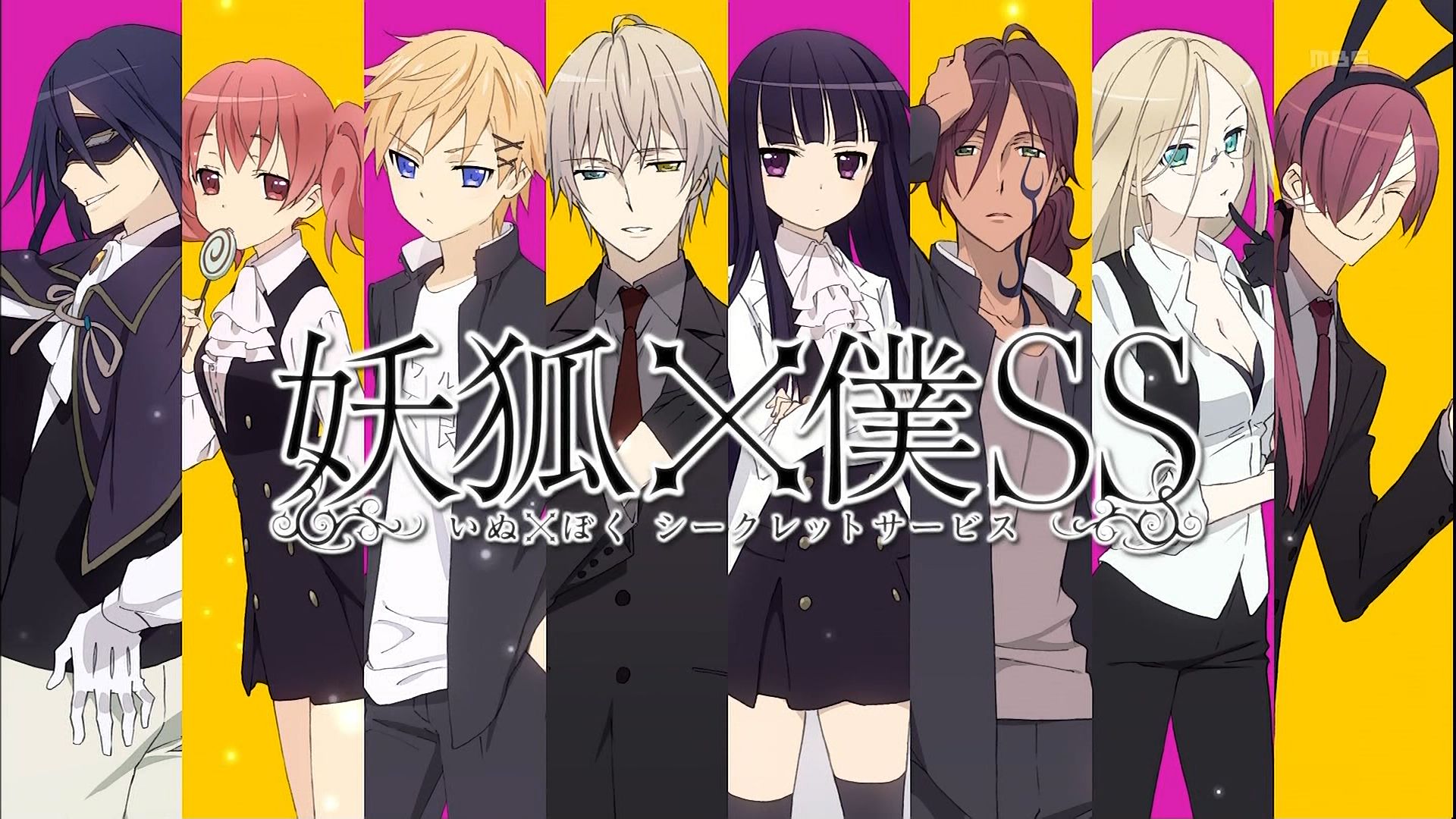
What Wikipaedia says: "The Maison de Ayakashi, better known as the Ayakashikan, is a high security apartment building where humans with demon ancestors, or yōkai, reside, each guarded by their own Secret Service bodyguard. A yōkai girl named Ririchiyo Shirakiin moves into the Ayakashikan hoping for some peace and quiet. Instead, she finds herself with the service of the Secret Service agent, Soushi Miketsukami."

tTPO says:
This show was what it was. It set out to be a romantic non-harem series with some side characters and ended up being exactly that. It was not plot heavy and kept its focus sensibly, for a short series, on the characters and the place they lived.

The main characters certainly (and the side characters to a variable extent) have some background and depth giving motivation to their actions, though it would wrong to say there were not some characters present there for comic relief and to just stir the pot. Not that this is a bad thing - if it was good enough for Shakespeare to have a jester or 2 then it's difficult to criticise it in anime.

Problems? Putting aside the seven year difference between the 22 year old male protagonist and the (nearly) 15 year old female protagonist (and no there was nothing even resembling a hint of sex at any stage, despite no shortage of fan service with some of the side characters) there is little in here to offend anyone. Also the supernatural backgrounds of the main characters don't get much exploration, and all things considered there is not much serious drama or tension. It all seems just a little easy at times. Is that good enough?


How About the Music?: The OP ("Nirvana" by MUCC) is a proficient bit of J-rock though erring on the generic side. Has a bit more get up and go in the live format though. I'm not sure the image of the band (now I've seen them) matches with the anime. I'm guessing it was all about the music.

There were a few too many EDs to talk about.

So How Does it End? (Spoiler Free):
The show ended well, with a good reveal in the second to last episode which tied up some loose ends, leaving things to wind down nicely in the last episode. Satisfying. 

Overall Grade: C. It set its aim low, and easily cleared the bar. However, there are more compelling shows you should probably be watching.

(NB: When reading up to write this review I see that there are dramatic events that occur in the manga not long subsequent to the end of where the anime ceases. So much so that the events of the anime are considered a prologue to what comes later. I didn't see that coming. If the anime had gone down that road though things may have been rated very differently.)

Wanna be the Strongest in the World

aka Sekai de Ichiban Tsuyoku Naritai!


Number of Episodes: 12

What Wikipaedia says: "Sekai de Ichiban Tsuyoku Naritai! follows the story of Sakura Hagiwara, a pop idol and member of the fictional japanese idol group Sweet Diva that impulsively decides to turn into a pro-wrestler in order to avenge another fellow Sweet Diva member who got a beating from a female wrestler."

tTPO says: This show clearly divided the blogosphere into people that thought it crass fan-service filled torture porn, and me. Once you get past the gratuitous crotch and cleavage shots, prolonged scenes of entwined female bodies inflicting pain on each other, and endless moans of pain which could be easily mistaken for pleasure, you actually have a quite reasonable shounen (fighting) series with interesting characters, something quite resembling a plot and a well developed background. There was even some genuine drama, and also a good plot twist towards the end.

As with most shounen series it often comes down to a 'fight-of-the-week' plot structure but given the nature of the series this should not be surprising. It is quite satisfying to see that the main character (minor spoiler warning) is not an instant legend with it taking a long time and a large number of losses before things start turning around. So long so that it does beg the question why she was not retired (or solved some of her technique issues) much earlier than she did because once these were sorted she got significantly better (end spoiler warning). The fact that this was the main plot weakness I think speaks volumes about this show. Which is mostly good. Mostly.


How About the Music?: The OP ("Beautiful Dreamer" by Kyōko Narumi) is a bit meh. The ED ("Fan Fanfare!!!" by Sweet Diva) is marginally better being a thematically consistent bit of girl group J-pop with some get up and go. But the song itself is just OK.


So How Does it End? (Spoiler Free): This has a good solid ending, dealing with the main issues facing the main characters, and leaves it wide open (pun intended) for a second series. I liked it.

Overall Grade: C+. If not for the obvious issues above, you could happily sit down with your daughter and watch this. Maybe they ought to make an edited version with more tastefully edited fights. The episodes would probably only be about 10 minutes long you could still enjoy the show I think, and many people may enjoy it more. As it stands you will have the headphones on and hope your significant other doesn't catch you watching it. Unless your significant other also enjoys this sort of thing.


KoanMan says: Are you between animes? Are you waiting the interminable chronological distance that is the week between episodes of your current viewing? Like dramatic, anime-style boobs and butt? Then Wanna Be The Strongest In The World!, or Sekai de ichiban tsuoku naritai!, may be just the thing.

With a plot as scanty as the clothing, this series has superficial character development, cheesy music, and a cast composed of super-hot babe’s. This one will not tax your cerebrum, although the sado-masochistic tones may appeal to some. This version of wrestling certainly seems to involve a lot of pain. There is also some dancing and singing, but mostly pain. And hot babes.

Director Rion Kujo has really fleshed out Kazuho Hyodo’s script (pardon the pun) with potent visuals, based on Kiyohito Natsuki’s manga illustrations, that animate ESE's Wanna Be The Strongest In The World! manga. Beyond the optic athleticism, clearly tailored to those who enjoy the female form, there is very little else. KoanMan found it a reasonable way to pass the time, but only if you can agree with the first few questions asked herein.

KoanMan rates Wanna Be The Strongest In The World! a C.

Note: There is some low-grade nudity (boobs), so if you are uncomfortable with your kids seeing that/them, you will need to decide what is appropriate yourself. Everything else is clothed, though very little is left to the imagination.

Wednesday, 25 April 2012

Rinne no Lagrange (season 1; with season 2 addendum)

aka Lagrange: The Flower of Rinne, Flower Declaration of your Heart


Number of Episodes: 12 (first season) + 12 (second season) + 5 mini-OVAs

What Viz Media via Myanimelist.net Wikipedia says: "Madoka Kyouno is an energetic girl who is full of passion. As the proud, and only, member of the Kamogawa Girls' High School Jersey Club, she goes around helping people in need.


Madoka's life is turned upside down when she is suddenly asked by a mysterious girl named Lan to pilot a robot. Motivated by her desire to protect the people and city of Kamogawa, Madoka agrees to pilot the resurrected Vox robot to fight against extraterrestrials that have come to attack Earth."

What tTPO says: From one Madoka to another in the space of three reviews. Compared with Puella Magi though, this series is a bit less coherent and tries just a little hard to be too many things. Describing it as a slice of life-mecha-space opera would not be too far off the mark, but it doesn't really succeed spectacularly as any of these things. The issue for me was that it tended to lose a bit of momentum as it swayed through the different aspects to the series, leaving me a little disconnected with the characters. Having said that is it not an epic fail either, and there is enough character, plot (with the odd hard hitting surprise), background plot and occasional humour to maintain some level of interest. I suspect this may end up being a series that would be better served being seen all at once, rather than week to week as I did, when I found myself asking myself 'so where are we up to with this?' More focused series leave me in no doubt where things are at and looking forward to the next episode despite the gaps between viewings.

How About the Music?  For me the ED (
"Hello!" by Megumi Nakajima) was the highlight of the music, capturing the generally upbeat mood of Madoka. Not to say the OP ("TRY Unite!" by Megumi Nakajima) was bad, it just didn't work quite as well for me. 

So how does it end? (Spoiler Free.): This actually ends in a pretty satisfactory manner, so long as you think the Empire Strikes Back ended in a satisfactory manner - with character development and distinct closure to this chapter, but without closure to the whole story. This clearly is heading into a second season which apparently will start around July 2012. And there is an OVA coming too. I must admit I find it a bit sad that average shows like this get second seasons when better shows (like Chiarafuru) probably won't.

Overall Grade: Grade C. This series is almost the definition of a C. Mrs tTPO thought so to. It did not too much wrong, but really was not otherwise outstanding in plot, characterisation, ideas or execution to rate higher. I am not sure if I will bother with the second season to see how things turn out. We'll see.  


Season 2 Addendum:  Season 2 is virtually a direct continuation of season 1, to a point where if you are going to sit through this, you should do all 24 episodes, or (more wisely) look at some other and better series. Now that is not to say that this is a bad series. On the contrary, season 2 deals with all the left over plot points from season 1 and wraps them up, and even has a bit of character development. However it does none of these things particularly well, with the various plot endings not really particularly well explained or satisfying, with more than a little deus ex machina required to pull everything back together. Apparently I should have listened to my own advice above. 

Still grade C.

Saturday, 18 February 2012

Ben-to


Number of episodes: 12

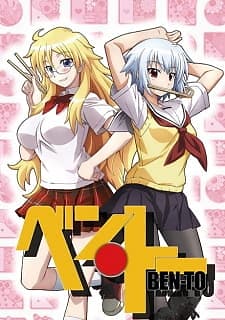
What Wikipedia says: "Ben-To is a Japanese light novel series written by Asaura, with illustrations by Kaito Shibano. The first volume was published in February 2008, and 10 volumes have been released by Shueisha as of December 2011. A 12-episode anime TV series adaptation produced by David Production aired in Japan between October and December 2011. While innocently reaching for some half-priced bento, Yō Satō finds himself beaten up on the floor of a supermarket. He soon learns that getting half-priced bento is an all-out brawl between customers. Yō is invited to the Half-Priced Food Lovers Club by one of the top fighters, Sen Yarizui, in order to train to compete in these battles. "

What tTPO says: It is difficult to know where to start. Having been to Japan on more than one occasion and bought bento from convenience stores late at night I loved the idea for this. Goddam genius. The fact it took itself seriously (sort of) and treated the idea in a similar fashion to other fighting genre shows made for a very dry kind of humour.

The series started well, with high energy levels and an air of intrigue as the characters (no problems here) were introduced. Somewhere in the middle of the season though it just lost momentum and while picking up a little towards the end it was too little too late. I think part of the problem was the delayed introduction of 3 main characters (one about episode 4 and the other around 8), and the other was the mini-arc format of the show. There were hints there may be a bigger city-wide story to tell with some history but these ideas generally remained underdeveloped before thing would move onto the next somewhat underdeveloped mini-arc.

 
How about the music?: Nothing much to write home about here. The OP is a competent bit of J-rock and the ED a slower melodic peice but neither, for me at least, were particularly noteworthy. 


So how does it end? (Spoiler Free): Adequate but ultimately lacking in involvement. The final arc's conclusion revolves around a character we were only introduced to the previous episode, with a major character was sick in bed at home, and largely out of the story. Why bother developing these characters if they are just going to stay home! Aaaargh!

Overall Grade: C. I really wanted to like this series but it barely managed to snatch mediocrity from the jaws of brilliance. Disappointing. Would have been a D if not for the early part of the series.

Friday, 10 February 2012

Boku wa Tomodachi ga Sukunai


Number of episodes: 12 + OVA

What Wikipedia says: "Kodaka Hasegawa is a recent transfer student to St. Chronica's Academy, a Catholic high school. As with every other school he has ever attended, he finds it difficult to make friends there because of his naturally-blond hair (inherited from his deceased English mother) and fierce-looking eyes, which make him look threatening to his prejudiced schoolmates.

One day, Kodaka accidentally comes across the equally solitary and very abrasive Yozora Mikazuki while she converses with her imaginary friend Tomo. Realizing that neither of them have any social lives, they decide that the best way to improve their situation is to form a club – the Neighbor's Club – precisely intended to make friends and learn social skills.

Five other members soon join the club, starting with the school's well-connected but arrogant idol Sena Kashiwazaki, who has no female friends of her own because of their jealousy over her many male admirers. The next to join is Yukimura Kusunoki, a feminine underclassman of Kodaka's who rather idealizes him and follows him in the hope that it will teach him to become manlier. Maria Takayama is a 10-year-old "genius" teacher and nun at the academy whom Yozora recruits to become the club adviser. Rika Shiguma is an underclassman and well-known scientific genius with fujoshi tendencies who joins the club after Kodaka rescues her from a laboratory accident. Finally, Kodaka's younger sister Kobato is in St. Chronica's middle school division and is a fan of Gothic anime. "


What tTPO says: I liked this series. However, being a harem series it hit my reviewing weak spot fairly hard. Yes, there were an enormous number of anime cliches present, but there was also a very basic story of a childhood friendship that wove its way through the series that helped hold it together and give it some heart. This, combined with some individually imaginative episodes (especially those involving computer games), elevated it above the above some of the very worst of this genre. I am not ashamed to say the were a few times I was perhaps a little more keen than I should have been to find out what happened in the next episode.

 
How about the music?: OP - did someone just rip off K-on? On the other hand, the ED, Watashi no Kimochi by Marina Inoue,
has a nice rock riff starting out that unfortunately fairly quickly takes a turn for the generic. But I really like the opening chords!

So how does it end? (Spoiler Free):  It's tidy 12-episode format worked in its favour and helped prevent too much repetition, and the ending was satisfactory (not brilliant though) while shamelesslessly leaving room for another series.

Overall Grade:  C (plus). Not the worst of the genre by any means but there are better harem series out there. Certainly if you are after anything resembling a plot heavy series leave right now.

Tuesday, 25 October 2011

Dog Days (with post-second season addendum)


Number of episodes: 13 + 13

What Wikipedia says: "Cinque Izumi is a cheerful and athletic half-Japanese, half-English boy who studies at Kinokawa International School in Japan, and has a normal life everyday until he suddenly got summoned to the alternate world of Flonyard. The people there look no different from humans, except for one thing; they have animal ears and tails. The one who summoned him is Millhiore, the dog-like Princess of the Biscotti Republic, who requested his assistance in their war against the forces of the feline-like Galette Lion Army.

After responding to Millhiore's plea, he receives a sacred weapon, the Palladion, and is appointed as a Hero to fight for Biscotti in a war that unlike the ones in Earth, is waged with special rules and no casualties, in a fashion similar to a sports competition with the purpose to raise funds for the Kingdoms involved, where the winner faction claims a larger sum than the losing side. After winning his first battle for Biscotti, Cinque learns that when a hero is summoned into Flonyard he becomes unable to return to his homeworld, a fact that Millhiore also was unaware of.

The scientists of Biscotti promise to Cinque to find a way for him to return home in 16 days, the remaining time until his meeting with his friend Rebecca Anderson whom he promised to spend the last three days of his Spring Break with. Until then, he decides to keep serving Millhiore as Biscotti's hero."

What tTPO says: Unless you are allergic to either cats or dogs or cute things in general, this is a series that is mostly harmless. It is directed at the younger audience, so despite all the fighting, our characters never in anything resembling serious danger until the last couple of episodes when the series got a bit darker. The drama was on the distinctly beige side of things until that point. Having a young target market though is, as always, not a good enough reason on its own to avoid having some light fan service at times. The other downside from this old man's point of view was the lack of originality (think Final Fantasy crossed with K-ON!, the Chronicles of Thomas Covenant and just about any other shounen anime and you won't be too far off the mark). Maybe they were tying to appeal to the male and female audience simultaneously?

The overall plot is not complex, but is nicely structured over the course of the series, with a quite large cast of characters (there is some even some exploration of the main ones) and caricatures to stay entertaining. The pacing was also pretty much spot on - Angel Beats and Occult Academy could take some lessons from Dog Days in this respect. So while lacking in originality and fire, it did at least have a beginning, a middle, an end and a little heart, and that alone puts it above many other shows.

How about the music?: Much like the rest of this show the J-rock OP and ED are a bit cute, and a bit disposable.

So how does it end? (Spoiler Free):  Neatly, with no important loose threads.

Overall Grade: Grade C (Nice enough, but not enough to spend time on). They set the bar low, but cleared it with ease. So much so that a second season has been announced. I probably won't be watching it though.
Maybe a B for the young folk?

Addendum (after watching the second season):  In contrast to my own advice I found time to watch the second season of this series - cunningly named Dog Days (apostrophe), or Dog Days' (or even DD') for short. Taking place in the next summer break of school, there were a few changes made to the formula (losing the generous amounts of fan service was not one of those changes) in that about 90% of the drama was stripped out, and the feel-good factor, which was already pretty high is now stratospheric. Seriously, even the token bad guys are good - the Demon-King's worst vice is looking at scantily clad ladies. The plot (what little there was) was also lost with the drama and DD' I think could fairly be called a slice of life series as a result. Having said that, they did actually start to deal with some of the harem / romance issues though in a very supportive way, and we got to hear about things from Cinque's perspective. Despite all of this they managed to increase the already formidable armada of characters by bringing 3 (not just 1) characters from Earth, introducing a new country for the sport-battles (with the associated rulers and retainers) and bringing a couple of historic heroes back from the past for good measure. And increase the number of insert songs performed by Millhiore from 1 to 3. 

There was a very strong implication we would see a third series and maybe just maybe, we get a bit of drama back? I'll probably find myself watching again - the short format just makes it a bit easy to commit time-wise.

Wednesday, 12 October 2011

Tactical Roar


Number of episodes: 13

What Wikipedia says: "In the near future, a hypercane has appeared in the Pacific Ocean, causing a series of  worldwide climate changes. This storm, dubbed "Grand Roar" by people, has been stable for over 50 years. Climate  changes make air travel and transport less reliable, and thus the world has begun reverting to a second naval age,  particularly in the Asian region. However, the world's condition also heralds the return of piracy and the growth  of maritime terrorism, causing many large international companies to arm themselves and setting up their own  private naval security forces.

At the outset of the series, Systems Engineer Hyosuke Nagimiya runs into the crew of the Pascal Magi, one such  maritime security ship. He gets into a few typical compromising situations before finally being introduced as a  software engineer assigned to update the systems on-board the ship. He meets his stepsister, the captain of the war  vessel, Captain Misaki Nanaha, who treats him as a stranger. Although he refers to her as 'sister,' he still thinks  of her as a woman nonetheless. During the duration of his duties, the ship is called into combat, where Hyosuke begins to understand the nature of the Pascal Magi and its crew's battle potential as the vessel flings itself into the fight."

What tTPO says: This is an odd show, and I have to admit a slight conflict of interest in that my dad was in the navy so I have a bit more interest and experience in naval military action than the casual viewer. Even if it happens to be set a few years in the future and on a ship staffed almost completely by women, a substantial number of whom happen to be school age. No, really. However, the actual make-up of the bridge crew of the Pascal Magi (the ship our main characters crew) is actually not too far off reality as it is right now, and the naval battles and terminology used again have at least some grounding in reality, all of which pleasantly surprised me. The slightly computerised animation for a lot of the military action actally works pretty well, though the rest of the animation looks just a little dated. The over-reaching plot is a not uninteresting philosophical and political thiller with action elements, but it loses a bit of momentum with individual episodes focusing more on drama between the large cast, and a harem romance between Hyosuke and his step sister (as well as just about everyone else on the Pascal Magi) with occasional bursts of fan service. And if you think this is an odd mix, it's because it is, leaving Tactical Roar the Jack-of-all-trades, but master of none. 

How about the music?: Both the OP (J-rock) and ED (ballad) are easy on the ears but much like the rest of this show are not outstanding. The singing in the ED gets a bit flat occasionally though. WTF?

So how does it end? (Spoiler Free):  Surprisingly cleanly with most loose ends tidied up.

Overall Grade: Grade C (Pleasant enough, but you don't really have time for this). Tactical Roar tries a little hard to be too many things at once, and while not failing, never really excels at any.

Tuesday, 4 October 2011

Mayo Chiki


Number of episodes: 13

What Wikipedia says: "The story revolves around Kinjirō Sakamachi, a 17 year old high school boy who suffers from gynophobia. The gynophobia sickness makes his nose bleed every time he has physical contact with a female. While using the bathroom he accidentally discovers that the popular and handsome butler Subaru Konoe is in fact a girl. Now that Kinjirō knows about Subaru's secret, he must work together with Subaru and her sadistic mistress, Kanade, to protect Subaru’s secret from being discovered."

What tTPO says: OK, I admit it, I have a huge soft spot for some high school romance +/- harem comedy, which will tend to bias this review a little. With that out the way this series ticks about as many of the anime tropes as one can tick in this sort of series: tsundere (or at least comically violent) girls (2+, not including the warring students), crossdressing girls, very rich girls, butlers generally, nosebleeds, inexperienced male leads, harem, more than a little fan service blah blah. Bottom line is there is not a lot of originality at work here, except for perhaps pushing the tropes as far as they can go (e.g. having not 1 but 2 fan clubs for the butler at school, both of whom of course think he is male). But despite all of that the girls are cute, the characters lovable and who mostly develop over the series, and (importantly) not annoying. Except...

How about the music?:  The OP is generic J-pop but in tune with the rest of the series is a quite catchy despite itself. Much can be said about the ED. They put a smile on my face.

So how does it end? (Spoiler Free):  ...what the hell were they thinking with episode 13!!! It is like the previous 3 episodes just didn't happen and we slipped into a similar but fundamentally different alternate reality. Not that episode 13 is all that bad by itself, but it just makes no sense considering what just happened in episode 12. I was really enjoying this series (in a guilty secret sort of way) but this is the perfect example of how a last episode can leave a final bad taste in your mouth about the whole thing. Given this is based on light novels episode 13 feels like it could be the start of another plot arc, but as an ending...rubbish.

Overall Grade: C (Not bad, but you should not be spending your time on this). Could almost rate this B if you were a huge harem / romance fan if not for episode 13 (either don't watch it or think of it as an alternate reality).

Monday, 3 October 2011

Croisée in a Foreign Labyrinth

aka Ikoku Meiro no Kurowāze


Number of Episodes: 12

What Wikipedia Says: "The story takes place in the second half of the 19th century, as Japanese culture gains popularity in the West. A young Japanese girl, Yune, accompanies a French traveller, Oscar Claudel, on his journey back to France, and offers to help at the family's ironwork shop in Paris. Oscar's grandson and shop owner Claude reluctantly accepts to take care of Yune, and we learn how those two, who have so little in common, get to understand each other and live together in the Paris of the 1800s."

What tTPO Says: This is a very attractively animated slice of life series. Yune is a naive but capable girl with whom we explore Paris and its inhabitants. Most of the characters grow through the series (Oscar would be an exception to this but since he is the oldest it is hardly an issue) and some who start out annoying (e.g. Alice) end up endearing, which in itself is a feat sometimes. Claude on the other hand has quite a few chips on his shoulder which do grate just occasionally. Yune is without doubt extraordinarily kawaii. I may name my next daughter after her if I have one. If I don't call her Sanae (see the Clannad review when it eventually goes up).

How about the music?: The opening theme is distinct and very appropriate for the show. The end theme is just a little more generic in flavour but still a lovely bit of music. Both very pretty.

So how does it end? (Spoiler Free): The ending is really a bit of a non-event, with several character threads left unresolved. While having an intricate plot is often less of an issue with slice of life series, it is a little frustrating to get involved with the set up of several character arcs and not be able to see them through to resolution. This cast a bit of a pall over what was otherwise a fairly enjoyable series. I hate that.

In hindsight also, the beginning lacks a fair bit of detail and we never really know the detailed circumstances of why Yune is in Paris in the first place. 

Overall Grade: C (OK series, but there are better series to spend your time on). Mrs TPO likes a bit of kawaii and she also thought C.