Showing posts with label Arty. Show all posts

Friday, 16 October 2015

Flowers of Evil

aka Aku no Hana 


Number of Episodes: 13

What Wikipedia says: The story follows a middle school student named Takao Kasuga who's forced into a "contract" by fellow student Sawa Nakamura, after being caught stealing the gym clothes of his crush Nanako Saeki, and the series of events afterwards that follow these three characters. The title of the manga comes from Charles Baudelaire's Les Fleurs du Mal.

What KoanMan says: KoanMan has some mixed feelings about "Aku no hana". Firstly, it bears mentioning that the "rotoscope" technique used makes the look of this series unique. It is a method of animating real film images projected onto a frosted screen and originally each image was hand-traced to create the final animated image, although computer software has now been developed to convert images. Besides the style, it allows animation to present characters with natural movement, and it delivers here. A more more normal animation format was originally tabled, however, to allow the audience to focus on the story/characters and not the actors, director Hiroshi Nagahama used the rotoscope technique.

The story is itself unusual. The central character Takao Kasuga is a hyper-anxious, hyper-reactive, moronic simpleton who rarely thinks much beyond himself. If one can tough out the first few grindingly tedious episodes, the slow, agonising pace actually becomes tolerable, and almost unnoticeable by about Ep7. Sawa Nakamura is his rebellious muse, challenging him to confront himself and her perceived view of him, while Nanako Saeki is the muse he imagines inside his own head. The main characters are very well developed with a realistic approach. Other characters are not important to the myopic worlds of the main characters, and are not explored, not do they need to be.

How About the Music? Music at open and close is good, and is completely unrelated to the "Aku no hana" song released in 1990 by Japanese rock band Buck-Tick. In fact the opening and closing credits contain almost all the music in the series, and thinking back, KoanMan did not notice anything other than mood audio at any other time.

So How Does it End? (Spoiler free): After a dragging, painful start, the simple plot is executed with a storyline that somehow managed to keep KoanMan watching to the end. An interesting watch, more for the moods it engenders that had KoanMan reminiscing about the internal angst associated with teenage life. Ahhhhh, the angst...... Beyond that there was little in the characters to connect with, and perhaps the intent in this "Aku no hana Part 1" series is to do just that, or simply to engender the keen desire to strangle the characters? Not sure.

Overall Grade: Interesting, moody, different - gets a B. Laboriously slow and Takao is an imbecile - gets a D. 


It all adds up to a C.

Addendum by tTPO: tTPO liked this more than KoanMan and it is clearly going to be a polarising series for viewers. There is little doubt that Takao is a largely spineless fool, but doing dumb things, being self-involved and being bored is pretty much what teenage life is about. Whether watching this immensely slow car crash makes good television is debateable, but I found somewhat compelling the brave directorial decisions about the rotoscopy (which immediately put off Mrs tTPO), the universally unlikeable characters, the long stretches without dialogue (which peaked with an epic 8 minutes of nothing in Episode 8) and repeated views of the decaying town. I also appreciated the positively atypical depiction of largely functional and caring parents who, in contrast to most anime series, are actually at home and involved with their offspring.  

The OP /ED are worth a special mention as being quite disturbed and I think set the tone of the series well.

In summary: Interesting, moody, different. Laboriously slow and Takao is an imbecile. It all adds up to an A-. 

I can only hope there is a second season so I can see the wreckage finally come to rest. 

Saturday, 14 September 2013

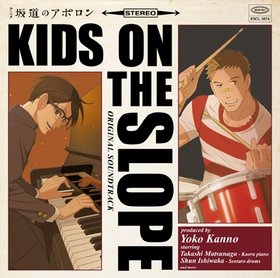
Kids on the Slope

aka Sakamichi no Apollon


Number of Episodes: 12

What Wikipedia says: "The beginning of summer, 1966; because of his father's job situation, freshman high school student Kaoru Nishimi moves by himself from Yokosuka to Sasebo in Kyushu to live with relatives. Until then, Kaoru was an honor roll student who tended to keep to himself, but meeting notorious "bad boy" Sentaro Kawabuchi starts to change him. Through his devil-may-care classmate, Kaoru learns how much fun it is to play jazz and finds the first person he can call a real friend."


KoanMan says: Every once in a while, a story catches you in an unexpected way.  This is an engaging and personal story, and somehow kept KoanMan riveted throughout, without the need for explosions, violence or carnage.  KoanMan generally loves those things, and yet they were not required here due to the strength of the story-line.

It begins in a fairly standard way, with an isolated young teen, Kaoru, arriving in a small provincial  town.  Tough-guy Sentaro, and classic girl-next-door Ritsuko, befriend Kaoru, and so begins a troubled journey through their developing relationships to each other and those around them.  These characters almost became part of KoanMan's life during this series, they are that well developed.  This is remarkable given the limited number of episodes in which to get this done. 

Pace is excellent, and the storyline cohesive and complete, thank you director Shinichiro Watanabe.

How About the Music?: The music is a standout as well.  The opening title song is seriously catchy, and some of the jazz that features within the series had this KoanMan tapping and swinging to the beat.  Composer Yoko Kanno has done well.

Overall Grade: Well crafted, free-flowing, short and sweet.... KoanMan cannot give anything other than an A.  


Addendum (by tTPO): I can't do much else but agree with KoanMan's assessment of this series. There is just the right balance of justice and injustice, things that go right and things that go wrong, joy and sadness, failure and redemption and all in an amazingly paced pocket sized series. Also, while the jazz is not a central theme to the story, it is the canvas on which this story is painted and it works just so well. I want to explore more jazz because of it. Ultimately, while this is a million miles away from their previous pairing on Cowboy Bebop, Shinichirō Watanabe and Yoko Kanno deserve nothing but an A for this.

Friday, 20 April 2012

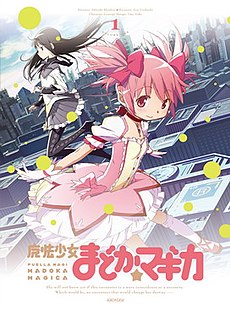
Puella Magi Madoka Magica

aka Mahō Shōjo Madoka Magika, Magical Girl Madoka of the Magus
Number of Episodes: 12

What Wikipedia says: "In this world, there exist strange creatures who have the power to grant one wish to a chosen girl. However, in exchange, that girl must then become a magical girl and use her powers to fight against witches, evil creatures born from darkness that are responsible for murders and suicides.

In the city of Mitakihara, a schoolgirl named Madoka Kaname and her friend Sayaka Miki are approached by a familiar named Kyubey, who offers to grant each of them one wish in return for making each of them a magical girl. Another magical girl named Homura Akemi tries to prevent Madoka from making such a deal, while Kyubey urges Madoka by telling her she will become the most powerful magical girl. However, contrary to the glamorous notions one would expect, a magical girl finds herself dealing with death, isolation, loss of humanity, agony over the value of her wish, and existential crisis. Madoka, following her friends, soon sees the darker side of being a magical girl, and because of knowing the truth about being a magical girl, she questions if she should become one as well."

What tTPO says: Holy crap. Just finished this and my mind is melting with the goodness of this series. For tTPO anything this good crammed into 12 episodes where the pacing never faulters is a great start. It seems that each episode has a reveal of some sort that changes the direction of the whole series and to keep this up for the whole series is just amazing. It really is a masterclass in pacing. 

Some anime series leave a lot to the imagination and for the viewer to do the work (see Mawaru-Penguindrum). This is not one of those series and it goes to great lengths to make sure (maybe with the exception of the last episode) the viewer knows what is going on. Usually not at the time you see it, so you still have time to puzzle it out yourself, but eventually most things are explained well. And boy does the plot all tie together nicely. Even the 'physics' of the show. I liked that. 

The animation of this was also facinating. On one hand you get the impression that the budget for this show was not a lot (I have no idea if this is the case or not) but what they did with artistic vision and imagination was just stunning, making this (in my limited experience) a unique visual presentation for the genre and anime generally. 

Lastly there is the feel of the show. Many other reviews talk about the deconstructive nature of this series and it is just so true. It really does dismember the magical girl genre in the face of 'reality' methodically and brilliantly. For me it ended up with the same sinking feeling as Watchmen when I first saw (then read) it. I am guessing the core themes of the superhero genre and the magical girl genre are not so far apart. 

How About the Music? The OP (Connect by ClariS, and while a video is hard to find this one is particularly awesome) is a fully serviceable bit of J-Pop that I think is improved by the series it fronts. Usually its the other way round but I do like this song. While on that note the opening credits are amusing in that they are typical for the genre but really only serve to lead the viewer astray as to the direction of the series. ED1 is a light J-pop song but only last 2 episodes before the series and the EDs tread a darker path. The ED2 (Magia by Kalafina) is a lot more epic in an emo-rock kind of way but did not work quite so well for me. ED3 (And I'm Home by Ai Nonaka & Eri Kitamura) only lasts a single episode (#9) but for me is the pick of the EDs. And then someone slowed it down by 8 times thus producing shoegaze epic which sounds even better (and uncannily like Slowdive). Who would have thought?

So how does it end? (Spoiler Free):  I did wonder how the hell this was going to end and they managed to do it on an epic scale in a way that actually made sense within the context of the story, and was not just a big hit of the reset button. In a strange way it ends up establishing the typical ground rules for the genre it deconstructs. If I had a complaint though it would be that the epic nature of the ending made it just a little less personal and consequently less involving with the characters we knew and loved. But that is a very minor complaint.

Overall Grade: Grade A. Ignore that fact this seems to be a show about magical girls. Just watch it. I'm talking to you Beukesy and Koanman. 

Addendum by Koanman:  Every now and then, a series provokes genuine thought, and this series is one of those.  It is nothing short of majestic in its scope.  It challenges the idea of universal morality, or confirms natural amorality, depending on your stance.  This series was riveting from start to finish, with interesting new additions to the plot constantly keeping things on the move.  The visual effects are second to none, at times disturbing, and yet appear fashioned from the simplest animation techniques. 

Madoka Kaname and her side-kick Sayaka Miki are super-sweet personalities, luckily balanced by some sincerely dark undertones.  Which brings us to Homura Akemi, who is a more interesting character that really does take the entire series to fully develop.  This is a real personal-power story, incorporating beautiful images at some times, and superb portrayals of anger at others.  There is a lot that one can associate closely with in this series.  It gets an A.

Tuesday, 21 February 2012

Mawaru-Penguindrum


Number of Episodes: 24

What Wikipeda says: "A terminally ill girl named Himari Takakura is miraculously saved from death by a strange spirit who resides in a penguin-shaped hat. However, in exchange for extending her life, the spirit tasks Himari's brothers, Kanba and Shouma, to seek out an item known as the Penguin Drum with assistance from a trio of strange penguins."

tTPO says: This series is very intelligent, steeped in philosophical ideas, chock full of symbolism, surreal, and just generally brilliant. It is a bit like a Dali painting in this respect, but herein lies the problem. While I appreciate Dali, I would be lying if I knew everything he was trying to communicate in his pieces. And it is much the same for me and Penguindrum. It just asked too much of the viewer, especially the time-pressed one.

While the core themes of the series (fate vs self determination, love vs loneliness) are definitely made clear early on, it takes about 13 episodes before we have a good idea what the actual plot of the series is actually about. And 13 episodes is just too long before getting some answers - I just felt I wanted a few answers before being barraged with more questions. Frustrating. I have no doubts there were subtle clues being dropped beforehand, and would fully expect a second go through the series would be quite a rewarding experience once you know what is happening. But for the tTPO a second run though the series is just not a reality.

Having said all that, the animation itself is clean and crisp. The characters are interesting, travel their own roads and develop well through the series. There was even a constant stream of background humour (which lighted up an otherwise quite dense series) with both the penguins and the public notices on the trains.

How About the Music?: Along with all the other production values the music was by and large great. The flavour of the music was interesting and reminded me very much of French pop, even though it was in Japanese. The EDs were different many weeks (there were 8 all up) and most of them were pretty good. Thankfully there were only 2 OPs, and while both good I liked the first one
("Noruniru" by Etsuko Yakushimaru Metro Orchestra) better than the second ("Boys, Come Back to Me" also by Etsuko Yakushimaru Metro Orchestra)

So how does it end? (Spoiler Free): Given the flavour of the show the ending could have been left hanging. Instead we get something that is emotionally satisfying and resolves more than a few plot points. Though not all. And if it did I would have been disappointed.

Overall Grade: The series has certainly polarised the blogosphere and for me will likely be the best ever series to get the worst recommendation. To get the most out of this you would likely need a good background in the arts and philosophy (or you could just look here or here), and enjoy your surrealism and symbolism. In this case you may call this a B and or even an A. But for the rest of us there is not much satisfaction in early part of the series, and we would probably need to watch it twice to get the most out of it, and do some research along the way about the symbolism. The TPO just does not have time for that.  Grade D.