aka Oreimo, Ore no Imouto ga Konna ni Kawaii Wake ga Nai
Number of Episodes: 25
What Wikipedia says: Kyosuke Kosaka, a normal 17-year-old high school student living in Chiba, has not gotten along with his younger sister Kirino in years. For longer than he can remember, Kirino has ignored his comings and goings and looked at him with spurning eyes. It seemed as if the relationship between Kyosuke and his sister, now fourteen, would continue this way forever. One day however, Kyosuke finds a DVD case of a magical girl anime which had fallen in his house's entranceway. To Kyosuke's surprise, he finds a hidden eroge inside the case and he soon learns that both the DVD and the game belong to Kirino. That night, Kirino brings Kyosuke to her room and reveals herself to be an otaku with an extensive collection of moe anime and younger sister-themed eroge she has been collecting in secret. Kyosuke quickly becomes Kirino's confidant for her secret hobby. The series then follows Kyosuke's efforts to help his sister to reconcile her personal life with her secret hobbies, while restoring their broken relationship and coming to terms with their true feelings for each other.
What KoanMan says: When looking to the next anime to spend time with, Oriemo (Ore no Imouto ga Konna ni Kawaii Wake ga Nai - My Little Sister Can't be This Cute) almost didn’t make it for KoanMan. This series also flies close to the sun with some of its concepts, and as such, almost did not make the watch list. It seemed to be difficult to find, with Season 2 more available than Season 1, obviously, the decision was made to go forth and watch Oriemo anyway, or because of?
Once underway, the story ebbed and flowed in a refreshingly unpredictable manner. Characters came in and out of focus according to the needs of the story, and provided good support for the brother-sister team of Kyousuke and Kirino. Director Hiroyuki Kanbe has adapted the story well from Tsukasa Fushimi’s light novels. Characters evolve and deepen over time, and the pace is steady without ever feeling slow or rushed.
So How Does it End? (Spoiler free): It ends. Perhaps controvertially in many ways. But it ends. Any more I think would be redundant. [tTPO]
How About the Music? Music is OK without being anything notable, though some of the scenery is beautiful and poignant, perfectly complimenting the moment in which they appear. KoanMan found this anime an enjoyable, easy watch, and likely to resonate on many levels with anyone with siblings.
Overall Grade: This will not be to everyone’s taste, but KoanMan gives this an A.
Addendum by tTPO: Incest, incest, incest, incest incest, incest. That's all people talk about in respect to this series. And yes, the brother / sister relationship is probably not within two standard deviations of the mean, however, the reality is that there is nothing any more than G rated that goes on in this series between them. And to simplify the series to a single word and write it off would be a disservice to the plot, the rest of the cast and the pacing of an otherwise very very watchable series, even if it is a bit long for the tTPO. And if you can't put up with some family drama just stop watching and shut the hell up, calm down and go and watch something less controversial like Fist of the North Star, or some hentai. A
An anime review website for the older otaku, where work, family and life mean that every anime watching hour is precious and should not be wasted on shows that do not deserve it. Scoring is judged on overall enjoyment, music and the ending, with longer series having to stand up to more strict criteria than shorter ones. Reviews are kept short and to the point. Because time is always pressing.
Showing posts with label Harem. Show all posts
Sunday, 26 May 2019
Saturday, 31 December 2016
Amagami SS & Amagami SS+
Number of Episodes: 26 with 2 OVAs / 13 with 8 OVAs / Special Episodes
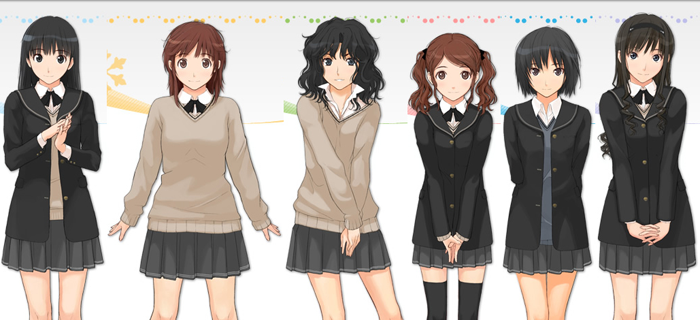
What Wikipedia says: The series follows Junichi Tachibana, a second year high school student from Kibitou High who dislikes celebrating Christmas due to a past incident two years ago when his date stood him up on Christmas Eve which left him heartbroken. However, this Christmas will be different as his encounter with one of these six girls, Haruka Morishima, Kaoru Tanamachi, Sae Nakata, Ai Nanasaki, Rihoko Sakurai and Tsukasa Ayatsuji will finally open up his heart to love again. The anime adaptation is rather unusual as it is divided into several story arcs where each arc focuses on one of the main heroines who will become Junichi's love interest.
On August 13, 2011, a second season of Amagami SS was announced.[4] The second season, titled Amagami SS+ plus, aired on January 5, 2012 to March 29, 2012.
What KoanMan says: Amagami SS and Amagami SS+ Plus are unique take on the serial (not parallel) romantic escapades of a schoolboy Tachibana Jun'ichi, apparently spawned from the PS2 dating game of the same name. His character seems to morph into whatever each of the six female love interests seem to need. And as each separate story unfolds with the girls, different aspects of his personality and theirs are brought to the fore. The storyline is well-paced and interesting in its diversity, with director Hiraike Yoshimasa keeping the relationship unique and engaging in its own right. No easy task. Well done.
Morishima Haruka is the senior class goddess, Nakata Sae is shy, quiet one with great taste in clothing, swimmer Nanasaki Ai and the strict class president Ayatsuji Tsukasa are the four that seem to stretch him the most from his natural state. These contrast well with his two childhood friends, the free-spirited and independent Tanamachi Kaoru, and the “overweight” and somewhat retiring Sakurai Rihoko, who accept him more as himself. One says “overweight” as the Japanese determination of this concept differs significantly from that of this round-eyed Gaijin - perhaps the term “not emaciated” might be a better fit for Rihoko’s still-slim figure.
All characters are very well articulated, and even
those in the periphery, like his caring but exasperated sister Tachibana
Miya (who gets her own OVA - tTPO), and his porn-addicted, sushi-chef-trainee friend Umehara
Masayoshi, who are perfect counterweights to the plot.
How About the Music? Music is fair, though art director Takahashi Maho has some fine scenery.
So How Does it End? (Spoiler free): In many different, and generally satisfying ways.
Overall Grade: KoanMan enjoyed these series, and did not feel lost, nor bored throughout. Very enjoyable. The score for this collective is a solid A.
Addendum by tTPO: Koanman got this mostly right. This is an excellent harem series that removes some of the 'main protagonist with many girlfriends' issues by simply dealing with each of the different girls in a parallel universe fashion. tTPO enjoyed the original series a bit more than the sequel simply because the original series being 26 episodes, gave the strories just a bit more breathing space. Having said that, if you watch the first season you cannot fail to watch to second I think to see where the relationships continued to (or failed to as the case may be). Where Koanman got it wrong was the music - the changing OPs (as sung by the different girls) in season one, with few exceptions, were great and added (for tTPO) to the different flavour of the arcs. As it is just a bit long and season two not quite as good as season 1, tTPO gives this a B+. Definitely one of the more watchable harem series.
Friday, 16 October 2015
Flowers of Evil
aka Aku no Hana
Number of Episodes: 13
What Wikipedia says: The story follows a middle school student named Takao Kasuga who's forced into a "contract" by fellow student Sawa Nakamura, after being caught stealing the gym clothes of his crush Nanako Saeki, and the series of events afterwards that follow these three characters. The title of the manga comes from Charles Baudelaire's Les Fleurs du Mal.
What KoanMan says: KoanMan has some mixed feelings about "Aku no hana". Firstly, it bears mentioning that the "rotoscope" technique used makes the look of this series unique. It is a method of animating real film images projected onto a frosted screen and originally each image was hand-traced to create the final animated image, although computer software has now been developed to convert images. Besides the style, it allows animation to present characters with natural movement, and it delivers here. A more more normal animation format was originally tabled, however, to allow the audience to focus on the story/characters and not the actors, director Hiroshi Nagahama used the rotoscope technique.
The story is itself unusual. The central character Takao Kasuga is a hyper-anxious, hyper-reactive, moronic simpleton who rarely thinks much beyond himself. If one can tough out the first few grindingly tedious episodes, the slow, agonising pace actually becomes tolerable, and almost unnoticeable by about Ep7. Sawa Nakamura is his rebellious muse, challenging him to confront himself and her perceived view of him, while Nanako Saeki is the muse he imagines inside his own head. The main characters are very well developed with a realistic approach. Other characters are not important to the myopic worlds of the main characters, and are not explored, not do they need to be.
How About the Music? Music at open and close is good, and is completely unrelated to the "Aku no hana" song released in 1990 by Japanese rock band Buck-Tick. In fact the opening and closing credits contain almost all the music in the series, and thinking back, KoanMan did not notice anything other than mood audio at any other time.
So How Does it End? (Spoiler free): After a dragging, painful start, the simple plot is executed with a storyline that somehow managed to keep KoanMan watching to the end. An interesting watch, more for the moods it engenders that had KoanMan reminiscing about the internal angst associated with teenage life. Ahhhhh, the angst...... Beyond that there was little in the characters to connect with, and perhaps the intent in this "Aku no hana Part 1" series is to do just that, or simply to engender the keen desire to strangle the characters? Not sure.
Overall Grade: Interesting, moody, different - gets a B. Laboriously slow and Takao is an imbecile - gets a D.
It all adds up to a C.
Addendum by tTPO: tTPO liked this more than KoanMan and it is clearly going to be a polarising series for viewers. There is little doubt that Takao is a largely spineless fool, but doing dumb things, being self-involved and being bored is pretty much what teenage life is about. Whether watching this immensely slow car crash makes good television is debateable, but I found somewhat compelling the brave directorial decisions about the rotoscopy (which immediately put off Mrs tTPO), the universally unlikeable characters, the long stretches without dialogue (which peaked with an epic 8 minutes of nothing in Episode 8) and repeated views of the decaying town. I also appreciated the positively atypical depiction of largely functional and caring parents who, in contrast to most anime series, are actually at home and involved with their offspring.
The OP /ED are worth a special mention as being quite disturbed and I think set the tone of the series well.
In summary: Interesting, moody, different. Laboriously slow and Takao is an imbecile. It all adds up to an A-.
I can only hope there is a second season so I can see the wreckage finally come to rest.
Number of Episodes: 13
What Wikipedia says: The story follows a middle school student named Takao Kasuga who's forced into a "contract" by fellow student Sawa Nakamura, after being caught stealing the gym clothes of his crush Nanako Saeki, and the series of events afterwards that follow these three characters. The title of the manga comes from Charles Baudelaire's Les Fleurs du Mal.
What KoanMan says: KoanMan has some mixed feelings about "Aku no hana". Firstly, it bears mentioning that the "rotoscope" technique used makes the look of this series unique. It is a method of animating real film images projected onto a frosted screen and originally each image was hand-traced to create the final animated image, although computer software has now been developed to convert images. Besides the style, it allows animation to present characters with natural movement, and it delivers here. A more more normal animation format was originally tabled, however, to allow the audience to focus on the story/characters and not the actors, director Hiroshi Nagahama used the rotoscope technique.
The story is itself unusual. The central character Takao Kasuga is a hyper-anxious, hyper-reactive, moronic simpleton who rarely thinks much beyond himself. If one can tough out the first few grindingly tedious episodes, the slow, agonising pace actually becomes tolerable, and almost unnoticeable by about Ep7. Sawa Nakamura is his rebellious muse, challenging him to confront himself and her perceived view of him, while Nanako Saeki is the muse he imagines inside his own head. The main characters are very well developed with a realistic approach. Other characters are not important to the myopic worlds of the main characters, and are not explored, not do they need to be.
How About the Music? Music at open and close is good, and is completely unrelated to the "Aku no hana" song released in 1990 by Japanese rock band Buck-Tick. In fact the opening and closing credits contain almost all the music in the series, and thinking back, KoanMan did not notice anything other than mood audio at any other time.
So How Does it End? (Spoiler free): After a dragging, painful start, the simple plot is executed with a storyline that somehow managed to keep KoanMan watching to the end. An interesting watch, more for the moods it engenders that had KoanMan reminiscing about the internal angst associated with teenage life. Ahhhhh, the angst...... Beyond that there was little in the characters to connect with, and perhaps the intent in this "Aku no hana Part 1" series is to do just that, or simply to engender the keen desire to strangle the characters? Not sure.
Overall Grade: Interesting, moody, different - gets a B. Laboriously slow and Takao is an imbecile - gets a D.
It all adds up to a C.
Addendum by tTPO: tTPO liked this more than KoanMan and it is clearly going to be a polarising series for viewers. There is little doubt that Takao is a largely spineless fool, but doing dumb things, being self-involved and being bored is pretty much what teenage life is about. Whether watching this immensely slow car crash makes good television is debateable, but I found somewhat compelling the brave directorial decisions about the rotoscopy (which immediately put off Mrs tTPO), the universally unlikeable characters, the long stretches without dialogue (which peaked with an epic 8 minutes of nothing in Episode 8) and repeated views of the decaying town. I also appreciated the positively atypical depiction of largely functional and caring parents who, in contrast to most anime series, are actually at home and involved with their offspring.
The OP /ED are worth a special mention as being quite disturbed and I think set the tone of the series well.
In summary: Interesting, moody, different. Laboriously slow and Takao is an imbecile. It all adds up to an A-.
I can only hope there is a second season so I can see the wreckage finally come to rest.
Sunday, 5 October 2014
Clannad & Clannad After Story
Number of Episodes: 44 + 1 Extra + 1 Recap + 3 Alternate endings + 1 Movie
WhatWikipedia Anime News Network says: "Tomoya Okazaki is a third year high school student resentful of
his life. His mother passed away from a car accident when he was
younger, causing his father to resort to alcohol and gambling. This
results in fights between the two until Tomoya's shoulder is injured in a
fight. Since then, Tomoya has had distant relationships with his
father, causing him to become a delinquent over time. While on a walk to
school, he meets a strange girl named Nagisa Furukawa who is a year
older, but is repeating due to illness. Due to this, she is often alone
as most of her friends have moved on. The two begin hanging out and
slowly, as time goes by, Tomoya finds his life shifting in a new
direction."
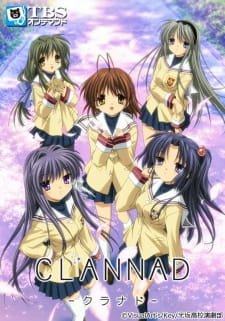
tTPO says: Clannad starts out as a somewhat conventional somewhat comedic high school harem series but it does not take long before other supernatural, emotional and family elements start veering this away from the conventional. The prominent roles of the parents of the main characters deserve special mention - more often than not parents just don't hae a significant role to play in most school anime, and if they are there are just in the background, always at work, or annoyances.
Where Clannad really differs is where it goes with After Story. So many series simply resolve the high school romance and leave that as the conclusion. But After Story is different and follows through in the years following school and the consequences the decision made there, ultimately leading to the karma filled, emotionally satisfying but slightly confusing, finale.
tTPO loved this series. I watched it some time ago but occasionally just randomly watch an episode to experience the inevitable feels that this series is packed with. Now I am a father the emotional impact of the parental roles in this series, as well as nearly all the events of After Story has only increased not decreased with time.
It is important to make some notes about the movie here. The short piece of advice is just don't do it. It is a largely joyless affair that focuses on Okasaki and Nagisa, and leaves out the whole karmic redemption theme that is so fundamental to the series which makes the darker moments more tolerable. Admittedly Nagisa's school play performance done much better. But that alone is not enough to watch it.
What
tTPO says: Clannad starts out as a somewhat conventional somewhat comedic high school harem series but it does not take long before other supernatural, emotional and family elements start veering this away from the conventional. The prominent roles of the parents of the main characters deserve special mention - more often than not parents just don't hae a significant role to play in most school anime, and if they are there are just in the background, always at work, or annoyances.
Where Clannad really differs is where it goes with After Story. So many series simply resolve the high school romance and leave that as the conclusion. But After Story is different and follows through in the years following school and the consequences the decision made there, ultimately leading to the karma filled, emotionally satisfying but slightly confusing, finale.
tTPO loved this series. I watched it some time ago but occasionally just randomly watch an episode to experience the inevitable feels that this series is packed with. Now I am a father the emotional impact of the parental roles in this series, as well as nearly all the events of After Story has only increased not decreased with time.
It is important to make some notes about the movie here. The short piece of advice is just don't do it. It is a largely joyless affair that focuses on Okasaki and Nagisa, and leaves out the whole karmic redemption theme that is so fundamental to the series which makes the darker moments more tolerable. Admittedly Nagisa's school play performance done much better. But that alone is not enough to watch it.
How About the Music?: For this tTPO, the music to this series is near perfect. Years after first watching it still elicits a pavlovian bittersweet response. All the themes deserve a mention. Except maybe "Torch". Sorry Lia.
OP1:"Megumeru ~cuckool mix 2007~" by eufonius
ED1: "Dango Daikazoku" by Chata
ED2: "Ana" by Lia
ED2: "Ana" by Lia
OP2: "Toki o Kizamu Uta" ("A Song to Pass the Time") by Lia
ED3: "TORCH" by Lia
So how does it end? (Spoiler Free): The ending brings everything together leaving few threads dangling. Though saying that, it would be a lie to say that the events as we head towards the end are particularly easy to understand. A rewatch or two puts most of the big points into context, though there still remain some significant debate on the interwebs as to the finer details. ie. You feel you know what just happened but explaining it to someone else may not be so easy. In all of these interpretations though, despite their disparity there is a significant point - this is NOT a deus ex machina ending, it is a a conclusion that brings together the events leading to this point.
For your and my convenience, the best of the explanatory links are here (long), here (diagrammatic), here (short) and here (point form).
Overall Grade: Clannad and Clannad After Story set the benchmark for harem and romance, and that doesn't even touch the genuine drama, comedy, and supernatural elements this series has. Despite the length (or perhaps because of it) this is well worth the journey, even for the tTPO. Though you could skip the extra, the recap and the movie. For the love of god though do not skip the alternate endings. While this series seems to divide the viewing public, for tTPO this is one of the best series ever. Grade A.
Addendum by KoanMan: For the TPO, this series may be a little long, but as a depiction of school life for friends facing their own challenges and discovering their own dreams, this has a lot to offer. Nagisa Furukawa and Tomoya Okazaki are the primary characters, and their relationship meanders around and through various goals and the lives of their friends as they tackle school and then then real world after school. As gentle as this begins, there are some seriously gut-wrenching moments. The "other world" parallelism is interesting, and adds some depth to the storyline. Series 1 [Clannad] has a goodly serving of humour, and the "kick count" is an inspired touch - look out for it! Great! Series 2 [Clannad After Story] is a lot more serious, with much less humour, although no less engaging. Throughout, Nagisa's father Akio Furukawa is a standout, and unsurprisingly, to those who know KoanMan, Tomoyo Sakagami and Kyou Fujibayashi rounded out the three favourites.
The music is OK, although the opening credit score of the second series is awesome. The final credits the first series "The Dango Song" took almost the entire first series to grow on KoanMan, who likes it now..... although it did not start out like that.
KoanMan loved this series, and for a non-action, non-violent story, this is impressive. Despite the length, this one was worth it. KoanMan gives this an A.
Little Busters! + Little Busters! Refrain + Little Busters! EX
Number of Episodes: 26 + 13 + 8
What TTPO says: It's hard to know where to start with this series. In the past I seem to have been a little plagued by some really good anime series with disappointing endings, which inevitably leave just a little sour taste in the mouth afterwards. Little Busters! turns this around. The first 26 episodes are really just a pretty average setup for the next much more emotionally intense 13 (Requiem) leaving the 8 OVAs (EX) the icing on the cake. And this is where the problem lies - can the TTPO really afford to get through 26 episodes which are by and large just average to get to the meat of the series?
How About the Music? The music is largely by Jun Maede and once again he manages to create music that is catchy without being trite, and still manages to trigger a near pavlovian response of bittersweet emotions associated with the series. The OP ("Little Busters!" by Rita) and ED ("Alicemagic" by Rita) are standouts, and almost up the the standard of the music of Angel Beats. Note quite though.
So how does it end? (Spoiler free): As previously stated the events of Refrain which is like one long ending to the series are what make the series are good as it is. Very satisfying indeed.
Overall Grade: If you had plenty of time of your hands I would give this a B or maybe a B+. But half a good series does not a good series make, even when it is the most important bit that is good. So in answer to my own question above, no I don't think I can in good faith recommend this if you are time pressed, and for that this will be the series probably remain the series I will have enjoyed the most to ever get a D.
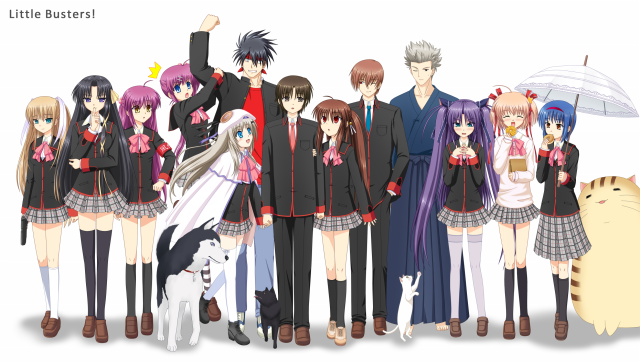
What Wikipedia MyAnimeList says: "When tragedy struck Riki Naoe as a child, he was rescued from grief over his parents' deaths when four other kids "recruited" him for their group—the "Little Busters." Now in high school, Riki and the other Busters are still fast friends, and though their vision of being heroes for justice may have faded, they'd still do anything for each other. Which is why Riki is now on TWO special missions. The not so secret one: recruiting new members so the Busters can form a baseball team. Preferably FEMALE recruits, as the current dude/babe ratio is an inconvenient 4 to 1. The OTHER mission, though. That's the strange one. Because Riki and Rin, the group's singular girl, are receiving odd messages, delivered by cats, concerning the existence of a "secret world" and assigning them tasks they have to complete. Were their youthful dreams of being crusaders not so fanciful after all? Or is there something even more vital at stake? Between steeling his courage to talk to girls, dealing with his own narcolepsy and facing his feelings concerning Rin, Riki may just need the strength of a superhero to solve the ultimate mystery of the Little Busters!"
What TTPO says: It's hard to know where to start with this series. In the past I seem to have been a little plagued by some really good anime series with disappointing endings, which inevitably leave just a little sour taste in the mouth afterwards. Little Busters! turns this around. The first 26 episodes are really just a pretty average setup for the next much more emotionally intense 13 (Requiem) leaving the 8 OVAs (EX) the icing on the cake. And this is where the problem lies - can the TTPO really afford to get through 26 episodes which are by and large just average to get to the meat of the series?
Well, there is a large cast and it took most of the first 26 episodes to just introduce and spend enough time with them to then care about what happens in Requiem. Which is important, because as with many of Key's previous productions (this show is also a visual novel adaptation) there is a fair amount of hardship the characters go through before they (and I) got to the end, and this improved the emotional payoff. Bittersweet is a good word to use to describe this, and is a word I will shamelessly use again in this review. The other good thing about the characters was they were all distinct - I did not have to try too hard to remember who did what in the mini-arcs that make up the first series. There are implied harem overtones to the story but these are not well developed nor are the focus of the story.
The OVAs are an interesting bunch focusing on 3 side characters from the main story with 3 mini-arcs that occur variously before and after the events of Refrain. While in no way essential to the plot they flesh out the world and these characters well, and I generally preferred them and their far more focussed nature to the character overburdened original series.
How About the Music? The music is largely by Jun Maede and once again he manages to create music that is catchy without being trite, and still manages to trigger a near pavlovian response of bittersweet emotions associated with the series. The OP ("Little Busters!" by Rita) and ED ("Alicemagic" by Rita) are standouts, and almost up the the standard of the music of Angel Beats. Note quite though.
So how does it end? (Spoiler free): As previously stated the events of Refrain which is like one long ending to the series are what make the series are good as it is. Very satisfying indeed.
Overall Grade: If you had plenty of time of your hands I would give this a B or maybe a B+. But half a good series does not a good series make, even when it is the most important bit that is good. So in answer to my own question above, no I don't think I can in good faith recommend this if you are time pressed, and for that this will be the series probably remain the series I will have enjoyed the most to ever get a D.
Wednesday, 6 August 2014
The Melancholy of Haruhi Suzumiya + The Disappearance of Haruhi Suzumiya movie
Number of Episodes: 24 + movie
What Wipipedia says: "The story follows the narrator and male protagonist Kyon, a cynical and incredulous student entering high school who is dragged along by the title character and female protagonist Haruhi Suzumiya (who is Kyon's classmate). She is an eccentric girl seeking supernatural phenomena and figures such as aliens, time travelers, and espers. With Kyon's reluctant help, Haruhi establishes a club called the SOS Brigade, to investigate mysterious events. Haruhi later recruits three additional members: the laconic bibliophile Yuki Nagato, the shy and timid Mikuru Asahina, and the extremely friendly transfer student Itsuki Koizumi. These members soon reveal themselves (to Kyon) to be the types of extraordinary characters that Haruhi is seeking. The three additional members have been sent by their various organizations to observe Haruhi, who is unaware of her own destructive reality warping powers and to prevent these powers from being unleashed. This leaves Kyon the task of maintaining the illusion of a normal life for Haruhi."
KoanMan says: KoanMan watched this series in the broadcast order, which meant some initial confusion re plot and characters. Starting with the least watchable episode straight up meant that if one did continue onto the next episode, it was all good from Ep2 onwards. In the end, watching in this way did make it a more interesting watch, as one felt just a little behind the storyline, trying to keep up with changes in direction that at the time presented as totally random. In retrospect, they still seem a little random, almost like they threw the episodes into a hat and let chance reveal the next episode. Character development did, however, seem perfectly done this way, so there must be some "method to the madness".
On that note, KoanMan found the characters difficult to associate with early on; the whining and sedentary Kyon, the OTT Haruhi Suzumiya, the uber-quiet bookworm Yuki Nagato, the "yes-man" Itsuki Koizumi, and the cutesy mascot girl Mikuru Asahina. Unusually, for KoanMan, all these characters grew on one, to the point where even Ep12 to Ep19 [Ttpo: that would be the infamous Endless Eight episodes] were watchable! Far more so than Straight Title Robot. The reader will know what this means by Ep13, suffice it to say that Ep13 to Ep18 could have been condensed by more brutal editing, however, this would beg the question....Would it have been the same series? Would it have had the same impact? The jury is out at this time.
The movie certainly had a far more cohesive plot and better direction to the story, most likely as it was based on The Disappearance of Haruhi Suzumiya, the 4th in a series of light novels by Nagaru Tanigawa. Thoroughly enjoyable, but do watch the series first.
How about the music?: The music was OK for the first few episodes, then the same music seemed to get better, and by the end, the very same music was something I looked forward to each episode. How did this happen?
Overall Grade: Between the unusual jumbling of episodes, well out of the story's chronological sequence, the mysteriously improving, though unchanging, music, and characters that grow on you, coupled with good delivery of a good story mean that series director Tatsuya Ishihara, and movie directors Tatsuya Ishihara and Yasuhiro Takemoto have done well.
KoanMan gives these series and movie a collective A.
Ttpo says: This series is not perfect but is brilliant. The fan service gets a little grating sometimes and the bullying of Mikuru occasionally a little uncomfortable. But these are minor gripes in a series that balances big questions in a deep world spanning mystery with day to day slice of life triviality with seeming ease. I loved the music (esp OP1, OP2 and insert song God Knows), and also the cheesy (and the oft mimicked) choreography over the ED1 (see here in live format by the seiyuu).
There are some very brave directional issues that KoanMan has already pointed out but these serve to further differentiate this series from the also-rans. The movie is everything good about the series in slighly higher resolution and is excellent from beginning to end, though without having first seen the series much would be lost to the casual viewer. An A for sure.
What Wipipedia says: "The story follows the narrator and male protagonist Kyon, a cynical and incredulous student entering high school who is dragged along by the title character and female protagonist Haruhi Suzumiya (who is Kyon's classmate). She is an eccentric girl seeking supernatural phenomena and figures such as aliens, time travelers, and espers. With Kyon's reluctant help, Haruhi establishes a club called the SOS Brigade, to investigate mysterious events. Haruhi later recruits three additional members: the laconic bibliophile Yuki Nagato, the shy and timid Mikuru Asahina, and the extremely friendly transfer student Itsuki Koizumi. These members soon reveal themselves (to Kyon) to be the types of extraordinary characters that Haruhi is seeking. The three additional members have been sent by their various organizations to observe Haruhi, who is unaware of her own destructive reality warping powers and to prevent these powers from being unleashed. This leaves Kyon the task of maintaining the illusion of a normal life for Haruhi."
KoanMan says: KoanMan watched this series in the broadcast order, which meant some initial confusion re plot and characters. Starting with the least watchable episode straight up meant that if one did continue onto the next episode, it was all good from Ep2 onwards. In the end, watching in this way did make it a more interesting watch, as one felt just a little behind the storyline, trying to keep up with changes in direction that at the time presented as totally random. In retrospect, they still seem a little random, almost like they threw the episodes into a hat and let chance reveal the next episode. Character development did, however, seem perfectly done this way, so there must be some "method to the madness".
On that note, KoanMan found the characters difficult to associate with early on; the whining and sedentary Kyon, the OTT Haruhi Suzumiya, the uber-quiet bookworm Yuki Nagato, the "yes-man" Itsuki Koizumi, and the cutesy mascot girl Mikuru Asahina. Unusually, for KoanMan, all these characters grew on one, to the point where even Ep12 to Ep19 [Ttpo: that would be the infamous Endless Eight episodes] were watchable! Far more so than Straight Title Robot. The reader will know what this means by Ep13, suffice it to say that Ep13 to Ep18 could have been condensed by more brutal editing, however, this would beg the question....Would it have been the same series? Would it have had the same impact? The jury is out at this time.
The movie certainly had a far more cohesive plot and better direction to the story, most likely as it was based on The Disappearance of Haruhi Suzumiya, the 4th in a series of light novels by Nagaru Tanigawa. Thoroughly enjoyable, but do watch the series first.
How about the music?: The music was OK for the first few episodes, then the same music seemed to get better, and by the end, the very same music was something I looked forward to each episode. How did this happen?
Overall Grade: Between the unusual jumbling of episodes, well out of the story's chronological sequence, the mysteriously improving, though unchanging, music, and characters that grow on you, coupled with good delivery of a good story mean that series director Tatsuya Ishihara, and movie directors Tatsuya Ishihara and Yasuhiro Takemoto have done well.
KoanMan gives these series and movie a collective A.
Ttpo says: This series is not perfect but is brilliant. The fan service gets a little grating sometimes and the bullying of Mikuru occasionally a little uncomfortable. But these are minor gripes in a series that balances big questions in a deep world spanning mystery with day to day slice of life triviality with seeming ease. I loved the music (esp OP1, OP2 and insert song God Knows), and also the cheesy (and the oft mimicked) choreography over the ED1 (see here in live format by the seiyuu).
There are some very brave directional issues that KoanMan has already pointed out but these serve to further differentiate this series from the also-rans. The movie is everything good about the series in slighly higher resolution and is excellent from beginning to end, though without having first seen the series much would be lost to the casual viewer. An A for sure.
Labels:
Comedy,
Drama,
Grade A,
Harem,
Mystery,
School,
Science Fiction,
Slice of Life
Thursday, 2 January 2014
White Album 2
Number of Episodes: 13
WhatWikipaedia Anime News Network says: "Fall, when graduation is only half a year away.
Haruki Kitahara, the final member of the light music club that dissolved, plays his guitar by the window after school in preparation for the school festival. It was the one and only adventure of a good student who spent two diligent years on his studies.
But when a flowing piano melody and a voice as a clear as bell harmonize with his guitar… He goes from being alone, to being two, then three in the light music club, as the semester he dreamed of, no, hoped for, began."
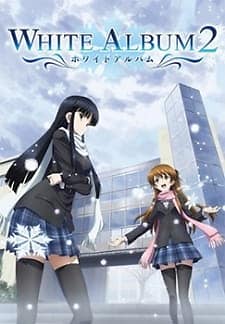
tTPO says: Set 10 years after the original White Album series, this new series has nothing to do with the old series except that it a) takes place in the same fictional universe and some of the songs from the original series appear here, b) it is based on a visual novel and c) it involves awkward romance and drama.
Having said that, there is lots to like about the series. There is a great dramatic (almost Shakespearean) arc in the pacing peaking midway through the series with the music club concert, before which is the glorious honeymoon period, but after which...not so much. The story is much more direct and less complex than the original White Album, and the focus remains on the basic love triangle that is the heart of the series. This is a good thing and enables better character development within the 12 episodes. And with the main characters still at school the mistakes they make and decisions they make ring naiive and true. (Teenagers don't need that much help to make their lives more dramatic than they need to be so is it any wonder these things are set at school? Who am I kidding? Adults still make plenty of bad decisions!).
How About the Music?: The music that is the canvas for the series also very appropriate though as a guitar player even with a few days practice I am not sure the solo Haruki pulls out at the concert is going to sound as good as it does considering his level of general guitar ineptitude. And the programming of the backing tracks for the original song they play - given they only had 24 hours to write and rehearse this when did Iizuke get a chance to do this? Especially the cracking sequenced bass line? Whatever. I'm being picky.
White Album, Powder Snow and Sound of Destiny from the first series all feature contextually. The OP ("Todokanai Koi '13" by Rena Uehara) and main ED ("Sayonara no Koto" by Rena Uehara) are largely inoffensive bits of J-rock and J-pop respectively that are improved subjectively by the series they are associated with.
So How Does it End? (Spoiler Free): There is much done right here (see my previous thought on the importance of having losers in any harem series), especially a couple of timely flashbacks - one in the second last episode and cleaver musical one at the very end - as well as a monologue from Setsuna that fill in whatever gaps were left with respect to the characters and their motivations. But there is a certain inevitability to the ending (despite its appropriateness) that takes away just a little from the drama and leaves a worse taste ("Er, that's it?") in my mouth than there should have been.
As I write this though all is not lost. Apparently this is but one part of a bigger story with further plot 2 and 5 years down the track. This to me is also a good thing and I can only hope the rest of this gets animated.
Overall Grade: Good show, but in a way I find difficult to describe, somehow not quite as good as it could have been. B. (Though this may improve with the completion of the story.)
What
Haruki Kitahara, the final member of the light music club that dissolved, plays his guitar by the window after school in preparation for the school festival. It was the one and only adventure of a good student who spent two diligent years on his studies.
But when a flowing piano melody and a voice as a clear as bell harmonize with his guitar… He goes from being alone, to being two, then three in the light music club, as the semester he dreamed of, no, hoped for, began."
tTPO says: Set 10 years after the original White Album series, this new series has nothing to do with the old series except that it a) takes place in the same fictional universe and some of the songs from the original series appear here, b) it is based on a visual novel and c) it involves awkward romance and drama.
Having said that, there is lots to like about the series. There is a great dramatic (almost Shakespearean) arc in the pacing peaking midway through the series with the music club concert, before which is the glorious honeymoon period, but after which...not so much. The story is much more direct and less complex than the original White Album, and the focus remains on the basic love triangle that is the heart of the series. This is a good thing and enables better character development within the 12 episodes. And with the main characters still at school the mistakes they make and decisions they make ring naiive and true. (Teenagers don't need that much help to make their lives more dramatic than they need to be so is it any wonder these things are set at school? Who am I kidding? Adults still make plenty of bad decisions!).
How About the Music?: The music that is the canvas for the series also very appropriate though as a guitar player even with a few days practice I am not sure the solo Haruki pulls out at the concert is going to sound as good as it does considering his level of general guitar ineptitude. And the programming of the backing tracks for the original song they play - given they only had 24 hours to write and rehearse this when did Iizuke get a chance to do this? Especially the cracking sequenced bass line? Whatever. I'm being picky.
White Album, Powder Snow and Sound of Destiny from the first series all feature contextually. The OP ("Todokanai Koi '13" by Rena Uehara) and main ED ("Sayonara no Koto" by Rena Uehara) are largely inoffensive bits of J-rock and J-pop respectively that are improved subjectively by the series they are associated with.
So How Does it End? (Spoiler Free): There is much done right here (see my previous thought on the importance of having losers in any harem series), especially a couple of timely flashbacks - one in the second last episode and cleaver musical one at the very end - as well as a monologue from Setsuna that fill in whatever gaps were left with respect to the characters and their motivations. But there is a certain inevitability to the ending (despite its appropriateness) that takes away just a little from the drama and leaves a worse taste ("Er, that's it?") in my mouth than there should have been.
As I write this though all is not lost. Apparently this is but one part of a bigger story with further plot 2 and 5 years down the track. This to me is also a good thing and I can only hope the rest of this gets animated.
Overall Grade: Good show, but in a way I find difficult to describe, somehow not quite as good as it could have been. B. (Though this may improve with the completion of the story.)
Tuesday, 26 November 2013
White Album
Number of Episodes: 13+13
WhatWikipaedia the Nihon Review (there are no decent synopses out there for this show so props to TypicalIdiotFan for this) says: "After 20 years of life, Fuji Touya finds himself in his second year of college, dating an up-and-coming idol singer named Morikawa Yuki, estranged from his father, and surrounded by “Goddesses”. These “Goddesses” are women that Touya has met throughout his life, who have all helped him in some way when he needed it. Unlike most other people, Touya has a hard time letting go of these special women, and his kindness to them has created some confusing and frustrating relationships. These bonds, especially with his beloved Yuki, are starting to become dramatic and strained, and eventually something is going to have to give…"
tTPO says: I like this series set in 1986. No, it is not perfect (ongoing communication problems form a large amount of drama - it's a wonder anyone survived the 80's) and yes, it is 26 episodes which means I had to forego some sleep as I binge-watched it over a week or so, but it was worth it. Comparisons with School Days are inevitable as both fall into a more tragic harem subgenre where a) the characters are more often than not flawed (especially the lead, though he could not do it without the willing help of the harem) and b) it's not always going to end well for a lot of people. In the case of White Album though, the car crash is slower, has more people on board at the time and doesn't end as badly.
Unlike may reviews that saw this series in two parts many years ago I watched it all in a short period of time and found the two parts* (shot by different directors apparently) still a pretty coherent series. I can't say it was always straightforward - there are without doubt some convoluted aspects but fortunately these are not usually essential to the main plot. Some but not all became clearer in subsequent episodes. What I did appreciate though were the character arcs - very few people stood still from start to finish, and many possibilities for where things were going were kept open till the near end and it was this that kept the episodes rolling and my sleep diminishing.
* With the appearance of White Album 2, and sequel to this series with completely new characters, it does get confusing with White Album, second season, also sometimes referred to as White Album 2, which was just the second half of this series.
How About the Music?: For a series so based around music I found the OP and EDs appropriate but not compelling. Should I have expected more from idol based J-Pop set in 1986 though?
Having said that, the main insert songs (even with their 80's flavourings) were a bit better and "White Album" (as sung by Aya Hirano - the voice of Haruhi) the song in particular eventually became a bit of an ear worm. The duet performance of "Powder Snow" at the end I think also rose above the limitations of the song itself (note this link contains spoilers as well as a song - different version with no spoilers here).
So How Does it End? (Spoiler Free): Mostly well. While most plot threads are sorted out, the final ending is left just a bit open. A bit of deduction (and internet research) allows narrowing down of the likely outcome without too much difficulty. The pacing was certainly much more even compared with School Days and even provided a motivation for many of the series' events though I can't vouch for the psychological validity of it! And yes, there were clues along the way for the astute viewer.
Overall Grade: Imperfect, but still compelling. B+
What
tTPO says: I like this series set in 1986. No, it is not perfect (ongoing communication problems form a large amount of drama - it's a wonder anyone survived the 80's) and yes, it is 26 episodes which means I had to forego some sleep as I binge-watched it over a week or so, but it was worth it. Comparisons with School Days are inevitable as both fall into a more tragic harem subgenre where a) the characters are more often than not flawed (especially the lead, though he could not do it without the willing help of the harem) and b) it's not always going to end well for a lot of people. In the case of White Album though, the car crash is slower, has more people on board at the time and doesn't end as badly.
Unlike may reviews that saw this series in two parts many years ago I watched it all in a short period of time and found the two parts* (shot by different directors apparently) still a pretty coherent series. I can't say it was always straightforward - there are without doubt some convoluted aspects but fortunately these are not usually essential to the main plot. Some but not all became clearer in subsequent episodes. What I did appreciate though were the character arcs - very few people stood still from start to finish, and many possibilities for where things were going were kept open till the near end and it was this that kept the episodes rolling and my sleep diminishing.
* With the appearance of White Album 2, and sequel to this series with completely new characters, it does get confusing with White Album, second season, also sometimes referred to as White Album 2, which was just the second half of this series.
How About the Music?: For a series so based around music I found the OP and EDs appropriate but not compelling. Should I have expected more from idol based J-Pop set in 1986 though?
Having said that, the main insert songs (even with their 80's flavourings) were a bit better and "White Album" (as sung by Aya Hirano - the voice of Haruhi) the song in particular eventually became a bit of an ear worm. The duet performance of "Powder Snow" at the end I think also rose above the limitations of the song itself (note this link contains spoilers as well as a song - different version with no spoilers here).
So How Does it End? (Spoiler Free): Mostly well. While most plot threads are sorted out, the final ending is left just a bit open. A bit of deduction (and internet research) allows narrowing down of the likely outcome without too much difficulty. The pacing was certainly much more even compared with School Days and even provided a motivation for many of the series' events though I can't vouch for the psychological validity of it! And yes, there were clues along the way for the astute viewer.
Overall Grade: Imperfect, but still compelling. B+
Saturday, 30 March 2013
Amnesia
Number of Episodes: 12
What Anime News Network
tTPO says: And so it begins. It seemed interesting enough. Until you realise the main protagonist is not getting her memories back, and remains vague, distant and amazingly uninteresting for nearly all of the show. Ironically enough, the male (harem) characters all tease us with the fact she is not as lively as she used to be before she lost her memories. Sadly we never get to see that potentially involving character we may have had some empathy with.
The five main male characters have at least a little depth to them. Bar one though they are all pretty unlikeable because they are either extradimensional and impotent, or have a varying degree of psychological pathology. The only sane guy (Ken) gets shoveled into a single episode only.
If I was being kind I would say the character design was a bit interesting, especially the eyes. And the Clamp style elongated characters. But that's hardly a reason to spend 4 hours watching the series.
How About the Music?: There is a bright light here. The OP ("Zoetrope" by Nagi Yanagi) is actually a bit of dark powergirl rock that may be the next most interesting thing in the series aside from the drawing of the irises. The ED ("Recall" by Ray) is from the same genre but doesn't work as well as the OP.
So How Does it End? (Spoiler Free): Awfully. Never before have I seen such a literal use of deus ex machina. It is a resolution. But a very bad one.
Overall Grade: This is a series that sucks you in at the beginning, hoping there may be some development. But there isn't. Amnesia flips you the bird and you will never get that time back. Grade D. Just execrable.
Sunday, 23 December 2012
Sword Art Online
Number of Episodes: 25
What
tTPO says: This series is a pleasant distraction that conveniently takes up the first two major arcs from the light novels the anime is based on. In that respect it is really two shorter series though there is some resolution for both in the final episode. But I get ahead of myself.
The series really promises and delivers no less than suggested in the blurb above. There are good action sequences, the virtual worlds are imaginitive and well thought out, the pacing is just so, and there is plenty of romantic and non-romantic love (the family aspect of this was a pleasant surprise) between the major players that feels about right, and keeps the harem fan inside me happy. I think it is this latter aspect (the love that drives the main characters) that engenders the rather heated support for this series.
So far as flaws go there is is just a little much deus ex machina for my liking and the triumph of 'will' over just about anything, including programming. I have a number of friends in the IT business who assure me life is not this simple. And the second villain, in contrast with the first (who is actually quite complex), is annoyingly underdeveloped and clichéd. But at the end of the day this is a fairly lightweight affair so you just go with the flow and it's all OK. It's not Neon Genesis. Don't overthink it.
How About the Music?: OP1 "crossing field" by LiSA is a pleasant but otherwise unremarkable bit of J-rock. OP2 ("INNOCENCE" by Eir Aoi) is cut from the same mould but for mind has a bit more get up and go.
ED1 ("Yume Sekai" by Haruka Tomatsu) is a pleasant song reflecting more the romance in the series. Has am easy on the ear modulation just before the prechorus. ED2 ("Overfly" by Luna Haruna) takes the same road but again with a bit more rock.
Really, there is not a bad theme in this 4.
So how does it end? (Spoiler Free): More than satisfactorily. Major plot threads are all sorted out, even if some of them are a bit silly, and there is still room for a sequel.
Overall Grade: Nothing really new here, but it does have plenty of heart (and I rate that) and the execution was generally pretty good. B-.
Friday, 7 December 2012
School Days
Number of Episodes: 12+3 OVAs
What
tTPO says (Warning! It is hard to discuss this series without being just a little spoilerish!): Holy crap. This is the first series in a long time I have had troubles finishing, not because it was so bad, but because I did not want to see the train crash that was coming. But I did make it, though it was not easy.
The blogosphere is sharply divided on this series - either it is somewhat flawed genius, or it is just very very disappointing, especially the ending. My experience was that School Days falls into the former category, and would like to think it was a deliberate decision on the behalf of the director Keitaro Motonaga. The problem, I think, with people that dislike this series is not the series itself, but their expectation of what it should have been. Calling this another harem show would be like calling Puella Magi Madoka Magica another magical girl anime.
School Days is based on a erotic 'visual novel', or a type of 'choose-your-own-adventure' type games. Of 21 possible endings, 18 of these were good endings, with the protagonist ending up happy with 1 (or more) girls. You can see that when Keitaro was given this project, it would have been easy to have made a fan-service laden series with many cute girls and a proverbial happy ending. However, this was not the decision that he made.
Instead we get a series with a remarkable lack of fan service, a bunch of flawed and generally unlikeable characters, and a deconstruction of the harem genre. It reminded me in feel and structure (and this admittedly may be a bit of a stretch) of Polanski's Macbeth, with Makoto in the titular role. Like that film it starts out modestly then rapidly (some say too fast but I think the timing was spot on) escalates to extremes. It should not be surprising though, giving the self-centred mind of the average teenager, that unlike Macbeth, Makoto takes little responsibility for his actions even up to the end, and spurns the last opportunities for possible redemption.
So how should I describe this to avoid disappointment? It is a harem show. There is a little romance, but not much (and enough that I would not tag it as such) - most of the relationships are very dysfunctional. There is plenty of drama. But the tag that gives a bit away, but would also set the expectations right, would be horror.
When you watch the series, this should be no surprise, since to anyone with a bit of life experience will know where this out of control train is heading. And train wrecks are usually not pretty.
How About the Music?: School Days is another series with had so many EDs I'm just going to ignore them. The OP ("Innocent Blue" by Devicehigh) on the other hand, again much like Puella Magi Madoka Magica, is (intentionally?) bland, leaving no clue as to the true nature of the series.
So how does it end? (Spoiler Free): Well that is the big question and no details here, but...not at all happily. And contrary to popular belief the ending is not sudden - the groundwork is laid for this over several episodes. But it does wrap things well. Prices were paid. I don't think we'll be seeing a sequel.
Overall Grade: How do I grade a show is flawed (how did everyone keep getting access to the roof when there was only one key?), I have no desire to rewatch and indeed struggled to watch once, but does such a good job of tearing apart the genre is was based on? A- apparently. But you have been warned.
Addendum: Just finished watching the OVAs and it is a bit of a rollercoaster. One is a very similar episode to the first episode. The next is a very traditional harem episode set in an alternate, happier and more cliche universe around Valentine's Day. Hilarity ensues. The third, and I think the best, is a very much odder alternate universe where 4 of the girls are poorly paid superheroes. Or magical witches. This is a genuinely funny episode (welcome relief after the series itself) that skewers transforming heroes, magical girls, the nature of heroes and villains, visual novel plots in addition to School Days itself. In a fit of irony there is a fair amount of gratuitous fan service. And in between all of this there are just brief moments of seriousness with what appears to be commentary on School Days itself. I could hear the director saying 'This is fiction guys. Don't try this at home." Or I could have been imagining things. But I like to think not.
Koanman's thoughts: Welding.
You know you shouldn't look at it, you know it will damage your vision, but you just cannot look away.
This series is welding.
It builds slowly, with loads of "sorry" and frustration, but certainly builds well to the inevitable. It was amazingly well done, there are not many examples of any kind of entertainment that can engender that level of emotional cringing; and sustain it for such a prolonged period.... Genius!
Music is really good, and you have to believe the music director really does have a sense of humour. It is very well matched to the mood of the scene in most instances. The only music I really detested was the 80's tinsel reject track in the opening credits. I could not sit through it even on the first pass without tears welling in my ears. I didn't know that was even possible.
After an entire series developing the characters, leading us slowly and labouriously through the continuing angst that School Days, I did not feel the ending fit with the personalities at all. It was very sudden, and a complete change in genre. Possibly the idea was to release all the pressure that had been building, but it did not work for me.
KoanMan would, for the series generally give an A, but for the ending a C. Overall this is a B.
Overall Grade: How do I grade a show is flawed (how did everyone keep getting access to the roof when there was only one key?), I have no desire to rewatch and indeed struggled to watch once, but does such a good job of tearing apart the genre is was based on? A- apparently. But you have been warned.
Addendum: Just finished watching the OVAs and it is a bit of a rollercoaster. One is a very similar episode to the first episode. The next is a very traditional harem episode set in an alternate, happier and more cliche universe around Valentine's Day. Hilarity ensues. The third, and I think the best, is a very much odder alternate universe where 4 of the girls are poorly paid superheroes. Or magical witches. This is a genuinely funny episode (welcome relief after the series itself) that skewers transforming heroes, magical girls, the nature of heroes and villains, visual novel plots in addition to School Days itself. In a fit of irony there is a fair amount of gratuitous fan service. And in between all of this there are just brief moments of seriousness with what appears to be commentary on School Days itself. I could hear the director saying 'This is fiction guys. Don't try this at home." Or I could have been imagining things. But I like to think not.
Koanman's thoughts: Welding.
You know you shouldn't look at it, you know it will damage your vision, but you just cannot look away.
This series is welding.
It builds slowly, with loads of "sorry" and frustration, but certainly builds well to the inevitable. It was amazingly well done, there are not many examples of any kind of entertainment that can engender that level of emotional cringing; and sustain it for such a prolonged period.... Genius!
Music is really good, and you have to believe the music director really does have a sense of humour. It is very well matched to the mood of the scene in most instances. The only music I really detested was the 80's tinsel reject track in the opening credits. I could not sit through it even on the first pass without tears welling in my ears. I didn't know that was even possible.
After an entire series developing the characters, leading us slowly and labouriously through the continuing angst that School Days, I did not feel the ending fit with the personalities at all. It was very sudden, and a complete change in genre. Possibly the idea was to release all the pressure that had been building, but it did not work for me.
KoanMan would, for the series generally give an A, but for the ending a C. Overall this is a B.
Tuesday, 26 June 2012
Dusk Maiden of Amnesia
aka Tasogare Otome × Amunejia
Number of Episodes: 12
What Wikipedia says: "The story revolves around a first-year middle school student, Teiichi Niiya who had just enrolled at Seikyou Private Academy. When he gets lost in one of the school's old building, he meets a girl named Yuuko Kanoe who reveals herself as a ghost with no memories. Teiichi then decides to investigate her death by looking through the school's seven mysteries revolving around her. Throughout the story, Teiichi and Yuko discover the truth about these ghost stories and help those who are troubled."
tTPO says: I must admit I was a bit unsure of this series when it started as it didn't really seem to know where it was going initially - comedy was mixed in with gratuitous fan service next to the romance, suspense, mystery and mild supernatural horror. However Mrs tTPO and I stuck with it and were glad we did. As the series progressed and more was revealed the plot and the feel of the show came more coherent, focusing more on the main characters and plot. In the process of doing this it lost much of the trivial fan service and comedy (though not quite) and gained more drama and atmosphere. The pacing at the end was pretty good and I am glad this was not a 24 episode series.
How About the Music?: The OP (Choir Jail by Konomi Suzuki) comes from the Evanescence / Paramore school of rock power ballads with female vocals. This is not my favourite genre but dammit if the song is not a) appropriate and b) a bit catchy.
The ED (Karandorie / Calendrier by Aki Okui) has a folky village waltz feel to it, and reminded me an awful lot of the opening theme to Spice and Wolf (Tabi no Tochuu). This is not necessariy a bad thing though (and I may be biased here) I felt the waltz time probably suited the medieval feel of Spice and Wolf better.
So how does it end? (Spoiler Free): As well as it possibly could have. The ending carried significant emotional weight and was consistent with its own internal logic, and I don't think you can ask for more than that. Though we were left thinking whether the final outcome was actually going to be the best outcome for Teiichi long term.
Overall Grade: This was another series that got a boost from a good ending. Despite the slightly wacky initial pacing and feel, stick with it - the latter half of the series more than makes up for it. Mrs tTPO and I agree: Grade B.
Sunday, 29 April 2012
Freezing + Freezing Vibrations
Number of Episodes: 12 (+ 6 mini-OVAs) + 12 (+ 1 special episode)
What Wikipedia says: "Set in a slightly futuristic world, Earth has been invaded and is at war with aliens from another dimension called the Nova. In order to counter them, Pandoras and Limiters, genetically modified girls with super fighting skills and their male partners who use special "freezing" powers to limit their opponent's mobility, are made to fight against the Nova. The series focuses on Kazuya Aoi, a Limiter whose late sister was a Pandora, and Satellizer el Bridget, a powerful Pandora with a cold personality, both who are enrolled at the West Genetics Academy, one of the many academies where Pandoras and Limiters are trained. In spite of the warnings of all his friends about Satellizer, who has intense aphephobia, Kazuya decides to be her friend and Limiter. They are later joined by Lana Linchen, a Pandora from Tibet in search for her Limiter who believes Kazuya to be her "soulmate", sparking a rivalry with Satellizer. The story follows Kazuya's Relationship with Satellizer, the students of the Academy, and Earth's war against the Nova."
What tTPO says: More to the point is what Wikipedia does not say - that this series has its fair share of blood and boobs. So if you are offended by nudity (no sex though - the worst it gets is some humiliation in episode 3) or reasonable amounts of violence I would be turning off about now. If you put up with this though what awaits is an interesting experience. The blood and boobs are often incorporated (as much as they can ever be) into the plot. The main characters have a fair amount of depth and backstory to them, and the mechanics of the Pandoras / Limiters / Novas are pretty well thought out - moreso if you freeze frame and read the Jinglish-ridden data screens that litter the episodes at various points. The pacing of the plot as it progresses to its inevitable climax is good, and even with the 'fight-of-the-week' phase it goes through I found myself looking to next weeks biff with anticipation. So much so that after watching 3 episodes of this on my own because I was indecisive about whether she would enjoy it or not, I introduced Mrs tTPO to it and she enjoyed it through to the end also.
The big weakness of the anime (as I discovered when I subsequently read the manga) was the lack of depth of the various secondary characters (with the exception of Ingrid Bernstein whose episode was one of the stronger ones as a consequence). In the anime they were often poorly developed charactures acting only as foils to the Aoi and Satellizer, with some of their redeeming battles in the final episodes in the manga, played right down in the anime. The other weakness of the anime in its adaptation of the manga is, that in contrast to what I said above, there were occasions when the fan service was gratuitous, and no more so than episode 8 (a prom queen episode with more wardrobe malfunctions than a Superbowl half-time show) which was an anime original. Or indeed any of the OVAs. Thankfully this episode is a stand alone and can be left out along with the OVAs without too many problems. If this sort of stuff floats your boat though you are in for a treat.
How About the Music? There are occasions I don't need to listen back to remind myself how a song went. The OP (Color by MARiA, a cover of the Hatsune Miku song, and much much better) is one of these, a thumping piece of J rock with some awesome use of synthesiser. The ED (Kimi wo Mamoritai aka To Protect you by Aika Kobayashi) is another pumping electronic J-rock number and while full of energy not quite as catchy as the OP for me.
So how does it end? (Spoiler Free.): Pretty well, but at risk of repeating myself, not quite as well as the manga, with a little bit too much focus on the main characters. That notwithstanding, it's not disappointing.
Overall Grade: Grade B. Don't get me wrong - I liked Freezing a lot, and probably more than this grade would indicate. The story, action and main character development are good enough to carry this series through its weaknesses. But I am not sure the anime adaptation does justice to the source material. Watch this then go and read the manga, because the manga goes all sorts of places after the events covered by the anime finish.
Addendum: Freezing Vibrations continued with a largely self contained story arc. Seeing the first series is not essential but it helps a lot. Unlike Freezing though, I had read the manga upon which this was based before seeing the series and I did wonder how they were going to do it and make it interesting since the 3rd and 4th arcs of the manga do stray away from Satellizer and Kazuya as the central characters and make it more of a ensemble story. So did it work?
For the most, yes. Some nifty writing meant the sometimes drawn out manga was condensed to a neat 12 episode arc, and they shoehorned the rather personal 2nd story arc from the manga into the middle of the 3rd manga arc which was more action oriented and made up the bulk of the story. There were good character moments for many, though Rana did not see much development this time around. There is after all only so much you can do in 12 episodes.
On the downside there were a couple of clunky moments as a consequence of the rearrangement of the arcs (mostly involving Satellizer's step-brother) as well as a vanishing Nova which was forgotten about but in the main the pacing I though was actually better than the manga, leaving the ending neatly wrapped up while still leaving the door open for an eventual series 3.
And there were boobs. And blood. And somehow it all just worked again. Still Grade B. And the OVA was still stunningly gratuitous and can be left out.
KoanMan says: When KoanMan started watching this series (by director Takashi Watanabe as an extension of the manga written by Korean manhwa author Dall-Young Lim and illustrated by Kwang-Hyun Kim) it was immediately obvious that mammophiles will love this. The irony is that the stand-out feature (pardon the pun) of this pair (OK, no more from now) series was in fact not the décolletage, but the story, which could easily have carried the whole production on its own. Of particular note, is that one became strangely accustomed, almost desensitised, to the thoracic theatrics - to the point that by the end of the first series, they were simply there. Just participating as part of the wall-paper....part of the background.
That said, the clothing is linked to the character and their state of composure/health. An interesting detail that actually fits well with the plot, led by a first year student "limiter" Kazuya Aoi, and the aphenphosmphobic second year student "pandora" Satellizer el Bridget (for those interested also see haphephobia and haptephobia). They are joined by Tibetan exchange student "pandora" Rana Linchen to form a comical love triad that continues to entertain. This relieves a lot of the heavy themes of world cataclysm running almost continuously, as characters discover themselves and their place in the world.
Character development is good, and this continued to deepen throughout both series. With the variety of personalities it is easy to have favourites, KoanMan likes the "never give up" attitudes of Rana Linchen and Ganessa Roland. Fantastic!
The second series particularly impressed with its dark undertones, as concepts alluded to in the first are given texture. This, despite what appears to be a complete "changing of the guard" between the series - it is almost as if the whole crew were changed over, with different music, different character portraits, and a mild, though obvious, lower grade of animation production in the second series.
The series one music is awesome, the opening theme is "Color" by MARiA (a cover of a song voiced by a singing synthesiser vocaloid Hatsune Miku), while the ending theme is "To Protect You" by Aika Kobayashi. Awesome. Alas, in series two, the theme music is not so awesome (opening theme "AVENGE WORLD", end theme "The World Embraces Scars" both performed by Konomi Suzuki).
Overall, a good story, good plot and character development. KoanMan enjoyed this, not because of the fan service, but almost in spite of it. KoanMan rates this a solid B.
Wednesday, 11 April 2012
Mashiro-Iro Symphony: Love is Pure White
aka Mashiro-Iro Symphony: The Color of Lovers
WhatWikipedia Anime News Network says: "The traditional girls-only Yuihime Private Academy is considering
the possibility of starting to accept both genders and has thus made an
agreement with a neighboring school to receive some of its students as
an experiment to see the reaction to this adaptation. Shingo Iryu is one
of the many students transferred for a ten month experimental phase at
Yuihime Academy. He, his sister, and his fellow relocated colleagues are
impressed by the sophisticated campus, but even more by the resistance
of many students who don't want the boys over there."
tTPO says: The synopsis admittedly did not fill me with hope. What happened when I started watching though was unexpected. It opened brilliantly with a sense of mystery and it made me wonder hopefully, could this be the next Clannad??? Disappointingly it then sunk (along with my hopes) into cliche for an episode or two. After this though it found its own way, and it was a good way.
Number of Episodes: 12
What
tTPO says: The synopsis admittedly did not fill me with hope. What happened when I started watching though was unexpected. It opened brilliantly with a sense of mystery and it made me wonder hopefully, could this be the next Clannad??? Disappointingly it then sunk (along with my hopes) into cliche for an episode or two. After this though it found its own way, and it was a good way.
For a harem series the characters were distinct, and by and large were not discarded after their moment in the spotlight. I've said it before but the emotional resonance of a romance series relies upon the consequences of the characters decisions and in that respect this series follows through. The design of the characters is moe and beautiful, and indeed the whole series is pretty easy on the eye.
While not setting any records for originality, there are a few things that make this series stand out - a main character who is more than competant and actually pretty good at communication, the friend of the main character who is also more than competant, and a general lack of fan service and jokes about porn.
If I had a complaint it would be about the slightly erratic pacing. Clearly they had a few character arcs from the game on which it is based to get through and you get the feeling maybe another episode or two could have made some of the transitions a bit smoother. But I'm not complaining that much.
How About the Music?: The music is a standout. The OP, "Authentic Symphony" by Choucho is an epic, catchy tune. The ED ("Suisai Candy (水彩キャンディ; Watercolor Candy)" by marble) is more J-pop but still very catchy. Even the incidental music (generally orchestral) kicks ass. It all just works to crank up the emotional impact.
So how does it end? (Spoiler Free): There are winners and losers and that is how it should be. And I gave a crap about both.
Overall Grade: This is no Clannad, and if Clannad never existed this may have scored higher. But for a well worn genre this show put very few steps wrong. Grade A-. Not forgetting my personal bias.
How About the Music?: The music is a standout. The OP, "Authentic Symphony" by Choucho is an epic, catchy tune. The ED ("Suisai Candy (水彩キャンディ; Watercolor Candy)" by marble) is more J-pop but still very catchy. Even the incidental music (generally orchestral) kicks ass. It all just works to crank up the emotional impact.
So how does it end? (Spoiler Free): There are winners and losers and that is how it should be. And I gave a crap about both.
Overall Grade: This is no Clannad, and if Clannad never existed this may have scored higher. But for a well worn genre this show put very few steps wrong. Grade A-. Not forgetting my personal bias.
Saturday, 18 February 2012
Maken-ki! and Maji de Watashi ni Koi Shinasai!
Number of episodes: 12 each
What Wikipedia says: "Maken-ki! is a Japanese manga series by Hiromitsu Takeda. An anime adaptation was recently completed. Takeru Ohyama, a young, normal, perverted minded guy, got accepted and goes to a school that, unknown to him, is where combat and magic is used and taught. Arriving at the school (which was once only for girls), he meets Haruko Amaya, his childhood friend, after three years, Inaho Kushiya, a girl who says she's his fiancée, and Kodama Himegami, a blonde who wants to kill him. Finding out that there are many girls there that just don't like him, he is told that everyone there uses a special magic ability while using an item or weapon called a Maken. Later, he finds that no Maken is acceptable for him and doesn't know what to do, since in this school the students get into duels that showcase their magic and combat power, of which he seemingly has none."
"Maji de Watashi ni Koi Shinasai! (lit. Do Love Me Seriously!) is a Japanese adult visual novel. Sentai Filmworks licensed the anime series. Kawakami City is famous for its strong dedication to its samurai ancestors. A healthy fighting spirit is always valued and it is even an important factor for success at school. Yamato, a second year student from Kawakami High School is always with his close friends (four boys and three girls). They have all known each other since they were young and have done many things together. While they have many other friends, this group of seven is a close-knit, inseparable group. They even have a secret base where they meet. With the new semester, they welcome two girls into their group and shortly after things begin to change."
What tTPO says: Both of these series share several similar traits - both are set in schools, both are harem series, both have fighting in abundance, neither is spectacularly good or bad, and both have very ample amounts of less than subtle fan service. Despite these similarities there are some important differences though.
Maken-ki! is all about the school, the students and the rather complex system of elemental power that the students use for fighting. The cast is large for a 12-episode series, and while their relationshop are interesting, the sheer weight of numbers of characters limits the possible development of them, leading to less empathy for many. The plot though leans heavily (as does the script) at times on the devlopment of elemental /weapon powers, and I cannot say, hand on heart, I always fully understood the nature of this. It was a bit like listening to Star Trek techno-babble. In Star Trek it was a poor substitute for an overall plot, and in Maken-ki! it is no different, and it ends up meandering and lacking in clear direction. Maybe you just need to be under 15 years old to get this completely? Having said that, some of the powers are quite imaginative.
Maji de Watashi ni Koi Shinasai! takes a different path. While still having some character development of the main characters, it takes many opportunities to poke fun at itself, often deconstructing the harem genre (and others where time permitted). This leads to some genuine LOL moments. It also takes a more serious look at the nature of modern Japanese nationalism and politics, and that is something I did not expect to be saying about a harem fighting series. Ever. And in there somewhere it manages to hold together some semblance of a plot.
How about the music?: Maken-ki!: The OP is a nice bit of J-pop and quite possibly the best bit about the series. The same canot be said for the ED which is a bit annoying.
Maji de Watashi ni Koi Shinasai!: The OP is some frenetic J-rock and is kinda cool without being brilliant. The ED is just a bit of bland J-pop.
So how does it end? (Spoiler Free): Harem show endings are trickier than some genres to get right because if there is a failure of commitment by the main character, it tend to trivialise any emotional weight the series may have had. With this in mind, both series have conclusions of sorts. However. Maken Ki's ending manages to feel contrived, and suffers (again) from Maken-babble. Some of the character arcs just faded away, along with any emotional impact they may have had.
In contrast, the ending of Maji de Watashi ni Koi Shinasai!, while at least roughly tying up most loose plot points, still manages one last brilliant harem genre deconstruction.
Overall Grade: Maken-ki! set the bar low, and much of the time failed to make it. I was thinking about giving this a C but that would be an injustice to other mediocre shows. Grade D.
Maji de Watashi ni Koi Shinasai! shows that within the same genre restrictions, you can have a much smarter and more involving series. Having said that, don't mistake this for an A grade show. Grade B- (and only just).
Friday, 10 February 2012
Boku wa Tomodachi ga Sukunai
Number of episodes: 12 + OVA
What Wikipedia says: "Kodaka Hasegawa is a recent transfer student to St. Chronica's Academy, a Catholic high school. As with every other school he has ever attended, he finds it difficult to make friends there because of his naturally-blond hair (inherited from his deceased English mother) and fierce-looking eyes, which make him look threatening to his prejudiced schoolmates.
One day, Kodaka accidentally comes across the equally solitary and very abrasive Yozora Mikazuki while she converses with her imaginary friend Tomo. Realizing that neither of them have any social lives, they decide that the best way to improve their situation is to form a club – the Neighbor's Club – precisely intended to make friends and learn social skills.
Five other members soon join the club, starting with the school's well-connected but arrogant idol Sena Kashiwazaki, who has no female friends of her own because of their jealousy over her many male admirers. The next to join is Yukimura Kusunoki, a feminine underclassman of Kodaka's who rather idealizes him and follows him in the hope that it will teach him to become manlier. Maria Takayama is a 10-year-old "genius" teacher and nun at the academy whom Yozora recruits to become the club adviser. Rika Shiguma is an underclassman and well-known scientific genius with fujoshi tendencies who joins the club after Kodaka rescues her from a laboratory accident. Finally, Kodaka's younger sister Kobato is in St. Chronica's middle school division and is a fan of Gothic anime. "
What tTPO says: I liked this series. However, being a harem series it hit my reviewing weak spot fairly hard. Yes, there were an enormous number of anime cliches present, but there was also a very basic story of a childhood friendship that wove its way through the series that helped hold it together and give it some heart. This, combined with some individually imaginative episodes (especially those involving computer games), elevated it above the above some of the very worst of this genre. I am not ashamed to say the were a few times I was perhaps a little more keen than I should have been to find out what happened in the next episode.
How about the music?: OP - did someone just rip off K-on? On the other hand, the ED, Watashi no Kimochi by Marina Inoue, has a nice rock riff starting out that unfortunately fairly quickly takes a turn for the generic. But I really like the opening chords!
So how does it end? (Spoiler Free): It's tidy 12-episode format worked in its favour and helped prevent too much repetition, and the ending was satisfactory (not brilliant though) while shamelesslessly leaving room for another series.
Overall Grade: C (plus). Not the worst of the genre by any means but there are better harem series out there. Certainly if you are after anything resembling a plot heavy series leave right now.
Subscribe to:
Posts (Atom)