Showing posts with label School. Show all posts

Wednesday, 24 July 2019

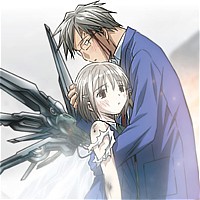
Saikano, The Last Love Song on this Little Planet

aka Saishuu Heiki Kanojo (translated into English as Ultimate Weapon Girlfriend)


Number of Episodes: 13

What Wikipedia Anime News Network says: Shuji and Chise are two Hokkaido high school students barely starting a relationship with each other. Then, with no warning, a squadron of bombers from an unknown country destroy the city of Sapporo. All hope is lost when suddenly, the bombers are destroyed by a small red light floating across the sky. At this point, Shuji finds out that the one responsible for eliminating the enemy forces is Chise, who reveals herself as a cyborg engineered for mass-destruction. 


What KoanMan says: This sounds like it would be great. It sounds like it would be packed with action. It sounds like a schoolboy's wet dream…

However… it is “sorry”, “dummy”, “idiot”, a little bleak, and more “sorry”. Much more “sorry”.

The take-home message: don’t judge a book by its cover. The feel of this series is dominated by the story-line, which meanders through the relationship of the main protagonists, high-schoolers Chise and Shuuji. Plenty is left out, and much is assumed as the plot plods along at a dreary pace. Brief glimpses of excitement are thwarted as the story is dragged back to its original pace, and yet it somehow flows steadily and consistently - just don’t expect to be thrilled by director Mitsuko Kase's anime rendition of Shin Takahashi’s manga.

The basic animation smacks of low budget, and possibly indicates a lack of artistic interest on the part of the production team (lead by Naoko Takahashi), although the artistic effects in the opening and closing credits were uncharacteristically well done. 

How About the Music? The music generally is average, and the music for the opening and closing were in keeping with the general mood, although those more musically attuned may find the 1/8th flat notes of the singer irritating, but it does add a little more to the disjointed feel generally. Perhaps sound director Keiichirou Miyoshi has achieved the desired audience response? KoanMan is unsure.

So How Does it End? (Spoiler free):  All endings are not created equal and while there won't be a sequel anytime soon, the ending perhaps lacks a little clarity. Reading the last chapter or two of the manga explains things a little more fully and is recommended. [tTPO]

Overall Grade: If you are after a borderline existential story that does not require adrenaline, then this could meet your needs. Despite the flaws KoanMan kept watching through to the end, indicating a certain something, perhaps the futility… ohhh the futility…

KoanMan rates this a C.

What tTPO says:  tTPO has a soft spot for romantic anime. What I have not said previously is I also have a soft spot for slow moving existential post apocolyptic romantic anime also, and Saikano fits this description. There is little to enjoy here as the glacial car crash that is this anime grinds to its conclusion, and yet like any car crash, I found it difficult to look away. The basic artwork (it was 2002 when it was produced) and muted colours that annoyed KoanMan I thought appropriate for this often emotionally cold production. 

Needless to say I rate it a bit higher than KoanMan, though Mrs tTPO would agree with him. I considered the possibilty I was wrong. Not possible though, is it? Grade B-.

Sunday, 26 May 2019

My Little Sister Can't Be This Cute

aka Oreimo, Ore no Imouto ga Konna ni Kawaii Wake ga Nai


Number of Episodes: 25

What Wikipedia says:  Kyosuke Kosaka, a normal 17-year-old high school student living in Chiba, has not gotten along with his younger sister Kirino in years. For longer than he can remember, Kirino has ignored his comings and goings and looked at him with spurning eyes. It seemed as if the relationship between Kyosuke and his sister, now fourteen, would continue this way forever. One day however, Kyosuke finds a DVD case of a magical girl anime which had fallen in his house's entranceway. To Kyosuke's surprise, he finds a hidden eroge inside the case and he soon learns that both the DVD and the game belong to Kirino. That night, Kirino brings Kyosuke to her room and reveals herself to be an otaku with an extensive collection of moe anime and younger sister-themed eroge she has been collecting in secret. Kyosuke quickly becomes Kirino's confidant for her secret hobby. The series then follows Kyosuke's efforts to help his sister to reconcile her personal life with her secret hobbies, while restoring their broken relationship and coming to terms with their true feelings for each other.

What KoanMan says: When looking to the next anime to spend time with, Oriemo (Ore no Imouto ga Konna ni Kawaii Wake ga Nai - My Little Sister Can't be This Cute) almost didn’t make it for KoanMan.
This series also flies close to the sun with some of its concepts, and as such, almost did not make the watch list. It seemed to be difficult to find, with Season 2 more available than Season 1, obviously, the decision was made to go forth and watch Oriemo anyway, or because of?

Once underway, the story ebbed and flowed in a refreshingly unpredictable manner. Characters came in and out of focus according to the needs of the story, and provided good support for the brother-sister team of Kyousuke and Kirino. Director Hiroyuki Kanbe has adapted the story well from Tsukasa Fushimi’s light novels. Characters evolve and deepen over time, and the pace is steady without ever feeling slow or rushed.

So How Does it End? (Spoiler free):  It ends. Perhaps controvertially in many ways. But it ends. Any more I think would be redundant. [tTPO]

How About the Music?
Music is OK without being anything notable, though some of the scenery is beautiful and poignant, perfectly complimenting the moment in which they appear. KoanMan found this anime an enjoyable, easy watch, and likely to resonate on many levels with anyone with siblings.

Overall Grade:
This will not be to everyone’s taste, but KoanMan gives this an A.

Addendum by tTPO: Incest, incest, incest, incest incest, incest. That's all people talk about in respect to this series. And yes, the brother / sister relationship is probably not within two standard deviations of the mean, however, the reality is that there is nothing any more than G rated that goes on in this series between them. And to simplify the series to a single word and write it off would be a disservice to the plot, the rest of the cast and the pacing of an otherwise very very watchable series, even if it is a bit long for the tTPO. And if you can't put up with some family drama just stop watching and shut the hell up, calm down and go and watch something less controversial like Fist of the North Star, or some hentai. A

Saturday, 24 November 2018

Mob Psycho 100


Number of Episodes: 12

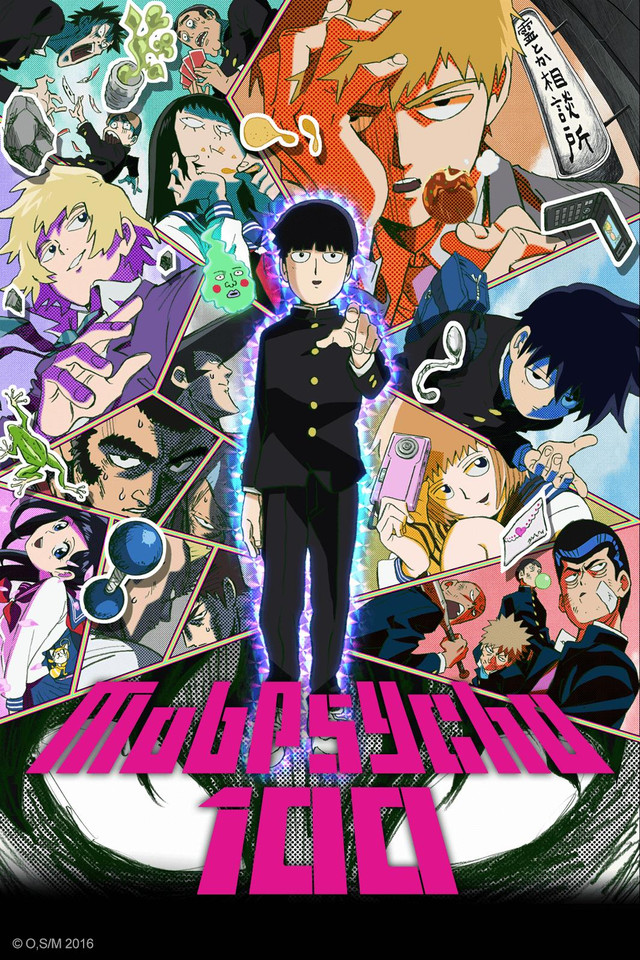
What Wikipedia says: Shigeo Kageyama is an average middle school boy, nicknamed Mob (モブ Mobu) (meaning "background character") for lacking a sense of presence. Although he looks like an inconspicuous person, he is in fact a powerful esper. As he grows older, Mob realizes that his psychic powers are strengthening and becoming more dangerous. To avoid his power getting out of control, he constantly lives a life under an emotional shackle. Mob wants to live a normal life just like the others, but a barrage of trouble keeps coming after him. With the suppressed emotions growing inside Mob little by little, his power threatens to break through its limits.

What KoanMan says: "Mob Psycho 100", by Yuzuru Tachikawa and produced by ONE, is a similar style of animation to One Punch Man by the same, though visually a little rough. The storylines are vaguely similar, however they present different viewing experiences. Characters centre on Mob, who is a socially clueless super-being, who follows a meandering plot through his personal development. Lots of action and likeable, though shallow, personalities make this an enjoyable watch, without much brain owner required. 

So How Does it End? (Spoiler free):
Well rounded, but with plenty of room for season 2 (coming late 2018/early 2019).

How About the Music? The music is OK, and the Japanese phonetic counting in English in the opening credits song is very cute. 

Overall Grade: Mob Psycho 100 is an enjoyable, non-taxing, short series, and is a good way to pass time, with some great visual ideas. Koan Man gives this a C.
 
Addendum by tTPO: This is one of those series where KoanMan doesn't quite know what he is talking about. While this is no One Punch Man, it is no C either, either enough humour, action and originality (a rare commodity) to well justify a B.

Saturday, 31 December 2016

Amagami SS & Amagami SS+


Number of Episodes: 26 with 2 OVAs / 13 with 8 OVAs / Special Episodes

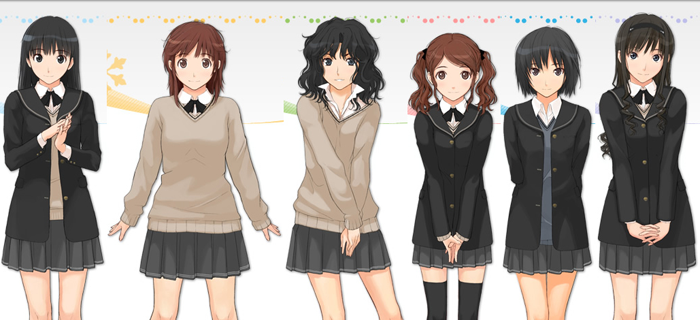
What Wikipedia says: The series follows Junichi Tachibana, a second year high school student from Kibitou High who dislikes celebrating Christmas due to a past incident two years ago when his date stood him up on Christmas Eve which left him heartbroken. However, this Christmas will be different as his encounter with one of these six girls, Haruka Morishima, Kaoru Tanamachi, Sae Nakata, Ai Nanasaki, Rihoko Sakurai and Tsukasa Ayatsuji will finally open up his heart to love again. The anime adaptation is rather unusual as it is divided into several story arcs where each arc focuses on one of the main heroines who will become Junichi's love interest. 
 
On August 13, 2011, a second season of Amagami SS was announced.[4] The second season, titled Amagami SS+ plus, aired on January 5, 2012 to March 29, 2012.

What KoanMan says:
Amagami SS and Amagami SS+ Plus are unique take on the serial (not parallel) romantic escapades of a schoolboy Tachibana Jun'ichi, apparently spawned from the PS2 dating game of the same name. His character seems to morph into whatever each of the six female love interests seem to need. And as each separate story unfolds with the girls, different aspects of his personality and theirs are brought to the fore. The storyline is well-paced and interesting in its diversity, with director Hiraike Yoshimasa keeping the relationship unique and engaging in its own right. No easy task. Well done.

Morishima Haruka is the senior class goddess, Nakata Sae is shy, quiet one with great taste in clothing, swimmer Nanasaki Ai and the strict class president Ayatsuji Tsukasa are the four that seem to stretch him the most from his natural state. These contrast well with his two childhood friends, the free-spirited and independent Tanamachi Kaoru, and the “overweight” and somewhat retiring Sakurai Rihoko, who accept him more as himself. One says “overweight” as the Japanese determination of this concept differs significantly from that of this round-eyed Gaijin - perhaps the term “not emaciated” might be a better fit for Rihoko’s still-slim figure. 
 
All characters are very well articulated, and even those in the periphery, like his caring but exasperated sister Tachibana Miya (who gets her own OVA - tTPO), and his porn-addicted, sushi-chef-trainee friend Umehara Masayoshi, who are perfect counterweights to the plot.
 
How About the Music? Music is fair, though art director Takahashi Maho has some fine scenery.

So How Does it End? (Spoiler free): In many different, and generally satisfying ways.

Overall Grade:
KoanMan enjoyed these series, and did not feel lost, nor bored throughout. Very enjoyable. The score for this collective is a solid A.

Addendum by tTPO:
Koanman
got this mostly right. This is an excellent harem series that removes some of the 'main protagonist with many girlfriends' issues by simply dealing with each of the different girls in a parallel universe fashion. tTPO enjoyed the original series a bit more than the sequel simply because the original series being 26 episodes, gave the strories just a bit more breathing space. Having said that, if you watch the first season you cannot fail to watch to second I think to see where the relationships continued to (or failed to as the case may be). Where Koanman got it wrong was the music - the changing OPs (as sung by the different girls) in season one, with few exceptions, were great and added (for tTPO) to the different flavour of the arcs. As it is just a bit long and season two not quite as good as season 1, tTPO gives this a B+. Definitely one of the more watchable harem series.

Sunday, 24 January 2016

School Live!


Number of Episodes: 12

What Wikipedia says: Yuki Takeya is a cheerful school girl who, along with her friends Kurumi Ebisuzawa, Yūri Wakasa, and Miki Naoki, is a member of the Megurigaoka Private High School's School Living Club. As Yuki seeks out fun school activities every day while living at school, the other girls work to keep her safe, because in reality, they are the sole survivors of their school after a zombie outbreak overruns the city.

What KoanMan says: A "cutesy" first episode, with what appeared to be very little substance, had KoanMan wondering "why watch this"? Then the second episode starts to show small cracks in the delightful world of Yuki Takeya. Cracks that reveal a world of ZOMBIES!! Awesome! 

School Live! is a carefully crafted journey into the lives of Yuki Takeya, Yuuri Wakasa (club president), Kurumi Ebisuzawa (shovel wielding tough girl), Miki Naoki (troubled junior), Megumi Sakura (class teacher) and the ever-perky Taroumaru (the club canine mascot), and by perky, KoanMan means annoying. Oh, and about a billion other local residents and school-goers..... the "z-o-m-b-i-e-s"..... (say that with a ghoulish voice). In keeping with most Zombie apocalypse stories, there is an endless supply of undead corpses that need dismemberment. However, unlike most of these stories, this one delves much more deeply into the minds and feelings of those few remaining alive. It is this story that really carries this series, although the pace a few flat spots, and is never rushed nor particularly action-packed. That said, a lot happens, and the flash-back style fits well and adds to the journey. Kurumi is a favourite - anyone who has their own gold-plated shovel for beheading has be cool right? Or at least respected..... And Yuuri is the warm heart of the group that keeps everything together at all times. 

How About the Music? The music is OK, and mostly fits the mood. [tTPO: The OP is fantastically moe and gives little indication of the true nature of the show.]

So How Does it End? (Spoiler free): It is not a let down.

Overall Grade: 
With a bit more action and faster pace this could easily have been an A. So close..... KoanMan liked this, and gives a solid B.

Addendum by tTPO:
tTPO has just a little more patience than KoanMan, maybe because Koanman has a tendency to marathon and tTPO watch a week at a time. In any case tTPO and Mrs tTPO were big fans of this series, and while is may have missed that little bit of magic that makes and A, it was not far off. A-.

Friday, 16 October 2015

Flowers of Evil

aka Aku no Hana 


Number of Episodes: 13

What Wikipedia says: The story follows a middle school student named Takao Kasuga who's forced into a "contract" by fellow student Sawa Nakamura, after being caught stealing the gym clothes of his crush Nanako Saeki, and the series of events afterwards that follow these three characters. The title of the manga comes from Charles Baudelaire's Les Fleurs du Mal.

What KoanMan says: KoanMan has some mixed feelings about "Aku no hana". Firstly, it bears mentioning that the "rotoscope" technique used makes the look of this series unique. It is a method of animating real film images projected onto a frosted screen and originally each image was hand-traced to create the final animated image, although computer software has now been developed to convert images. Besides the style, it allows animation to present characters with natural movement, and it delivers here. A more more normal animation format was originally tabled, however, to allow the audience to focus on the story/characters and not the actors, director Hiroshi Nagahama used the rotoscope technique.

The story is itself unusual. The central character Takao Kasuga is a hyper-anxious, hyper-reactive, moronic simpleton who rarely thinks much beyond himself. If one can tough out the first few grindingly tedious episodes, the slow, agonising pace actually becomes tolerable, and almost unnoticeable by about Ep7. Sawa Nakamura is his rebellious muse, challenging him to confront himself and her perceived view of him, while Nanako Saeki is the muse he imagines inside his own head. The main characters are very well developed with a realistic approach. Other characters are not important to the myopic worlds of the main characters, and are not explored, not do they need to be.

How About the Music? Music at open and close is good, and is completely unrelated to the "Aku no hana" song released in 1990 by Japanese rock band Buck-Tick. In fact the opening and closing credits contain almost all the music in the series, and thinking back, KoanMan did not notice anything other than mood audio at any other time.

So How Does it End? (Spoiler free): After a dragging, painful start, the simple plot is executed with a storyline that somehow managed to keep KoanMan watching to the end. An interesting watch, more for the moods it engenders that had KoanMan reminiscing about the internal angst associated with teenage life. Ahhhhh, the angst...... Beyond that there was little in the characters to connect with, and perhaps the intent in this "Aku no hana Part 1" series is to do just that, or simply to engender the keen desire to strangle the characters? Not sure.

Overall Grade: Interesting, moody, different - gets a B. Laboriously slow and Takao is an imbecile - gets a D. 


It all adds up to a C.

Addendum by tTPO: tTPO liked this more than KoanMan and it is clearly going to be a polarising series for viewers. There is little doubt that Takao is a largely spineless fool, but doing dumb things, being self-involved and being bored is pretty much what teenage life is about. Whether watching this immensely slow car crash makes good television is debateable, but I found somewhat compelling the brave directorial decisions about the rotoscopy (which immediately put off Mrs tTPO), the universally unlikeable characters, the long stretches without dialogue (which peaked with an epic 8 minutes of nothing in Episode 8) and repeated views of the decaying town. I also appreciated the positively atypical depiction of largely functional and caring parents who, in contrast to most anime series, are actually at home and involved with their offspring.  

The OP /ED are worth a special mention as being quite disturbed and I think set the tone of the series well.

In summary: Interesting, moody, different. Laboriously slow and Takao is an imbecile. It all adds up to an A-. 

I can only hope there is a second season so I can see the wreckage finally come to rest. 

Tuesday, 10 March 2015

Nanana's Buried Treasure

aka Ryūgajō Nanana no Maizōkin

Number of Episodes: 11

What Wikipedia says: On the "Special Student Zone" artificial island – Nanaejima, the story centers on a beautiful, optimistic, but NEET (not in education, employment or training) girl Nanana Ryūgajō, who was mysteriously killed in her own apartment.
Ten years later, a boy named Juugo Yama was forced to transfer to a high school on the island. With only a certain amount of money to live on, Juugo chooses a low-rent apartment that happens to be haunted by the ghostly Nanana, who is bound to her former home and unable to move on. Juugo and members of the school's adventure club join a "treasure hunt royale" on the island for the Nanana Collection, treasures that possess mysterious powers.

tTPO says: This is just a disappointing series. Maybe the whole thing was designed as a glorified advertisement for the light novels but if that was the plan I still don't want to read them. Even if I could read kanji. So what were the problems? For me it was probably two things - the treasure-of-the-week format (tough to avoid when this is the central tenent of the show),  but mostly the fact the series not only went nowhere after 11 episodes, but had time to put in distracting side plots in that trip to nowhere.
You would think, when plotting out an 11 episode anime that someone may have said "Hey, we only have 11 episodes here. We had better keep things tight." I am pretty sure this conversation never happened.  
On the upside, the characters are not all cookie cutter cliches, including the somewhat conflicted protagonist Juugo. It was this, as well as the (vain) hope there would be some form of resolution for Nanana that kept me watching.

How About the Music? Meh. 

So How Does it End? (Spoiler free): In desperate,desperate need of more episodes to give the plot some semblance of  resolution.

Overall Grade: Better than Amnesia, but still a D. A second season to pull this together may result in a revision but till then, still a D. 

Sunday, 5 October 2014

Clannad & Clannad After Story


Number of Episodes: 44 + 1 Extra + 1 Recap + 3 Alternate endings + 1 Movie

What Wikipedia Anime News Network says: "
Tomoya Okazaki is a third year high school student resentful of his life. His mother passed away from a car accident when he was younger, causing his father to resort to alcohol and gambling. This results in fights between the two until Tomoya's shoulder is injured in a fight. Since then, Tomoya has had distant relationships with his father, causing him to become a delinquent over time. While on a walk to school, he meets a strange girl named Nagisa Furukawa who is a year older, but is repeating due to illness. Due to this, she is often alone as most of her friends have moved on. The two begin hanging out and slowly, as time goes by, Tomoya finds his life shifting in a new direction."

tTPO says: Clannad starts out as a somewhat conventional somewhat comedic high school harem series but it does not take long before other supernatural, emotional and family elements start veering this away from the conventional.  The prominent roles of the parents of the main characters deserve special mention - more often than not parents just don't hae a significant role to play in most school anime, and if they are there are just in the background, always at work, or annoyances. 


Where Clannad really differs is where it goes with After Story. So many series simply resolve the high school romance and leave that as the conclusion. But After Story is different and follows through in the years following school and the consequences the decision made there, ultimately leading to the karma filled, emotionally satisfying but slightly confusing, finale. 

tTPO loved this series. I watched it some time ago but occasionally just randomly watch an episode to experience the inevitable feels that this series is packed with. Now I am a father the emotional impact of the parental roles in this series, as well as nearly all the events of After Story has only increased not decreased with time.

It is important to make some notes about the movie here. The short piece of advice is just don't do it. It is a largely joyless affair that focuses on Okasaki and Nagisa, and leaves out the whole karmic redemption theme that is so fundamental to the series which makes the darker moments more tolerable. Admittedly Nagisa's school play performance done much better. But that alone is not enough to watch it. 

How About the Music?: For this tTPO, the music to this series is near perfect. Years after first watching it still elicits a pavlovian bittersweet response. All the themes deserve a mention. Except maybe "Torch". Sorry Lia.


OP1:"Megumeru ~cuckool mix 2007~" by eufonius
ED1: "Dango Daikazoku" by Chata
ED2: "Ana" by Lia
OP2: "Toki o Kizamu Uta" ("A Song to Pass the Time") by Lia
ED3: "TORCH" by Lia

So how does it end? (Spoiler Free):  The ending brings everything together leaving few threads dangling. Though saying that, it would be a lie to say that the events as we head towards the end are particularly easy to understand. A rewatch or two puts most of the big points into context, though there still remain some significant debate on the interwebs as to the finer details. ie. You feel you know what just happened but explaining it to someone else may not be so easy. In all of these interpretations though, despite their disparity there is a significant point - this is NOT a deus ex machina ending, it is a a conclusion that brings together the events leading to this point. 

For your and my convenience, the best of the explanatory links are here (long), here (diagrammatic), here (short) and here (point form).

Overall Grade: Clannad and Clannad After Story set the benchmark for harem and romance, and that doesn't even touch the genuine drama, comedy, and supernatural elements this series has. Despite the length
(or perhaps because of it) this is well worth the journey, even for the tTPO. Though you could skip the extra, the recap and the movie. For the love of god though do not skip the alternate endings. While this series seems to divide the viewing public, for tTPO this is one of the best series ever. Grade A. 

Addendum by KoanMan: For the TPO, this series may be a little long, but as a depiction of school life for friends facing their own challenges and discovering their own dreams, this has a lot to offer. Nagisa Furukawa and Tomoya Okazaki are the primary characters, and their relationship meanders around and through various goals and the lives of their friends as they tackle school and then then real world after school. As gentle as this begins, there are some seriously gut-wrenching moments. The "other world" parallelism is interesting, and adds some depth to the storyline. Series 1 [Clannad] has a goodly serving of humour, and the "kick count" is an inspired touch - look out for it! Great! Series 2 [Clannad After Story] is a lot more serious, with much less humour, although no less engaging. Throughout, Nagisa's father Akio Furukawa is a standout, and unsurprisingly, to those who know KoanMan, Tomoyo Sakagami and Kyou Fujibayashi rounded out the three favourites.

The music is OK, although the opening credit score of the second series is awesome. The final credits the first series "The Dango Song" took almost the entire first series to grow on KoanMan, who likes it now..... although it did not start out like that.

KoanMan loved this series, and for a non-action, non-violent story, this is impressive. Despite the length, this one was worth it. KoanMan gives this an A.

Little Busters! + Little Busters! Refrain + Little Busters! EX

Number of Episodes: 26 + 13 + 8

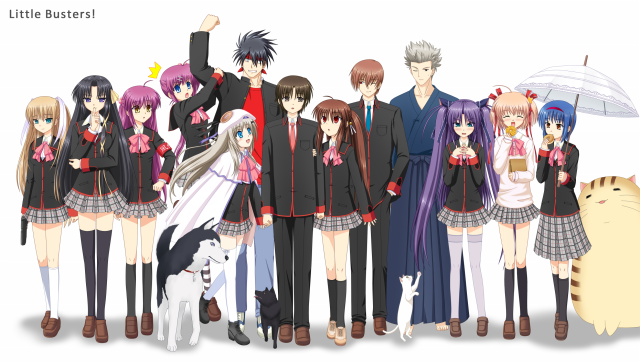
What Wikipedia MyAnimeList says: "When tragedy struck Riki Naoe as a child, he was rescued from grief over his parents' deaths when four other kids "recruited" him for their group—the "Little Busters." Now in high school, Riki and the other Busters are still fast friends, and though their vision of being heroes for justice may have faded, they'd still do anything for each other. Which is why Riki is now on TWO special missions. The not so secret one: recruiting new members so the Busters can form a baseball team. Preferably FEMALE recruits, as the current dude/babe ratio is an inconvenient 4 to 1. The OTHER mission, though. That's the strange one. Because Riki and Rin, the group's singular girl, are receiving odd messages, delivered by cats, concerning the existence of a "secret world" and assigning them tasks they have to complete. Were their youthful dreams of being crusaders not so fanciful after all? Or is there something even more vital at stake? Between steeling his courage to talk to girls, dealing with his own narcolepsy and facing his feelings concerning Rin, Riki may just need the strength of a superhero to solve the ultimate mystery of the Little Busters!"

What TTPO says: It's hard to know where to start with this series. In the past I seem to have been a little plagued by some really good anime series with disappointing endings, which inevitably leave just a little sour taste in the mouth afterwards. Little Busters! turns this around. The first 26 episodes are really just a pretty average setup for the next much more emotionally intense 13 (Requiem) leaving the 8 OVAs (EX) the icing on the cake. And this is where the problem lies - can the TTPO really afford to get through 26 episodes which are by and large just average to get to the meat of the series? 

Well, there is a large cast and it took most of the first 26 episodes to just introduce and spend enough time with them to then care about what happens in Requiem. Which is important, because as with many of Key's previous productions (this show is also a visual novel adaptation) there is a fair amount of hardship the characters go through before they (and I) got to the end, and this improved the emotional payoff. Bittersweet is a good word to use to describe this, and is a word I will shamelessly use again in this review. The other good thing about the characters was they were all distinct - I did not have to try too hard to remember who did what in the mini-arcs that make up the first series. There are implied harem overtones to the story but these are not well developed nor are the focus of the story.

The OVAs are an interesting bunch focusing on 3 side characters from the main story with 3 mini-arcs that occur variously before and after the events of Refrain. While in no way essential to the plot they flesh out the world and these characters well, and I generally preferred them and their far more focussed nature to the character overburdened original series. 

How About the Music? The music is largely by Jun Maede and once again he manages to create music that is catchy without being trite, and still manages to trigger a near pavlovian response of bittersweet emotions associated with the series. The OP ("Little Busters!" by Rita) and ED ("Alicemagic" by Rita) are standouts, and almost up the the standard of the music of Angel Beats. Note quite though. 

So how does it end? (Spoiler free): As previously stated the events of Refrain which is like one long ending to the series are what make the series are good as it is. Very satisfying indeed. 

Overall Grade: If you had plenty of time of your hands I would give this a B or maybe a B+. But half a good series does not a good series make, even when it is the most important bit that is good. So in answer to my own question above, no I don't think I can in good faith recommend this if you are time pressed, and for that this will be the series probably remain the series I will have enjoyed the most to ever get a D.

Friday, 3 October 2014

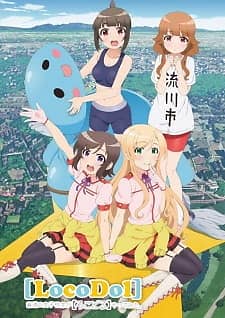
Locodol

aka Futsū no Joshikōsei ga Locodol Yattemita ("Normal High School Girls Tried Being Locodols")

Number of Episodes: 12 + OVA

What Wikipedia Says: In the town of Nagarekawa, Nanako Usami, an ordinary high school girl, is approached by her uncle to become a local idol or "Locodol", partnering with upperclassman Yukari Kohinata to form the idol unit, Nagarekawa Girls. As the girls use their talent to promote Nagarekawa and their businesses, they are joined by Yui Mikoze, who acts as the local mascot, and Mirai Nazukari, who serves are Yui's substitute.

What TTPO says: This is a harmless slice of life series with cute (but not overly so) girls trying their hardest to do their best for each other and the town they live in. While their manager is just a little on the creepy side at times there are just no bad people in this show whatsoever - 24 carat hearts abound. This lack of tension could have been a recipe for boredom, but the writers manage to avoid many of the obvious idol cliches (and thankfully most fanservice) and keep the characters pretty well grounded - idol work is a lot of work and not so much glamour in this series and our main protagonists are not on a rocket racing to the top anytime soon. There are even genuine cliffhanger endings to some episodes.

How About the Music?  For a show about locodols the music is pretty low key but I can say the  insert song which we finally see at the end of the series is worth the wait - ridiculously happy and with lyrics that summarise the philosphy (if you can call it that) of the series. Do yourself a favour and don't click on it now - just watch the series. The ED ("Mirai Shoujotachi" by Nagaregawa Girls) is also worth a listen.

So how does it end? (Spoiler Free.): Appropriately. The OVA comes in soon after the end of the series and is a nice bookend to the series while clearly stating Nanako and Yukari have a long way to go and there is clearly room for a second season. 


Overall Grade: This was not an ambitious series but is was refreshingly fun and honest watching, well paced, and a welcome break from some of the more gritty actions series we have been watching of late. Grade B+.

Wednesday, 6 August 2014

The Melancholy of Haruhi Suzumiya + The Disappearance of Haruhi Suzumiya movie

Number of Episodes: 24 + movie


What Wipipedia says: "The story follows the narrator and male protagonist Kyon, a cynical and incredulous student entering high school who is dragged along by the title character and female protagonist Haruhi Suzumiya (who is Kyon's classmate). She is an eccentric girl seeking supernatural phenomena and figures such as aliens, time travelers, and espers. With Kyon's reluctant help, Haruhi establishes a club called the SOS Brigade, to investigate mysterious events. Haruhi later recruits three additional members: the laconic bibliophile Yuki Nagato, the shy and timid Mikuru Asahina, and the extremely friendly transfer student Itsuki Koizumi. These members soon reveal themselves (to Kyon) to be the types of extraordinary characters that Haruhi is seeking. The three additional members have been sent by their various organizations to observe Haruhi, who is unaware of her own destructive reality warping powers and to prevent these powers from being unleashed. This leaves Kyon the task of maintaining the illusion of a normal life for Haruhi."

KoanMan says: KoanMan watched this series in the broadcast order, which meant some initial confusion re plot and characters. Starting with the least watchable episode straight up meant that if one did continue onto the next episode, it was all good from Ep2 onwards. In the end, watching in this way did make it a more interesting watch, as one felt just a little behind the storyline, trying to keep up with changes in direction that at the time presented as totally random. In retrospect, they still seem a little random, almost like they threw the episodes into a hat and let chance reveal the next episode. Character development did, however, seem perfectly done this way, so there must be some "method to the madness".

On that note, KoanMan found the characters difficult to associate with early on; the whining and sedentary Kyon, the OTT Haruhi Suzumiya, the uber-quiet bookworm Yuki Nagato, the "yes-man" Itsuki Koizumi, and the cutesy mascot girl Mikuru Asahina. Unusually, for KoanMan, all these characters grew on one, to the point where even Ep12 to Ep19 [Ttpo: that would be the infamous Endless Eight episodes] were watchable! Far more so than Straight Title Robot. The reader will know what this means by Ep13, suffice it to say that Ep13 to Ep18 could have been condensed by more brutal editing, however, this would beg the question....Would it have been the same series? Would it have had the same impact? The jury is out at this time.

The movie certainly had a far more cohesive plot and better direction to the story, most likely as it was based on The Disappearance of Haruhi Suzumiya, the 4th in a series of light novels by Nagaru Tanigawa. Thoroughly enjoyable, but do watch the series first.

How about the music?: The music was OK for the first few episodes, then the same music seemed to get better, and by the end, the very same music was something I looked forward to each episode. How did this happen?

Overall Grade: Between the unusual jumbling of episodes, well out of the story's chronological sequence, the mysteriously improving, though unchanging, music, and characters that grow on you, coupled with good delivery of a good story mean that series director Tatsuya Ishihara, and movie directors Tatsuya Ishihara and Yasuhiro Takemoto have done well.

KoanMan gives these series and movie a collective A. 


Ttpo says: This series is not perfect but is brilliant. The fan service gets a little grating sometimes and the bullying of Mikuru occasionally a little uncomfortable. But these are minor gripes in a series that balances big questions in a deep world spanning mystery with day to day slice of life triviality with seeming ease. I loved the music (esp OP1, OP2 and insert song God Knows), and also the cheesy (and the oft mimicked) choreography over the ED1 (see here in live format by the seiyuu).

There are some very brave directional issues that KoanMan has already pointed out but these serve to further differentiate this series from the also-rans. The movie is everything good about the series in slighly higher resolution and is excellent from beginning to end, though without having first seen the series much would be lost to the casual viewer. An A for sure.

Thursday, 15 May 2014

Kill la Kill

Number of Episodes: 24 + OVA


What Wikipaedia says:  "Kill la Kill is set at Honnouji Academy, a fictional high school in Tokyo Bay set in Japan that is dominated by its fearsome student council, led by Satsuki Kiryuin. The council members wear special uniforms called Goku Uniforms that grant them superhuman abilities, which they use to oppress the rest of the school's students and staff. Ryuko Matoi, a student wielding half of a scissor-shaped longsword, transfers to Honnouji Academy in search of the owner of the other half of the scissor blade, the person who killed her father, Isshin Matoi."

KoanMan says: Kill la Kill. The name implies a lot. And KoanMan believes it delivers.

Blood is a common feature of this action-packed anime, as is the fanfare that goes with the life-fibre (Goku) suit transformations. KoanMan had just completed the Freezing series immediately prior, so the fanfare went almost unnoticed until it came time to write the review of Kill la Kill.

It is apparent that the characters are pretty tough lot, as the punishment dealt to various characters is prodigious. That said, KoanMan could only spot two deaths in the whole series, with one other suspected, though not confirmed one way or the other.

Characters are exceptionally well developed, and the storyline is superb. The animation itself is much less polished than most anime productions, though this is soon forgotten as the pace sets sail from the start and steadily builds over the initial episodes, before settling into an almost perfect rhythm. The underlying character relationships add an unusual depth despite some humourously cheesy scenes, and equally cheesy one-liners sprinkled throughout. KoanMan is not generally a fan of super-cutesy, but when it does happen, it fits almost perfectly with the high-action, high-stakes, serious stuff - not because it fits, but precisely because it doesn't fit... and somehow it all works!

How About the Music?: Opening and closing credits had little relevance for KoanMan. Although the closing credit music was OK, music is not a feature. But it does not matter!

Overall Grade: This is a great watch. KoanMan gives this A.

tTPO says: tTPO liked this series a lot. It started out with a fairly standard fight of the week format (OK but nothing too special) but then became so much more. Along the way there is high humour and more than a little fun poked at the nature of fan service in anime, as well as some serious character development, an epic plotline, many arterial spurts and more than a couple of shout out loud moments for several characters doing their best. For such a great series though the emotional climax was really the second last episode, leaving the last episode just a little predictable, though not without its own emotional journey. And it wasn't even a bad last episode - it just couldn't quite stack up to the second last one. As much as I would like to give this an A then I can't bring myself to do it. So A- it is, but only just. You should still watch it. And the OVA too.

Wednesday, 29 January 2014

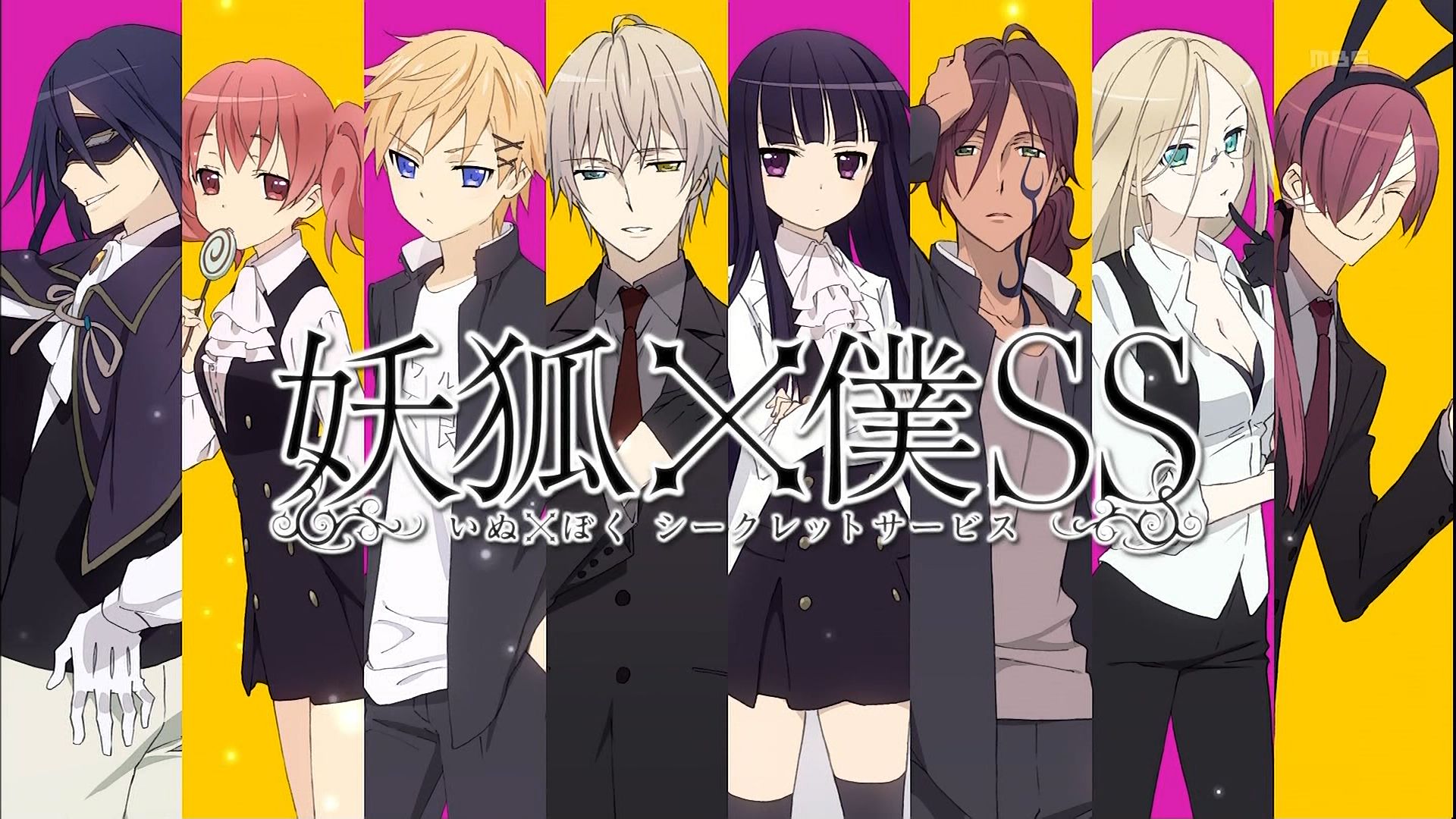
Inu x Boku Secret Service

aka Inu × Boku SS, Inu Boku Shīkuretto Sābisu, The Dog and Me Secret Service), Youko x Boku


Number of Episodes: 12

What Wikipaedia says: "The Maison de Ayakashi, better known as the Ayakashikan, is a high security apartment building where humans with demon ancestors, or yōkai, reside, each guarded by their own Secret Service bodyguard. A yōkai girl named Ririchiyo Shirakiin moves into the Ayakashikan hoping for some peace and quiet. Instead, she finds herself with the service of the Secret Service agent, Soushi Miketsukami."

tTPO says:
This show was what it was. It set out to be a romantic non-harem series with some side characters and ended up being exactly that. It was not plot heavy and kept its focus sensibly, for a short series, on the characters and the place they lived.

The main characters certainly (and the side characters to a variable extent) have some background and depth giving motivation to their actions, though it would wrong to say there were not some characters present there for comic relief and to just stir the pot. Not that this is a bad thing - if it was good enough for Shakespeare to have a jester or 2 then it's difficult to criticise it in anime.

Problems? Putting aside the seven year difference between the 22 year old male protagonist and the (nearly) 15 year old female protagonist (and no there was nothing even resembling a hint of sex at any stage, despite no shortage of fan service with some of the side characters) there is little in here to offend anyone. Also the supernatural backgrounds of the main characters don't get much exploration, and all things considered there is not much serious drama or tension. It all seems just a little easy at times. Is that good enough?


How About the Music?: The OP ("Nirvana" by MUCC) is a proficient bit of J-rock though erring on the generic side. Has a bit more get up and go in the live format though. I'm not sure the image of the band (now I've seen them) matches with the anime. I'm guessing it was all about the music.

There were a few too many EDs to talk about.

So How Does it End? (Spoiler Free):
The show ended well, with a good reveal in the second to last episode which tied up some loose ends, leaving things to wind down nicely in the last episode. Satisfying. 

Overall Grade: C. It set its aim low, and easily cleared the bar. However, there are more compelling shows you should probably be watching.

(NB: When reading up to write this review I see that there are dramatic events that occur in the manga not long subsequent to the end of where the anime ceases. So much so that the events of the anime are considered a prologue to what comes later. I didn't see that coming. If the anime had gone down that road though things may have been rated very differently.)

Thursday, 2 January 2014

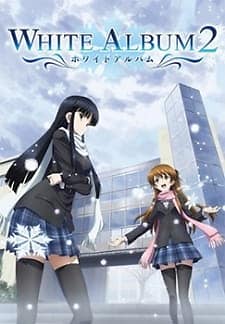
White Album 2

Number of Episodes: 13


What Wikipaedia Anime News Network says: "Fall, when graduation is only half a year away.

Haruki Kitahara, the final member of the light music club that dissolved, plays his guitar by the window after school in preparation for the school festival. It was the one and only adventure of a good student who spent two diligent years on his studies.

But when a flowing piano melody and a voice as a clear as bell harmonize with his guitar… He goes from being alone, to being two, then three in the light music club, as the semester he dreamed of, no, hoped for, began."

tTPO says:
Set 10 years after the original White Album series, this new series has nothing to do with the old series except that it a) takes place in the same fictional universe and some of the songs from the original series appear here, b) it is based on a visual novel and c) it involves awkward romance and drama.

Having said that, there is lots to like about the series. There is a great dramatic (almost Shakespearean) arc in the pacing peaking midway through the series with the music club concert, before which is the glorious honeymoon period, but after which...not so much. The story is much more direct and less complex than the original White Album, and the focus remains on the basic love triangle that is the heart of the series. This is a good thing and enables better character development within the 12 episodes. And with the main characters still at school the mistakes they make and decisions they make ring naiive and true. (Teenagers don't need that much help to make their lives more dramatic than they need to be so is it any wonder these things are set at school? Who am I kidding? Adults still make plenty of bad decisions!).

How About the Music?:
The music that is the canvas for the series also very appropriate though as a guitar player even with a few days practice I am not sure the solo Haruki pulls out at the concert is going to sound as good as it does considering his level of general guitar ineptitude. And the programming of the backing tracks for the original song they play - given they only had 24 hours to write and rehearse this when did Iizuke get a chance to do this? Especially the cracking sequenced bass line? Whatever. I'm being picky.

White Album, Powder Snow and Sound of Destiny from the first series all feature contextually. The OP ("Todokanai Koi '13" by Rena Uehara) and main ED ("Sayonara no Koto" by Rena Uehara) are largely inoffensive bits of J-rock and J-pop respectively that are improved subjectively by the series they are associated with. 

So How Does it End? (Spoiler Free):
There is much done right here (see my previous thought on the importance of having losers in any harem series), especially a couple of timely flashbacks - one in the second last episode and cleaver musical one at the very end - as well as a monologue from Setsuna that fill in whatever gaps were left with respect to the characters and their motivations. But there is a certain inevitability to the ending (despite its appropriateness) that takes away just a little from the drama and leaves a worse taste ("Er, that's it?") in my mouth than there should have been. 

As I write this though all is not lost. Apparently this is but one part of a bigger story with further plot 2 and 5 years down the track. This to me is also a good thing and I can only hope the rest of this gets animated.

Overall Grade:
Good show, but in a way I find difficult to describe, somehow not quite as good as it could have been. B. (Though this may improve with the completion of the story.)

Tuesday, 26 November 2013

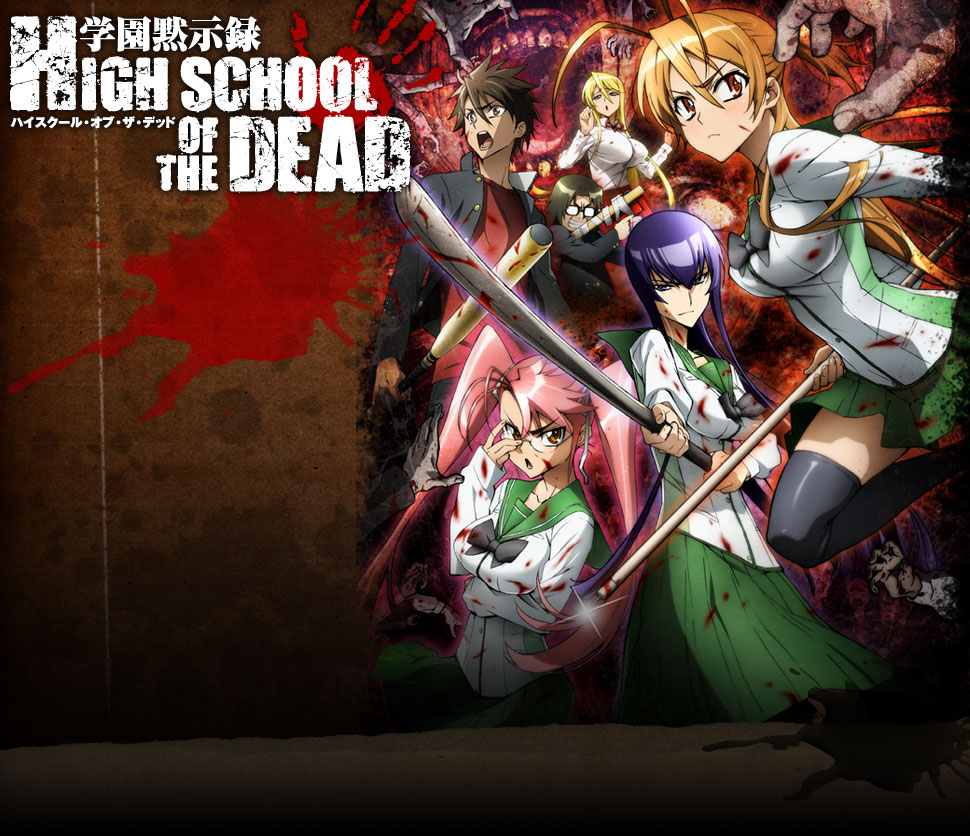
High School of the Dead

Number of Episodes: 12 + 1 OVA


What Wikipedia says: "Highschool of the Dead is an anime series adapted from the manga of the same name written by Daisuke Sato and illustrated by Shoji Sato. The series is set in the present day, beginning as the world is struck by a deadly pandemic that turns humans into zombies. The story follows Takashi Komuro, a student at Fujimi High School who survived the initial outbreak along with several of his classmates and the school nurse, and occasionally jumps to the perspective of other characters. As the group tries to survive the zombie apocalypse, they must also face dangerous fellow survivors and the decay of their own moral codes."

KoanMan says: The director of "Highschool of the Dead" Tetsuo Araki certainly had booty on his mind when he rendered this anime, originally penned by Manga author Daisuke Satō.

The plot is reasonably simple, this is a Zombie movie after all.  However it is surprising, that terribly cheesy moments, complete with the silly sound effects, are interspersed with moments of intense gravity. The character and relationship development is great with the formation of their erstwhile "family" one of the most enjoyable aspects. The personalities are different enough to add real texture to the story.

The OVA is not important to the general story, but includes a little humour.

How About the Music?: Beyond the copious décolletage, the opening sequence music, "Highschool of the Dead" by Kishida Kyoudan and the Akeboshi Rockets (live version at the link), is fantastic! KoanMan realises this is completely personal, but it fits perfectly with the post-modern pop style of the visuals, and goes well with the Zombie apocalypse theme. There are more EDs than you can poke a stick at (each episode has a different one) so I'm sure there is something for everyone here.

So How Does it End? (Spoiler Free): Satisfactorily. But the journey is very much a continuing one.

Overall Grade: KoanMan gives this a solid B. One is male, of course. Roll on Season 2.

Addendum (by tTPO): HOTD is not without its flaws - there is a recap episode at episode 4 (is that some kind of record?) and as a show focussing on teenagers it fails to escape the trope that most adults are useless and as KoanMan has outline already, there are more than a few cheesy moments. It does succeed though at many things. The animation is great, the scale of the disaster is awesome thought the journey is personal, and by the end of the series there has been more than a little development of the main characters. But most importantly, for a show which is defined to a large extent by the fan service, the creative team seem to have really given some thought to how can we do this differently, and I think they succeeded. Not all the time mind you (note the obligatory bathhouse episode and the unneccessary OVA) but they did the near impossible in making some gratuitous fan service interesting. Put oll of this together and you have and entertaining and above-average series. B+

Saturday, 14 September 2013

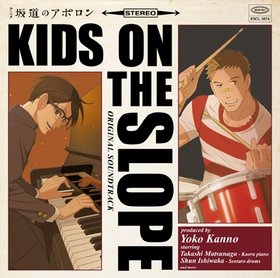
Kids on the Slope

aka Sakamichi no Apollon


Number of Episodes: 12

What Wikipedia says: "The beginning of summer, 1966; because of his father's job situation, freshman high school student Kaoru Nishimi moves by himself from Yokosuka to Sasebo in Kyushu to live with relatives. Until then, Kaoru was an honor roll student who tended to keep to himself, but meeting notorious "bad boy" Sentaro Kawabuchi starts to change him. Through his devil-may-care classmate, Kaoru learns how much fun it is to play jazz and finds the first person he can call a real friend."


KoanMan says: Every once in a while, a story catches you in an unexpected way.  This is an engaging and personal story, and somehow kept KoanMan riveted throughout, without the need for explosions, violence or carnage.  KoanMan generally loves those things, and yet they were not required here due to the strength of the story-line.

It begins in a fairly standard way, with an isolated young teen, Kaoru, arriving in a small provincial  town.  Tough-guy Sentaro, and classic girl-next-door Ritsuko, befriend Kaoru, and so begins a troubled journey through their developing relationships to each other and those around them.  These characters almost became part of KoanMan's life during this series, they are that well developed.  This is remarkable given the limited number of episodes in which to get this done. 

Pace is excellent, and the storyline cohesive and complete, thank you director Shinichiro Watanabe.

How About the Music?: The music is a standout as well.  The opening title song is seriously catchy, and some of the jazz that features within the series had this KoanMan tapping and swinging to the beat.  Composer Yoko Kanno has done well.

Overall Grade: Well crafted, free-flowing, short and sweet.... KoanMan cannot give anything other than an A.  


Addendum (by tTPO): I can't do much else but agree with KoanMan's assessment of this series. There is just the right balance of justice and injustice, things that go right and things that go wrong, joy and sadness, failure and redemption and all in an amazingly paced pocket sized series. Also, while the jazz is not a central theme to the story, it is the canvas on which this story is painted and it works just so well. I want to explore more jazz because of it. Ultimately, while this is a million miles away from their previous pairing on Cowboy Bebop, Shinichirō Watanabe and Yoko Kanno deserve nothing but an A for this.

Monday, 1 April 2013

Girls and Panzer

aka Girls und Panzer


Number of Episodes: 12 + 2 catch-up episodes + 5 OVAs

What Wikipedia says: "Girls und Panzer...is a 2012 Japanese anime television series created by Actas...Takaaki Suzuki, who has earlier acted as a military history advisor for Strike Witches and Upotte, has revealed that he is involved in the production of the anime...The story takes place in a universe where girls participate in Sensha-dō (lit. "Way of the Tank"), the art of operating tanks, as a traditional martial art. Miho Nishizumi, a girl who has had a bad experience with Sensha-dō, transfers to Ōarai Girl's High School to get away from it. However, soon after joining, the school revives Sensha-dō and Miho, being the only student with any experience in operating a tank, is ordered to take part. Despite being initially reluctant, Miho soon comes to enjoy Sensha-dō again and, joined by her new friends; Saori, Hana, Yukari and Mako, enters a national Sensha-dō championship where they face off against various other schools."

tTPO says: After a few false starts it seems we finally have the definitive schoolgirl x miliary anime. Reading the blurb you could be fooled into thinking this is just another poor excuse for a show with too much gratuitous fan service and not enough of anything else. What you get is completely the reverse. There is so much this show gets right it is hard to know where to start.

For starters, the technical research by Suzuki-san is impeccable. The variety and scope of tanks that appear in the show is fantastic and for anyone even vaguely interesting in the history of the tank there is much here to see and learn. Certainly for me, as new tanks appeared that I was unfamiliar with I googled them soon after watching the episode to find out their historical role.

Without giving too much away, the show takes place in an alternative history where schooling occurs...differently. It may not necessarily be realistic (neither are the mechanics of tankery, though this is explained a bit more in the catch-up x.5 episodes) but the third OVA expands and how this came about. While a certain amount of willing suspension of disbelief required to watch the show, it is clear that the Girls und Panzer reality has actually been pretty well thought through. Between the accuracy of the hardware and the depth to the setting, there is clearly a lot of love for the series, as well as respect for the audience, from the creators.

Keeping that in mind there is remarkably little fan service in the show and that only adds to the appeal. There just isn't time for those sorts of distractions. The only time we get mild fan service is in OVAs 1 and 2 and this keeps it well away from the main series. But for those that want it then you are catered for as well. The rest of us can just skip over it.

There is a huge cast of characters for a 12 episode series, and to an extent I mentally grouped these into the various tank teams to try and keep up. The most well developed not surprisingly are Miho and her team, and they all get little arcs away from the main story which, considering how quickly this series moves from beginning to end, is just amazing. Even with the lack of development, the non-core characters still remain often memorable, including Saki on the first-year team, who never says a word throughout the series (but ironically has a considerable fan following in Japan). (Edit and spoiler warning: She does say a single line in the last episode.) There really are no annoying characters - there are many many hearts of gold here. K-on!! with tanks anyone?

The pacing of the core-episodes of this show are also near perfect (if you forget about the catch-up episodes which were a result of production running late) with the show moving fast where it needs to advance the plot, and slow when it needs time to breathe.

The plot itself is pretty straightforward (with a couple of reveals along the way) but this is not the focus of the show really - we all know how it will finish but the key is how they get there. The tank action is magnificent with the right amount of tension and each of the tankery battles stand out in their own way. Again, a bit of willing suspension of disbelief is required here but by now this is not an issue - just sit back and enjoy the ride. We did.

How About the Music?: The OP ("Dream Riser" by ChouCho) and ED ("
Enter Enter MISSION!" by Fuchigami Mai & Iguchi Yuka & Kayano Ai & Nakagami Ikumi & Ozaki Mami) are just perfect accompaniments to the series and set the tone perfectly. That's all there is to it. 

So How Does it End? (Spoiler Free): As expected. But it's the journey that counts.

Overall Grade: Perfect feel-good action entertainment with enough depth to keep you discussing and thinking about it afterwards. My only gripe is the lack of t-shirts available right now. Grade A from myself and Mrs tTPO. Roll on season 2. (Edit: Looks like we won't be getting a season 2 but will will be getting an OVA - the battle with Anzio - and a full length movie. Would have preferred season 2 but much much better than nothing!)


Koanman's thoughts: Who likes tanks? Come on.... Show of hands please..... Well I do, and for a goodly portion of my juvenile years they held my attention. The tanks really are the feature here, and to see them filled with school girls is a good thing! The attention to detail is superb, with most tanks displaying the quirks and flaws that plagued the original items during the 1930's and 40's. It also features some very rare tanks - for those interested it is a feast (check the girls' favourite tanks). There is even a nice reference to Heinz Guderian - well done.

The plot is a little light-on, and the characters could be developed a lot more, particularly given the large number of them!  I am certainly hoping for another full series, as this one was so full of tank action it left little time for full exploration of the world in which they live and background to their story. It starts way slow, and very girly, but by Ep3 it is really getting good and continues to accelerate through to the end with very little breathing time. The action is a joy to watch. The girls are heartwarming and they love tanks - this is the first military girl anime that gets it right for me. More please.

KoanMan gives this an A. 


(By the way, I love "the angler-fish dance". The first time I saw it, it made no sense at all. After a second go later in the series.... it still made no sense but I just cannot get enough of it. I don't know why I love it, I just do. KM.)

Saturday, 2 February 2013

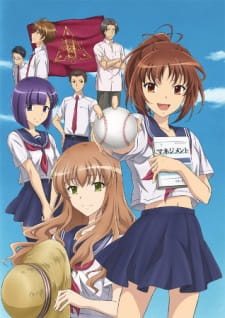
Moshidora


Number of Episodes: 10

What Wikipedia says: What If the Manageress of a High School Baseball Team read Drucker's "Management"?  Moshidora is a 2009 Japanese business novel by Natsumi Iwasaki. It follows high school girl Minami Kawashima who manages her school's baseball team using Peter Drucker'sManagement: Tasks, Responsibilities, Practices to rally her dispirited teammates. The novel has been adapted into a 10-episode anime television series by the Japanese public broadcaster NHK and produced by Production I.G.

KoanMan says: This series was a surprise. The initial intro discussing Peter Drucker and his business management manifesto unsurprisingly titled "Management" and it's application to business does not engender a whole lot of excitement for the upcoming show. But don't let the business thing fool you. This is a great watch.

The story flows nicely and never feels rushed, though may be a little slow for some at first, but was just fine for this TPO.  There are some uncharacteristically cheesy surprised expressions, though these did not disturb the storyline and did not interfere with the viewing experience other than to provide mild chuckles each time.  The characters develop remarkably well, resulting in significant emotional investment on the part of the viewer. 

Moshidora centres on Minami Kawashima, the temporary manager of the high-school baseball team (that's where the "Management" comes in) standing in for her ill friend Yuki Miyata.  The understated strength of their relationship is beautiful.

The other characters flesh out the storyline and each has their role to play, without ever feeling forced or uncomfortable and the still image montages are very well done and add to the story where dialogue is not required.  The intro does become repetitive as the whole spiel is given at the start of every single episode... Luckily, the magic of computers allows one to skip that bit from episode two onwards - you really only need to see/hear it once.  This one flaw aside, there is little to fault, although action junkies will be disappointed - this is no Terminator movie.  That said, it is an interesting exposé of the human responses to good management.

How About the Music?: The music was OK, and after the first episode it simply becomes part of the background, going largely un-noticed. This might sound bland, but is actually a compliment, as the music seems to fit very well with the story at any given time. If it was out of place, it would have been more obvious.

So How Does it End? (Spoiler Free): Well, as a western gaijin completely immersed throughout one's childhood in TV from the USA, there are some aspects that are predictable, and others aspects that are absolutely not in the "American playbook".  (Note: do not read the full Wiki page on Moshidora if you don't want the end spoiled)

Overall Grade: This is a well crafted, short and sweet series. It gets an A grading.  Thoroughly recommended. 


Addendum (by TTPO): You will have to forgive Koanman for making the odd misjudgement, after all it is his first full review. 

I agree overall that Moshidora is a really good anime and brought something new to the table - business management - and integrated it pretty well into an enjoyable (if well worn and straightforward) storyline. I do enjoy learning something unexpected from a show - Spice and Wolf and medieval economics would be a good example of this, and at the time of writing Maoyuu Maou Yuusha looks to be going down a similar road with respect to macroeconomics.

I also agree (and mark accordingly by TTPO standards) that this is was nicely paced and at the time of broadcast I enjoyed the novel 5-episodes a week for 2 weeks format. It was like a slightly slow marathoning. Having said that, I could have coped with a bit more management but there was not really space for this in the 10 episode format.

Where Koanman went dreadfully wrong is the music. The
OP (Yume Note by Azusa) is just a brilliant song which I would listen to many time again (and have).  And here is a classical guitar version for good measure. The ED (Daisuki da yo by momo) did not grab me so much. But forwarding past Azusa is a crime.

Not quite 'A' material in my books (that would be
Madoka Magica) because of the slightly basic plot but still very good, full of heart (with rampant tearjerking but I love that stuff), management and brevity.  B+. And since it's my blog that what it gets tagged as. Though Mrs tTPO scored both this and Madoka Magicka as A's, even though she thought the latter was better. Go figure. 


Addendum 2 (by TTPO): Just watched the last episode again. I was wrong. A-. Ah well.