Showing posts with label Romance. Show all posts

Sunday, 26 May 2019

My Little Sister Can't Be This Cute

aka Oreimo, Ore no Imouto ga Konna ni Kawaii Wake ga Nai


Number of Episodes: 25

What Wikipedia says:  Kyosuke Kosaka, a normal 17-year-old high school student living in Chiba, has not gotten along with his younger sister Kirino in years. For longer than he can remember, Kirino has ignored his comings and goings and looked at him with spurning eyes. It seemed as if the relationship between Kyosuke and his sister, now fourteen, would continue this way forever. One day however, Kyosuke finds a DVD case of a magical girl anime which had fallen in his house's entranceway. To Kyosuke's surprise, he finds a hidden eroge inside the case and he soon learns that both the DVD and the game belong to Kirino. That night, Kirino brings Kyosuke to her room and reveals herself to be an otaku with an extensive collection of moe anime and younger sister-themed eroge she has been collecting in secret. Kyosuke quickly becomes Kirino's confidant for her secret hobby. The series then follows Kyosuke's efforts to help his sister to reconcile her personal life with her secret hobbies, while restoring their broken relationship and coming to terms with their true feelings for each other.

What KoanMan says: When looking to the next anime to spend time with, Oriemo (Ore no Imouto ga Konna ni Kawaii Wake ga Nai - My Little Sister Can't be This Cute) almost didn’t make it for KoanMan.
This series also flies close to the sun with some of its concepts, and as such, almost did not make the watch list. It seemed to be difficult to find, with Season 2 more available than Season 1, obviously, the decision was made to go forth and watch Oriemo anyway, or because of?

Once underway, the story ebbed and flowed in a refreshingly unpredictable manner. Characters came in and out of focus according to the needs of the story, and provided good support for the brother-sister team of Kyousuke and Kirino. Director Hiroyuki Kanbe has adapted the story well from Tsukasa Fushimi’s light novels. Characters evolve and deepen over time, and the pace is steady without ever feeling slow or rushed.

So How Does it End? (Spoiler free):  It ends. Perhaps controvertially in many ways. But it ends. Any more I think would be redundant. [tTPO]

How About the Music?
Music is OK without being anything notable, though some of the scenery is beautiful and poignant, perfectly complimenting the moment in which they appear. KoanMan found this anime an enjoyable, easy watch, and likely to resonate on many levels with anyone with siblings.

Overall Grade:
This will not be to everyone’s taste, but KoanMan gives this an A.

Addendum by tTPO: Incest, incest, incest, incest incest, incest. That's all people talk about in respect to this series. And yes, the brother / sister relationship is probably not within two standard deviations of the mean, however, the reality is that there is nothing any more than G rated that goes on in this series between them. And to simplify the series to a single word and write it off would be a disservice to the plot, the rest of the cast and the pacing of an otherwise very very watchable series, even if it is a bit long for the tTPO. And if you can't put up with some family drama just stop watching and shut the hell up, calm down and go and watch something less controversial like Fist of the North Star, or some hentai. A

Sunday, 25 November 2018

Cells At Work


Number of Episodes: 13

What Wikipedia says:  The story takes place inside the human body, where trillions of anthropomorphic cells each do their job to keep the body healthy. The series largely focuses on two such cells; a rookie red blood cell, AE3803, who often gets lost during deliveries, and a relentless white blood cell, U-1146, who fights against any germs that invade the body.

What KoanMan says: Are you looking to learn a bit about the blood and immune system? Do you want to bond with characters like life-long friends? Cells at Work may be the educational anime for you.

There is a lot of information portrayed in an easy to digest way, with more heavy detail given in freeze panes that you can pause and ponder as you go. A little artistic licence is applied to achieve a good story (dendrites and nutrients, and the landscape in general), although if you know what I’m talking about then I need say no more as you already know, and if you don’t know, then it really matters not - do some study :). Never-the-less, KoanMan particularly enjoyed the portrayal of Naive cells becoming activated with awesome, though very specific, powers, and Red Blood Cell's introduction of her apprentice to White Blood Cell. Golden moments.

The characters at first seem a little bland at first, though go on to create an unexpected bond, and before long KoanMan found a growing concern for the main protagonists, particularly Red Blood Cell.

So How Does it End? (Spoiler free):  Life never ends. Or does it?

How About the Music? Akane Shimizu’s manga has been well adapted into anime by director/writer Kenichi Suzuki and writer Yuko Kakihara. Kenichirō Suehiro's music fits the scenes moment by moment quite well, and although the opening and closing music is average, the music is not why you watch this anime.

Overall Grade: Overall, a good watch. KoanMan give this a solid B.

Addendum by tTPO:
Cells at Work is medicine seen through the lens of manga / anime. To be honest it is hard for tTPO (and KoanMan for that matter) to be entirely objective about this series since we both have medical training and can appreciate how cleverly and, by and large, accurately the physiology and pathophysiology have been presented. (For a medical doctor's thoughts on this see here.) This just adds to the appreciation and entertainment value of this otherwise well done series. Who would have thought that a growing relationship between two blood cells would be so riveting? Grade B+.


PS: Despite the educational value this may not be one for the kids. The amount of blood and violence in the immune response to infection is considerable.

She and Her Cat: Their Standing Points & She and Her Cat: Everything Flows


Number of Episodes: 1 & 4

What MyAnimeList says: Do you believe in love at first sight?

This short but sweet film revolves around She, a woman whose name is never uttered, and her pet cat, Chobi. Their first meeting was beautiful. One rainy day, She found Chobi abandoned outside and decided to bring him home with her. Chobi instantaneously fell for his kind and gentle owner. He had not only found a home, but also the love of his life. But can their relationship ever become anything more than just pet and owner?


What KoanMan says: A very short film, followed by a four part series, "She and her cat" manages to cover a lot of ground in a very short time frame. A gentle, cat's view upon a transitional and somewhat troubled time in a young woman's life. Every scene, every word of dialogue is and integral part of the whole, with nothing superfluous - director Makoto Shinkai has created a masterpiece of efficiency.

So How Does it End? (Spoiler free): Everything flows. 

Overall Grade: For the time-pressed otaku, this is a must. This gets an A.

Addendum by tTPO: With a total running time of 37 minutes for the five episodes there can be no better feels per minute series than this. It is beautiful, breathing, no action magnificence. 


If you have anything resembling a heart (and don't mind just a little anthropomorphism) see this. A.

Saturday, 24 November 2018

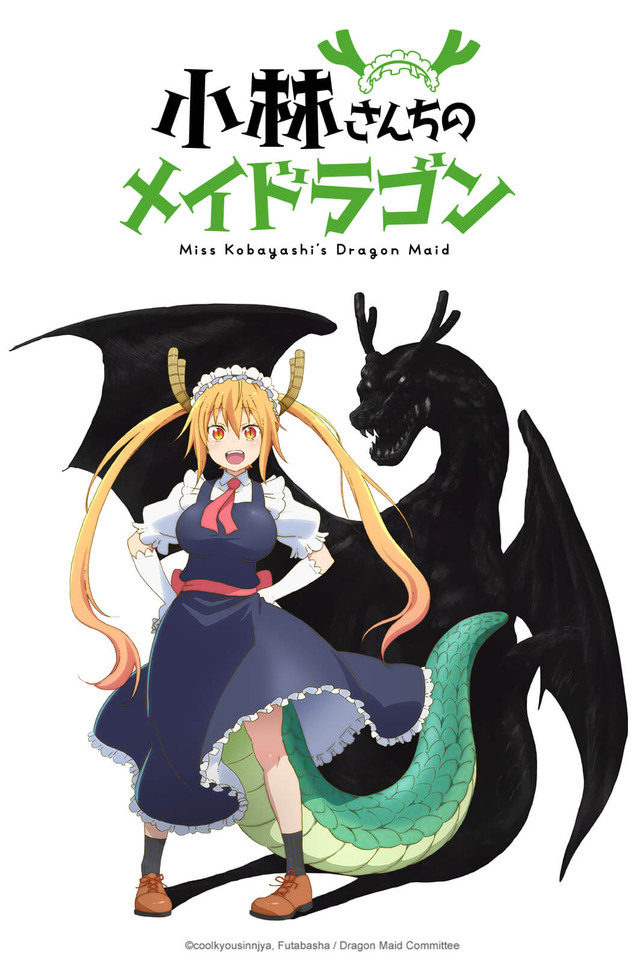
Miss Kobayashi's Dragon Maid

aka Kobayashi-san Chi no Meidoragon


Number of Episodes: 13 + 1 OVA

What Wikipedia says: As office worker Kobayashi gets ready for work, she is greeted by a large dragon right outside her front door. The dragon immediately transforms into a human girl in a maid outfit, and introduces herself as Tohru. It turns out that during a drunken excursion into the mountains the night before, Kobayashi had encountered the dragon, who claims to have come from another world. Subsequently, Kobayashi had removed a holy sword from Tohru's back, earning her gratitude. With Tohru having no place to stay, Kobayashi offers to let the dragon stay at her home and become her personal maid, to which she agrees. As Kobayashi has forgotten her drunken offering, she is initially reluctant to allow the dragon into her home despite her previous promise, but a mix of guilt and the usefulness of Tohru's dragon abilities convinces Kobayashi to accept her. Despite being efficient at housework, Tohru's unorthodox methods of housekeeping often end up scaring Kobayashi and bringing more trouble than help. Additionally, Tohru's presence attracts other dragons, gods, and mythical beings to her new home.

What KoanMan says: As with many anime, there is an interesting entry to the story that becomes clear over the course of the series, as the emotionally flat Miss Kobayashi (whist sober at least) catches up with her own life events. At times trite, and at others a little cheesy, the slightly convoluted plot unfolds to reveal different, and yet surprisingly similar characters, each with their own method of escape and identity-denial.

Director Yasuhiro Takemoto keeps the pace steady, integrating fan-service right into the characters in a story that does not take itself too seriously, and keeps the whole production light-hearted.

So How Does it End? (Spoiler free):  Do slice of life series ever end? In any case, satisfactorily with plenty of room for season 2.

How About the Music? Music and mood is good, in particular, the jealousy and rage scenes are surprisingly well done, with no doubt as to what the characters are feeling.

Overall Grade: An easy watch and good entertainment that will not tax the cerebrum. KoanMan gives Miss Kobayashi and her infatuated maid a B.


Addendum by tTPO: Despite the extreme moe, generally successful comedy and currently fashionable fantasy setup, this is a remarkably emotionally honest and engaging series. The decision to separate the overt fan service from the slowly developing yuri relationship between Kobayashi and Tohru ends up lending more weight to the relationship than would be expected in this otherwise pretty lightweight series. I cared, and so did Mrs tTPO (who is not the greatest yuri fan). Recommended. B+

Saturday, 31 December 2016

Amagami SS & Amagami SS+


Number of Episodes: 26 with 2 OVAs / 13 with 8 OVAs / Special Episodes

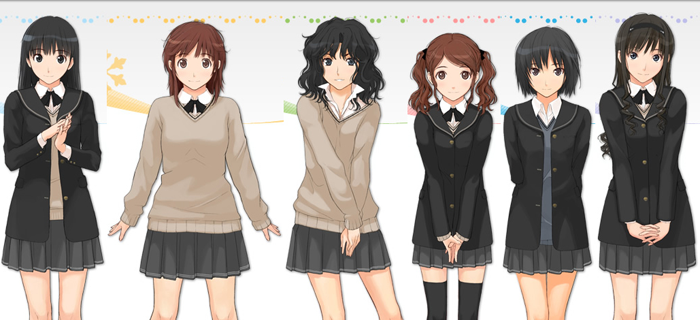
What Wikipedia says: The series follows Junichi Tachibana, a second year high school student from Kibitou High who dislikes celebrating Christmas due to a past incident two years ago when his date stood him up on Christmas Eve which left him heartbroken. However, this Christmas will be different as his encounter with one of these six girls, Haruka Morishima, Kaoru Tanamachi, Sae Nakata, Ai Nanasaki, Rihoko Sakurai and Tsukasa Ayatsuji will finally open up his heart to love again. The anime adaptation is rather unusual as it is divided into several story arcs where each arc focuses on one of the main heroines who will become Junichi's love interest. 
 
On August 13, 2011, a second season of Amagami SS was announced.[4] The second season, titled Amagami SS+ plus, aired on January 5, 2012 to March 29, 2012.

What KoanMan says:
Amagami SS and Amagami SS+ Plus are unique take on the serial (not parallel) romantic escapades of a schoolboy Tachibana Jun'ichi, apparently spawned from the PS2 dating game of the same name. His character seems to morph into whatever each of the six female love interests seem to need. And as each separate story unfolds with the girls, different aspects of his personality and theirs are brought to the fore. The storyline is well-paced and interesting in its diversity, with director Hiraike Yoshimasa keeping the relationship unique and engaging in its own right. No easy task. Well done.

Morishima Haruka is the senior class goddess, Nakata Sae is shy, quiet one with great taste in clothing, swimmer Nanasaki Ai and the strict class president Ayatsuji Tsukasa are the four that seem to stretch him the most from his natural state. These contrast well with his two childhood friends, the free-spirited and independent Tanamachi Kaoru, and the “overweight” and somewhat retiring Sakurai Rihoko, who accept him more as himself. One says “overweight” as the Japanese determination of this concept differs significantly from that of this round-eyed Gaijin - perhaps the term “not emaciated” might be a better fit for Rihoko’s still-slim figure. 
 
All characters are very well articulated, and even those in the periphery, like his caring but exasperated sister Tachibana Miya (who gets her own OVA - tTPO), and his porn-addicted, sushi-chef-trainee friend Umehara Masayoshi, who are perfect counterweights to the plot.
 
How About the Music? Music is fair, though art director Takahashi Maho has some fine scenery.

So How Does it End? (Spoiler free): In many different, and generally satisfying ways.

Overall Grade:
KoanMan enjoyed these series, and did not feel lost, nor bored throughout. Very enjoyable. The score for this collective is a solid A.

Addendum by tTPO:
Koanman
got this mostly right. This is an excellent harem series that removes some of the 'main protagonist with many girlfriends' issues by simply dealing with each of the different girls in a parallel universe fashion. tTPO enjoyed the original series a bit more than the sequel simply because the original series being 26 episodes, gave the strories just a bit more breathing space. Having said that, if you watch the first season you cannot fail to watch to second I think to see where the relationships continued to (or failed to as the case may be). Where Koanman got it wrong was the music - the changing OPs (as sung by the different girls) in season one, with few exceptions, were great and added (for tTPO) to the different flavour of the arcs. As it is just a bit long and season two not quite as good as season 1, tTPO gives this a B+. Definitely one of the more watchable harem series.

Wednesday, 4 November 2015

Elfen Lied


Number of Episodes: 13

What Wikipedia Anime News Network says: "The Diclonius, a mutated homo sapien that is said to be selected by God and will eventually become the destruction of mankind, possesses two horns in their heads, and has a "sixth sense" which gives it telekinetic abilities. Due to this dangerous power, they have been captured and isolated in laboratories by the government. Lucy, a young and psychotic Diclonius, manages to break free of her confines and brutally murder most of the guards in the laboratory, only to get shot in the head as she makes her escape. She survives and manages to drift along to a beach, where two teenagers named Kouta and Yuka discovers her. Having lost her memories, she was named after the only thing that she can now say, "Nyuu," and the two allow her to stay at Kouta's home. However, it appears that the evil "Lucy" is not dead just yet... "

What tTPO says: This is an extreme series - extreme violence and gore, nudity, and much victimisation of innocents. This alone is enough to turn many people off, and understandably so. As Koanman points out below, character development is not profound for most and the plot, based on a much longer manga, ends up being hard to follow at times as to everyone's motivations. 


Despite all of these imperfections it is a compelling and thought provoking series that treads similar thematic ground to Shiki in that it questions human nature and asks the same question - who are the monsters here?

How About the Music? I'll let KoanMan talk about this. 


So How Does it End? (Spoiler free): The ending is not made perfectly clear, but it is emotionally satisfactory and surprisingly, just a little optimistic.

Overall Grade: This is an imperfect series, and not an easy ride. But somewhere in there is a story that needed to be told and questions that needed to be asked. Grade B

Addendum by KoanMan: Elfen Lied has loads of cool ideas and concepts, starting with the visuals right from the beginning, and coupled with the hauntingly brilliant choice of theme song by music director Katsunori Shimizu, "Lilium", by Kumico Noma. The closing theme "Be My Girl", by Cheiko Kawabe, is also a good choice, and certainly finishes each episode on a light note.

The plot is interesting, if not somewhat convoluted. This is where the first half of the series feels a little disjointed, and the storyline does not flow well from one scene to the next. Everything is there, but just a bit clunky. The invisible hand thing doesn't really appeal.

Similarly, character development falls short. All the elements are there, however, director Mamoru Kanbe just misses the mark. The main female characters all have plenty of quirks that could have generated legendary status, however, Kouta comes across as plain weak. That said, Yuka comes across weird and jealous, Mayu is a bit of a non-event, and Nana is confused, although with daddy issues, this at least gives her some interest. 


Lucy/Nyu is the only character that really gets development, all the others get attempts at development. Lucy starts as a killing fiend humming a cutesy song, a disturbing blend of efficient murderous innocence. Then, as her dual personality becomes obvious it seems she becomes moody and bitter... No cutesy malevolent humming at all. KoanMan is not sure why she was a innocent and happy cute killing machine at first, then a dark and moody cute killing machine later.

KoanMan really wants to love this series, although it just doesn't quite get there. It is OK, but it could have been so much more- a solid B for this one.

Friday, 16 October 2015

Flowers of Evil

aka Aku no Hana 


Number of Episodes: 13

What Wikipedia says: The story follows a middle school student named Takao Kasuga who's forced into a "contract" by fellow student Sawa Nakamura, after being caught stealing the gym clothes of his crush Nanako Saeki, and the series of events afterwards that follow these three characters. The title of the manga comes from Charles Baudelaire's Les Fleurs du Mal.

What KoanMan says: KoanMan has some mixed feelings about "Aku no hana". Firstly, it bears mentioning that the "rotoscope" technique used makes the look of this series unique. It is a method of animating real film images projected onto a frosted screen and originally each image was hand-traced to create the final animated image, although computer software has now been developed to convert images. Besides the style, it allows animation to present characters with natural movement, and it delivers here. A more more normal animation format was originally tabled, however, to allow the audience to focus on the story/characters and not the actors, director Hiroshi Nagahama used the rotoscope technique.

The story is itself unusual. The central character Takao Kasuga is a hyper-anxious, hyper-reactive, moronic simpleton who rarely thinks much beyond himself. If one can tough out the first few grindingly tedious episodes, the slow, agonising pace actually becomes tolerable, and almost unnoticeable by about Ep7. Sawa Nakamura is his rebellious muse, challenging him to confront himself and her perceived view of him, while Nanako Saeki is the muse he imagines inside his own head. The main characters are very well developed with a realistic approach. Other characters are not important to the myopic worlds of the main characters, and are not explored, not do they need to be.

How About the Music? Music at open and close is good, and is completely unrelated to the "Aku no hana" song released in 1990 by Japanese rock band Buck-Tick. In fact the opening and closing credits contain almost all the music in the series, and thinking back, KoanMan did not notice anything other than mood audio at any other time.

So How Does it End? (Spoiler free): After a dragging, painful start, the simple plot is executed with a storyline that somehow managed to keep KoanMan watching to the end. An interesting watch, more for the moods it engenders that had KoanMan reminiscing about the internal angst associated with teenage life. Ahhhhh, the angst...... Beyond that there was little in the characters to connect with, and perhaps the intent in this "Aku no hana Part 1" series is to do just that, or simply to engender the keen desire to strangle the characters? Not sure.

Overall Grade: Interesting, moody, different - gets a B. Laboriously slow and Takao is an imbecile - gets a D. 


It all adds up to a C.

Addendum by tTPO: tTPO liked this more than KoanMan and it is clearly going to be a polarising series for viewers. There is little doubt that Takao is a largely spineless fool, but doing dumb things, being self-involved and being bored is pretty much what teenage life is about. Whether watching this immensely slow car crash makes good television is debateable, but I found somewhat compelling the brave directorial decisions about the rotoscopy (which immediately put off Mrs tTPO), the universally unlikeable characters, the long stretches without dialogue (which peaked with an epic 8 minutes of nothing in Episode 8) and repeated views of the decaying town. I also appreciated the positively atypical depiction of largely functional and caring parents who, in contrast to most anime series, are actually at home and involved with their offspring.  

The OP /ED are worth a special mention as being quite disturbed and I think set the tone of the series well.

In summary: Interesting, moody, different. Laboriously slow and Takao is an imbecile. It all adds up to an A-. 

I can only hope there is a second season so I can see the wreckage finally come to rest. 

Saturday, 10 October 2015

Zetsuen no Tempest

 aka Blast of Tempest


Number of Episodes: 24

What Wikipedia says: "The story revolves around Mahiro Fuwa, a teenager whose sister was mysteriously murdered one year before, and his friend Yoshino Takigawa. Mahiro is contacted by Hakaze Kusaribe, the leader of the Kusaribe clan who was left stranded on an unknown deserted island by her followers, and agrees to help Hakaze in exchange for her help to find out the culprit for the death of his family. Upon learning of his friend's intentions, Yoshino joins him on his quest to stand against the Kusaribe clan who intends to awaken the "Tree of Exodus" whose power can bring ruin to the entire world. 

Several dialogues and plot elements in Zetsuen no Tempest pay homage to two works of William Shakespeare, Hamlet and The Tempest, which are two stories about retribution, albeit with completely opposing outcomes."

KoanMan says: Logic, magic, and really powerful trees. This series is an interesting tale of two average high school friends, Yoshino Takigawa and Mahiro Fuwa, that find themselves tormented by the murder of Aika Fuwa. Events then escalate from normal to holocaust as magic is used as a weapon in the war between two trees representing opposing philosophies on human civilization and its future. The boys are quickly introduced to Hakaze Kusaribe, the princess Mage of the Tree of Genesis.

There is a lot of time for characters to develop, although most characters have an unusual quirk somewhere in their make-up which adds a little light-hearted fun to proceedings.

Logic is a central pillar of the story, and besides magic, mostly holds up. Dialogue is important, with one discussion spanning several episodes. It is so well done, KoanMan barely realised until 3 episodes into this conversation that it was one conversation. The pace is a little on and off, and the story is a little disjointed, although overall the story ebbs and flows well. Plot is convoluted though does follow a solid central direction.

How About the Music?
Music is OK, with opening and closing credits music quite average, however, the inclusion at times of selected classical music pieces added greatly to the mood. This was not consistent enough throughout the series for KoanMan and this could have been a stand-out feature if done well.

Special mention goes to Michiru Oshima for his orchestral arrangement of Beethoven's "Tempest (mvt 3)" - fantastic. 

Overall Grade: KoanMan liked this series, and it gets extra marks for keeping interest throughout some very long blocks of dialogue. Zetsuen no Tempest gets a B. 


Addendum (by tTPO): Both tTPO and Mrs tTPO like this series a lot. The long slabs of adversarial dialogue taking place in small areas that punctuated the series had more ebbs and flows than many many more physical fights and as such made a refreshing change for the medium. It really did reflect the theatrical themes on which the story was based. The plot was complex without being too complex or self indulgent and the only letdown for tTPO was the inevitability of main conclusion which was not bad by any means, but given the excellent journey to get there was just not quite as good. 

Blast of Tempest gets a B from us too. 


Sunday, 5 October 2014

Clannad & Clannad After Story


Number of Episodes: 44 + 1 Extra + 1 Recap + 3 Alternate endings + 1 Movie

What Wikipedia Anime News Network says: "
Tomoya Okazaki is a third year high school student resentful of his life. His mother passed away from a car accident when he was younger, causing his father to resort to alcohol and gambling. This results in fights between the two until Tomoya's shoulder is injured in a fight. Since then, Tomoya has had distant relationships with his father, causing him to become a delinquent over time. While on a walk to school, he meets a strange girl named Nagisa Furukawa who is a year older, but is repeating due to illness. Due to this, she is often alone as most of her friends have moved on. The two begin hanging out and slowly, as time goes by, Tomoya finds his life shifting in a new direction."

tTPO says: Clannad starts out as a somewhat conventional somewhat comedic high school harem series but it does not take long before other supernatural, emotional and family elements start veering this away from the conventional.  The prominent roles of the parents of the main characters deserve special mention - more often than not parents just don't hae a significant role to play in most school anime, and if they are there are just in the background, always at work, or annoyances. 


Where Clannad really differs is where it goes with After Story. So many series simply resolve the high school romance and leave that as the conclusion. But After Story is different and follows through in the years following school and the consequences the decision made there, ultimately leading to the karma filled, emotionally satisfying but slightly confusing, finale. 

tTPO loved this series. I watched it some time ago but occasionally just randomly watch an episode to experience the inevitable feels that this series is packed with. Now I am a father the emotional impact of the parental roles in this series, as well as nearly all the events of After Story has only increased not decreased with time.

It is important to make some notes about the movie here. The short piece of advice is just don't do it. It is a largely joyless affair that focuses on Okasaki and Nagisa, and leaves out the whole karmic redemption theme that is so fundamental to the series which makes the darker moments more tolerable. Admittedly Nagisa's school play performance done much better. But that alone is not enough to watch it. 

How About the Music?: For this tTPO, the music to this series is near perfect. Years after first watching it still elicits a pavlovian bittersweet response. All the themes deserve a mention. Except maybe "Torch". Sorry Lia.


OP1:"Megumeru ~cuckool mix 2007~" by eufonius
ED1: "Dango Daikazoku" by Chata
ED2: "Ana" by Lia
OP2: "Toki o Kizamu Uta" ("A Song to Pass the Time") by Lia
ED3: "TORCH" by Lia

So how does it end? (Spoiler Free):  The ending brings everything together leaving few threads dangling. Though saying that, it would be a lie to say that the events as we head towards the end are particularly easy to understand. A rewatch or two puts most of the big points into context, though there still remain some significant debate on the interwebs as to the finer details. ie. You feel you know what just happened but explaining it to someone else may not be so easy. In all of these interpretations though, despite their disparity there is a significant point - this is NOT a deus ex machina ending, it is a a conclusion that brings together the events leading to this point. 

For your and my convenience, the best of the explanatory links are here (long), here (diagrammatic), here (short) and here (point form).

Overall Grade: Clannad and Clannad After Story set the benchmark for harem and romance, and that doesn't even touch the genuine drama, comedy, and supernatural elements this series has. Despite the length
(or perhaps because of it) this is well worth the journey, even for the tTPO. Though you could skip the extra, the recap and the movie. For the love of god though do not skip the alternate endings. While this series seems to divide the viewing public, for tTPO this is one of the best series ever. Grade A. 

Addendum by KoanMan: For the TPO, this series may be a little long, but as a depiction of school life for friends facing their own challenges and discovering their own dreams, this has a lot to offer. Nagisa Furukawa and Tomoya Okazaki are the primary characters, and their relationship meanders around and through various goals and the lives of their friends as they tackle school and then then real world after school. As gentle as this begins, there are some seriously gut-wrenching moments. The "other world" parallelism is interesting, and adds some depth to the storyline. Series 1 [Clannad] has a goodly serving of humour, and the "kick count" is an inspired touch - look out for it! Great! Series 2 [Clannad After Story] is a lot more serious, with much less humour, although no less engaging. Throughout, Nagisa's father Akio Furukawa is a standout, and unsurprisingly, to those who know KoanMan, Tomoyo Sakagami and Kyou Fujibayashi rounded out the three favourites.

The music is OK, although the opening credit score of the second series is awesome. The final credits the first series "The Dango Song" took almost the entire first series to grow on KoanMan, who likes it now..... although it did not start out like that.

KoanMan loved this series, and for a non-action, non-violent story, this is impressive. Despite the length, this one was worth it. KoanMan gives this an A.

Wednesday, 29 January 2014

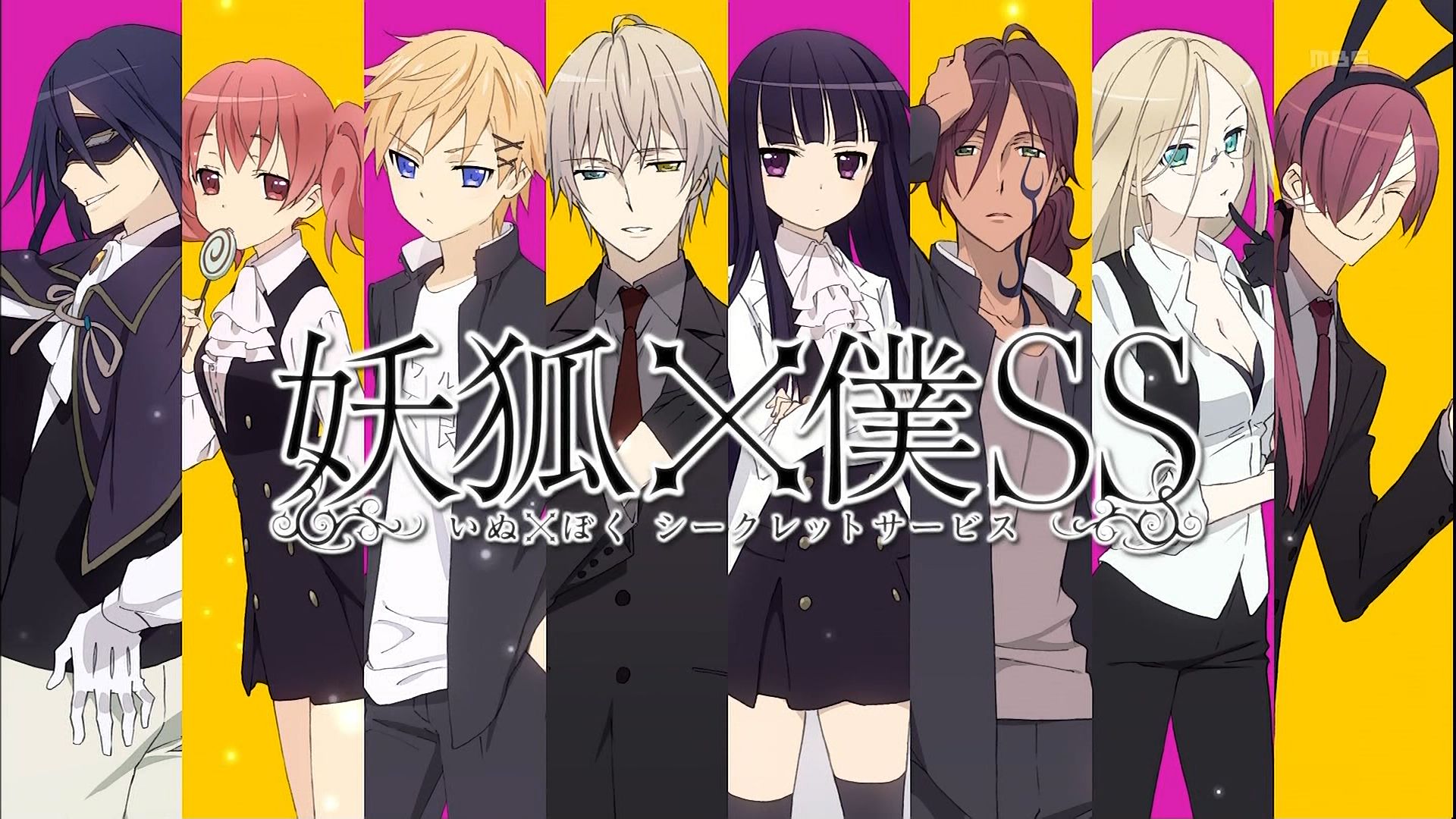
Inu x Boku Secret Service

aka Inu × Boku SS, Inu Boku Shīkuretto Sābisu, The Dog and Me Secret Service), Youko x Boku


Number of Episodes: 12

What Wikipaedia says: "The Maison de Ayakashi, better known as the Ayakashikan, is a high security apartment building where humans with demon ancestors, or yōkai, reside, each guarded by their own Secret Service bodyguard. A yōkai girl named Ririchiyo Shirakiin moves into the Ayakashikan hoping for some peace and quiet. Instead, she finds herself with the service of the Secret Service agent, Soushi Miketsukami."

tTPO says:
This show was what it was. It set out to be a romantic non-harem series with some side characters and ended up being exactly that. It was not plot heavy and kept its focus sensibly, for a short series, on the characters and the place they lived.

The main characters certainly (and the side characters to a variable extent) have some background and depth giving motivation to their actions, though it would wrong to say there were not some characters present there for comic relief and to just stir the pot. Not that this is a bad thing - if it was good enough for Shakespeare to have a jester or 2 then it's difficult to criticise it in anime.

Problems? Putting aside the seven year difference between the 22 year old male protagonist and the (nearly) 15 year old female protagonist (and no there was nothing even resembling a hint of sex at any stage, despite no shortage of fan service with some of the side characters) there is little in here to offend anyone. Also the supernatural backgrounds of the main characters don't get much exploration, and all things considered there is not much serious drama or tension. It all seems just a little easy at times. Is that good enough?


How About the Music?: The OP ("Nirvana" by MUCC) is a proficient bit of J-rock though erring on the generic side. Has a bit more get up and go in the live format though. I'm not sure the image of the band (now I've seen them) matches with the anime. I'm guessing it was all about the music.

There were a few too many EDs to talk about.

So How Does it End? (Spoiler Free):
The show ended well, with a good reveal in the second to last episode which tied up some loose ends, leaving things to wind down nicely in the last episode. Satisfying. 

Overall Grade: C. It set its aim low, and easily cleared the bar. However, there are more compelling shows you should probably be watching.

(NB: When reading up to write this review I see that there are dramatic events that occur in the manga not long subsequent to the end of where the anime ceases. So much so that the events of the anime are considered a prologue to what comes later. I didn't see that coming. If the anime had gone down that road though things may have been rated very differently.)

Thursday, 2 January 2014

White Album 2

Number of Episodes: 13


What Wikipaedia Anime News Network says: "Fall, when graduation is only half a year away.

Haruki Kitahara, the final member of the light music club that dissolved, plays his guitar by the window after school in preparation for the school festival. It was the one and only adventure of a good student who spent two diligent years on his studies.

But when a flowing piano melody and a voice as a clear as bell harmonize with his guitar… He goes from being alone, to being two, then three in the light music club, as the semester he dreamed of, no, hoped for, began."

tTPO says:
Set 10 years after the original White Album series, this new series has nothing to do with the old series except that it a) takes place in the same fictional universe and some of the songs from the original series appear here, b) it is based on a visual novel and c) it involves awkward romance and drama.

Having said that, there is lots to like about the series. There is a great dramatic (almost Shakespearean) arc in the pacing peaking midway through the series with the music club concert, before which is the glorious honeymoon period, but after which...not so much. The story is much more direct and less complex than the original White Album, and the focus remains on the basic love triangle that is the heart of the series. This is a good thing and enables better character development within the 12 episodes. And with the main characters still at school the mistakes they make and decisions they make ring naiive and true. (Teenagers don't need that much help to make their lives more dramatic than they need to be so is it any wonder these things are set at school? Who am I kidding? Adults still make plenty of bad decisions!).

How About the Music?:
The music that is the canvas for the series also very appropriate though as a guitar player even with a few days practice I am not sure the solo Haruki pulls out at the concert is going to sound as good as it does considering his level of general guitar ineptitude. And the programming of the backing tracks for the original song they play - given they only had 24 hours to write and rehearse this when did Iizuke get a chance to do this? Especially the cracking sequenced bass line? Whatever. I'm being picky.

White Album, Powder Snow and Sound of Destiny from the first series all feature contextually. The OP ("Todokanai Koi '13" by Rena Uehara) and main ED ("Sayonara no Koto" by Rena Uehara) are largely inoffensive bits of J-rock and J-pop respectively that are improved subjectively by the series they are associated with. 

So How Does it End? (Spoiler Free):
There is much done right here (see my previous thought on the importance of having losers in any harem series), especially a couple of timely flashbacks - one in the second last episode and cleaver musical one at the very end - as well as a monologue from Setsuna that fill in whatever gaps were left with respect to the characters and their motivations. But there is a certain inevitability to the ending (despite its appropriateness) that takes away just a little from the drama and leaves a worse taste ("Er, that's it?") in my mouth than there should have been. 

As I write this though all is not lost. Apparently this is but one part of a bigger story with further plot 2 and 5 years down the track. This to me is also a good thing and I can only hope the rest of this gets animated.

Overall Grade:
Good show, but in a way I find difficult to describe, somehow not quite as good as it could have been. B. (Though this may improve with the completion of the story.)

Tuesday, 26 November 2013

White Album

Number of Episodes: 13+13


What Wikipaedia the Nihon Review (there are no decent synopses out there for this show so props to TypicalIdiotFan for this) says: "After 20 years of life, Fuji Touya finds himself in his second year of college, dating an up-and-coming idol singer named Morikawa Yuki, estranged from his father, and surrounded by “Goddesses”. These “Goddesses” are women that Touya has met throughout his life, who have all helped him in some way when he needed it. Unlike most other people, Touya has a hard time letting go of these special women, and his kindness to them has created some confusing and frustrating relationships. These bonds, especially with his beloved Yuki, are starting to become dramatic and strained, and eventually something is going to have to give…"


tTPO says: I like this series set in 1986. No, it is not perfect (ongoing communication problems form a large amount of drama - it's a wonder anyone survived the 80's) and yes, it is 26 episodes which means I had to forego some sleep as I binge-watched it over a week or so, but it was worth it. Comparisons with School Days are inevitable as both fall into a more tragic harem subgenre where a) the characters are more often than not flawed (especially the lead, though he could not do it without the willing help of the harem) and b) it's not always going to end well for a lot of people. In the case of White Album though, the car crash is slower, has more people on board at the time and doesn't end as badly.

Unlike may reviews that saw this series in two parts many years ago I watched it all in a short period of time and found the two parts* (shot by different directors apparently) still a pretty coherent series. I can't say it was always straightforward - there are without doubt some convoluted aspects but fortunately these are not usually essential to the main plot. Some but not all became clearer in subsequent episodes. What I did appreciate though were the character arcs - very few people stood still from start to finish, and many possibilities for where things were going were kept open till the near end and it was this that kept the episodes rolling and my sleep diminishing.


* With the appearance of White Album 2, and sequel to this series with completely new characters, it does get confusing with White Album, second season, also sometimes referred to as White Album 2, which was just the second half of this series.

How About the Music?: For a series so based around music I found the OP and EDs appropriate but not compelling.
Should I have expected more from idol based J-Pop set in 1986 though? 

Having said that, the main insert songs (even with their 80's flavourings) were a bit better and "White Album" (as sung by Aya Hirano - the voice of Haruhi) the song in particular eventually became a bit of an ear worm. The duet performance of "Powder Snow" at the end I think also rose above the limitations of the song itself (note this link contains spoilers as well as a song - different version with no spoilers here). 

So How Does it End? (Spoiler Free): Mostly well. While most plot threads are sorted out, the final ending is left just a bit open. A bit of deduction (and internet research) allows narrowing down of the likely outcome without too much difficulty. The pacing was certainly much more even compared with School Days and even provided a motivation for many of the series' events though I can't vouch for the psychological validity of it! And yes, there were clues along the way for the astute viewer.

Overall Grade: Imperfect, but still compelling. B+

Saturday, 14 September 2013

Kids on the Slope

aka Sakamichi no Apollon


Number of Episodes: 12

What Wikipedia says: "The beginning of summer, 1966; because of his father's job situation, freshman high school student Kaoru Nishimi moves by himself from Yokosuka to Sasebo in Kyushu to live with relatives. Until then, Kaoru was an honor roll student who tended to keep to himself, but meeting notorious "bad boy" Sentaro Kawabuchi starts to change him. Through his devil-may-care classmate, Kaoru learns how much fun it is to play jazz and finds the first person he can call a real friend."


KoanMan says: Every once in a while, a story catches you in an unexpected way.  This is an engaging and personal story, and somehow kept KoanMan riveted throughout, without the need for explosions, violence or carnage.  KoanMan generally loves those things, and yet they were not required here due to the strength of the story-line.

It begins in a fairly standard way, with an isolated young teen, Kaoru, arriving in a small provincial  town.  Tough-guy Sentaro, and classic girl-next-door Ritsuko, befriend Kaoru, and so begins a troubled journey through their developing relationships to each other and those around them.  These characters almost became part of KoanMan's life during this series, they are that well developed.  This is remarkable given the limited number of episodes in which to get this done. 

Pace is excellent, and the storyline cohesive and complete, thank you director Shinichiro Watanabe.

How About the Music?: The music is a standout as well.  The opening title song is seriously catchy, and some of the jazz that features within the series had this KoanMan tapping and swinging to the beat.  Composer Yoko Kanno has done well.

Overall Grade: Well crafted, free-flowing, short and sweet.... KoanMan cannot give anything other than an A.  


Addendum (by tTPO): I can't do much else but agree with KoanMan's assessment of this series. There is just the right balance of justice and injustice, things that go right and things that go wrong, joy and sadness, failure and redemption and all in an amazingly paced pocket sized series. Also, while the jazz is not a central theme to the story, it is the canvas on which this story is painted and it works just so well. I want to explore more jazz because of it. Ultimately, while this is a million miles away from their previous pairing on Cowboy Bebop, Shinichirō Watanabe and Yoko Kanno deserve nothing but an A for this.

Sunday, 23 December 2012

Sword Art Online


Number of Episodes: 25

What Wikipedia Anime News Network says: "The players of a virtual reality MMORPG, Aincrad Online, are trapped and fighting for their very lives. After it is announced that the only way to leave the game is by beating it, Kirito—a very powerful swordsman—and his friends take on a quest to free all the minds trapped in Aincrad."

tTPO says: This series is a pleasant distraction that conveniently takes up the first two major arcs from the light novels the anime is based on. In that respect it is really two shorter series though there is some resolution for both in the final episode. But I get ahead of myself. 


The series really promises and delivers no less than suggested in the blurb above. There are good action sequences, the virtual worlds are imaginitive and well thought out, the pacing is just so, and there is plenty of romantic and non-romantic love (the family aspect of this was a pleasant surprise) between the major players that feels about right, and keeps the harem fan inside me happy. I think it is this latter aspect (the love that drives the main characters) that engenders the rather heated support for this series.

So far as flaws go there is is just a little much deus ex machina for my liking and the triumph of 'will' over just about anything, including programming. I have a number of friends in the IT business who assure me life is not this simple. And the second villain, in contrast with the first (who is actually quite complex), is annoyingly underdeveloped and clichéd. But at the end of the day this is a fairly lightweight affair so you just go with the flow and it's all OK. It's not Neon Genesis. Don't overthink it.

How About the Music?:  OP1 "crossing field" by LiSA is a pleasant but otherwise unremarkable bit of J-rock.  OP2 ("INNOCENCE" by Eir Aoi) is cut from the same mould but for mind has a bit more get up and go. 


ED1 ("Yume Sekai" by Haruka Tomatsu) is a pleasant song reflecting more the romance in the series. Has am easy on the ear modulation just before the prechorus. ED2 ("Overfly" by Luna Haruna) takes the same road but again with a bit more rock. 

Really, there is not a bad theme in this 4.

So how does it end? (Spoiler Free): More than satisfactorily. Major plot threads are all sorted out, even if some of them are a bit silly, and there is still room for a sequel.  


Overall Grade: Nothing really new here, but it does have plenty of heart (and I rate that) and the execution was generally pretty good. B-.

Tuesday, 18 September 2012

Planetes


Number of Episodes: 26

What Anime News Network Wikipedia says: " In the year 2075, mankind has reached a point where journeying between Earth, the moon and the space stations is part of daily life. However, the progression of technology in space has also resulted in the problem of the space debris, which can cause excessive and even catastrophic damage to spacecrafts and equipment. This is the story of Technora's Debris Collecting section, its EVA worker, Hachirota "Hachimaki" Hoshino, and the newcomer to the group, Ai Tanabe.
"

What tTPO says: This is a special series. If you went on the description above (itself is really an injustice to the scale of the series) and the first few episodes you would be questioning whether it was worth continuing or not - standalone episodes loaded with apparent anime caricatures. But you would then miss out on a rare anime experience.


The characters which at first appear so shallow bloom over the course of the series. Some change markedly for good or ill, others less so but gain a backstory that explains why they are the way they are. And the secondary characters, that in other series may be discarded in one-shot episodes, start to recur and have their own arcs, as small as they may be. But inherently you can't appreciate this snowballing of richness and development of the bigger world of the story until many episodes have passed.


The bigger story itself doesn't really start till the second half of the series with the first half a series of (near) standalone episodes with sometimes a slice-of life feel laying the groundwork which is essential to later development. As big as the story gets though (and it is a decent story), it is really just a vehicle for the characters.

Of note are a few other aspects of the series. Firstly, because it ends up taking place over the course of about 18 months, the episodes more often than not fail to immediately follow one another. This means that it is not uncommon for one episode to end on a cliffhanger, then the next episode start sometime after, with the cliffhanger explained in hindsight. Or for an episode to start halfway through an event we have not seen yet, with the details filled out later on. The result of this is a story where the viewer is left a little disoriented as to how the story got where it is (in a good way). But you are not left hanging and things are explained sooner or later. Both this and the character arcs reminded me in some ways of Babylon 5.

Secondly the science in the series is hard. No giant robots, FTL drives or big laser weapons. Just the hard slog of humanity leaving the planet a bit at a time. The research by the author and production team just shows and they succeed (within the bounds of an anime) to make this future as plausible as possible. The designs to my eye all looked great. If you like your science fiction over your science fantasy, this is a show for you.

Lastly the series asks some serious questions about space, its development and the future directions we may take as a planet. Some of these are not pretty but we need art to make us think about these things before it is too late.

How About the Music?  Meh. The music was mostly unobtrusive (except for the final episode ED that reminded me overwhelmingly of Code Geass - which all makes sense now since Hitomi was responsible for the offending, though not offensive, music in question) but in truth the flavour of the show seemed to get on just fine without it being a focus. And this from a guy that likes his anime music. The OP was "Dive in the Sky" by Mikio Sakai and the ED 1-25 "Wonderful Life" also by Mikio Sakai
.

So how does it end? (Spoiler Free.): Loose ends virtually all wrapped up with only a couple of small unanswered questions of minor consequence. The thoroughness of the end of the last episode (as well as the music) was again very reminiscent of Code Geass, and this was no bad thing. Did I mention some of the production team were the same as Code Geass?

Overall Grade: Grade A-. The strength of this show is also its weakness - if the ball got rolling just a bit faster this would have been an A but that's not how this series rolls. But the science, the unusual structure (for an anime), the asking of big questions, the shameless and brave main character development and the care given to even minor characters means that this definitely deserves a seat at the table reserved for the best.

Tuesday, 26 June 2012

Dusk Maiden of Amnesia

aka Tasogare Otome × Amunejia


Number of Episodes: 12

What Wikipedia says: "The story revolves around a first-year middle school student, Teiichi Niiya who had just enrolled at Seikyou Private Academy. When he gets lost in one of the school's old building, he meets a girl named Yuuko Kanoe who reveals herself as a ghost with no memories. Teiichi then decides to investigate her death by looking through the school's seven mysteries revolving around her. Throughout the story, Teiichi and Yuko discover the truth about these ghost stories and help those who are troubled."

tTPO says: I must admit I was a bit unsure of this series when it started as it didn't really seem to know where it was going initially - comedy was mixed in with gratuitous fan service next to the romance, suspense, mystery and mild supernatural horror. However Mrs tTPO and I stuck with it and were glad we did. As the series progressed and more was revealed the plot and the feel of the show came more coherent, focusing more on the main characters and plot. In the process of doing this it lost much of the trivial fan service and comedy (though not quite) and gained more drama and atmosphere. The pacing at the end was pretty good and I am glad this was not a 24 episode series.

How About the Music?: The OP (Choir Jail by Konomi Suzuki) comes from the Evanescence / Paramore school of rock power ballads with female vocals. This is not my favourite genre but dammit if the song is not a) appropriate and b) a bit catchy.

The ED (Karandorie / Calendrier by Aki Okui) has a folky village waltz feel to it, and reminded me an awful lot of the opening theme to Spice and Wolf (Tabi no Tochuu). This is not necessariy a bad thing though (and I may be biased here) I felt the waltz time probably suited the medieval feel of Spice and Wolf better.

So how does it end? (Spoiler Free): As well as it possibly could have. The ending carried significant emotional weight and was consistent with its own internal logic, and I don't think you can ask for more than that. Though we were left thinking whether the final outcome was actually going to be the best outcome for Teiichi long term.

Overall Grade: This was another series that got a boost from a good ending. Despite the slightly wacky initial pacing and feel, stick with it - the latter half of the series more than makes up for it. Mrs tTPO and I agree: Grade B.

Saturday, 5 May 2012

Bunny Drop & Papa no Iukoto wo Kikinasai!

aka Usagi Drop & Listen to Me, Girls. I Am Your Father! (or Papakiki for short)


Number of Episodes: 11 (with 4 mini-OVAs) & 12

What Wikipedia MyAnimeList says: "Going home from his grandfather's funeral, thirty-year-old Daikichi is floored to discover that the old man had an illegitimate child with a younger lover. The rest of his family is equally shocked and embarrassed by this surprise development, and not one of them wants anything to do with the silent little girl, Rin Kaga. In a fit of anger, Daikichi decides to take her in himself. As Daikichi nurtures Rin, he started to understand the struggle while at the same time the joy of parenting." (Bunny Drop)

"Segawa Yuuta is a freshman of a university. He lost his parents when he was small and was raised by his sister Yuri. Yuuta has been living alone since Yuri got married to a middle aged man when Yuta was a junior high student. One day, Yuri visited Yuuta's apartment and asked him to take care of her three daughters while Yuri and her husband were on a trip. He unwillingly accepted the job but the plane Yuri took went missing. In order to prevent the daughters (the elder two of the daughters are children of Yuri's husband from other women [while] the smallest one is his and Yuri's child) from being adopted separately by relatives, Yuuta decided to take in all three girls. A life of a strange family in a tiny apartment begins." (Papa no Iukoto wo Kikinasai!)

tTPO says: These two series take a somewhat different approach to the same theme. Bunny Drop is based on a manga (which extends significantly further in time than the anime, read at your peril) and is the more 'adult' of the two, given that the main character, unusually, is in his 30s, single and not at school. He soon has family support and sorts out most of the practical issues with respect to work pretty quickly (punctuality notwithstanding), leaving this focused on the very much a slice of life series focussed on the issues he faces (the changes in responsibility and lifestyle when suddenly faced with raising a child) and the relationship between Daikichi and Rin. 

Papkiki (a hell of a lot easier than continually typing Papa no Iukoto wo Kikinasai!) is based on light novels which also extend much further than the anime. Because Yuuta is much younger (18) when he adopts the 3 girls, and does so against the families recommendation there are a lot more practical issues (as well as many of the same emotional issues) that need to be overcome by both Yuta and the girls. While Bunny drop (as an anime) only has hints of romance between Daikichi and another single mum, there is more overt romantic interaction between Sora (14) and Yuuta which is thankfully not reciprocated and Yuuta and clubmate Raika (who gets an entry into the top ten most desirable anime women, mostly because she doesn't talk much, can cook, has a very dry sense of humour, is violent and is easy on the eye). There is also a somewhat disturbing worship of both the precocious Miu (10) and Hina (3) by Yuuta's clubmate Sako. Thankfully also, this whiff of pedophilia is constantly rewarded by protective violence from Raika. And lastly there is a the platonic date between ladies man clubmate Nimura and Miu one episode. Despite all of this potentially very inappropriate romance, accidental fan service notwithstanding, the overwhelming message from the characters inter-relationships is one of strong friendships and mutual support though trying circumstances, and it is this honest emotion that carries the series.  Indeed the theme that the notion of family being more about care and love and not just blood relations is common to both series.

How About the Music?:  The Bunny drop OP (Sweet Drops by Puffy) is a bouncy bit of innocent 60s sounding pop and is a perfect intro to the series. The ED ("High High High" by kasarinchu) is a bit more downbeat but still optimistic. I got the feeling the OP was about Rin and the ED about Daikichi.

The PapaKiki OP Happy Girl - Eri Kitamura) is also an optimistic bit of catchy pop, more overtly J-pop but perfect for the girls. The ED (Colouring - Yui Horie) is a bit more mid-tempo electro pop and reminded me in feel at least of the lesser of the Ao no Exorcist EDs. Not as good match to the feel of the series I thought.

So how does it end? (Spoiler Free): Both of these series had emotionally satisfying endings, though especially with Bunny Drop, the slice of life nature of the series meant that plot-wise there is hardly a climactic conclusion. Papakiki was endowed with a bit more story which enabled a resolution to some of the immediate plot issues covered by the story. Both are left wide open for second seasons or more OVAs.

Overall Grade: Both these series succeed at the most important things - the emotional weight of the situation the characters find themselves in and how they respond to it. I'm not sure there is much here for the young crowd (maybe I am wrong) but as an old dude with a wife and child these series resonated strongly with both Mrs tTPO and myself. Grade B+ from all of us.

Sunday, 29 April 2012

Freezing + Freezing Vibrations


Number of Episodes: 12 (+ 6 mini-OVAs) + 12 (+ 1 special episode)

What Wikipedia says: "Set in a slightly futuristic world, Earth has been invaded and is at war with aliens from another dimension called the Nova. In order to counter them, Pandoras and Limiters, genetically modified girls with super fighting skills and their male partners who use special "freezing" powers to limit their opponent's mobility, are made to fight against the Nova. The series focuses on Kazuya Aoi, a Limiter whose late sister was a Pandora, and Satellizer el Bridget, a powerful Pandora with a cold personality, both who are enrolled at the West Genetics Academy, one of the many academies where Pandoras and Limiters are trained. In spite of the warnings of all his friends about Satellizer, who has intense aphephobia, Kazuya decides to be her friend and Limiter. They are later joined by Lana Linchen, a Pandora from Tibet in search for her Limiter who believes Kazuya to be her "soulmate", sparking a rivalry with Satellizer. The story follows Kazuya's Relationship with Satellizer, the students of the Academy, and Earth's war against the Nova."

What tTPO says: More to the point is what Wikipedia does not say - that this series has its fair share of blood and boobs. So if you are offended by nudity (no sex though - the worst it gets is some humiliation in episode 3) or reasonable amounts of violence I would be turning off about now. If you put up with this though what awaits is an interesting experience. The blood and boobs are often incorporated (as much as they can ever be) into the plot. The main characters have a fair amount of depth and backstory to them, and the mechanics of the Pandoras / Limiters / Novas are pretty well thought out - moreso if you freeze frame and read the Jinglish-ridden data screens that litter the episodes at various points. The pacing of the plot as it progresses to its inevitable climax is good, and even with the 'fight-of-the-week' phase it goes through I found myself looking to next weeks biff with anticipation. So much so that after watching 3 episodes of this on my own because I was indecisive about whether she would enjoy it or not, I introduced Mrs tTPO to it and she enjoyed it through to the end also.


The big weakness of the anime (as I discovered when I subsequently read the manga) was the lack of depth of the various secondary characters (with the exception of Ingrid Bernstein whose episode was one of the stronger ones as a consequence). In the anime they were often poorly developed charactures acting only as foils to the Aoi and Satellizer, with some of their redeeming battles in the final episodes in the manga, played right down in the anime. The other weakness of the anime in its adaptation of the manga is, that in contrast to what I said above, there were occasions when the fan service was gratuitous, and no more so than episode 8 (a prom queen episode with more wardrobe malfunctions than a Superbowl half-time show) which was an anime original. Or indeed any of the OVAs. Thankfully this episode is a stand alone and can be left out along with the OVAs without too many problems. If this sort of stuff floats your boat though you are in for a treat.

How About the Music?  There are occasions I don't need to listen back to remind myself how a song went. The OP (Color by MARiA, a cover of the Hatsune Miku song, and much much better) is one of these, a thumping piece of J rock with some awesome use of synthesiser. The ED (Kimi wo Mamoritai aka To Protect you by Aika Kobayashi) is another pumping electronic J-rock number and while full of energy not quite as catchy as the OP for me.

So how does it end? (Spoiler Free.): Pretty well, but at risk of repeating myself, not quite as well as the manga, with a little bit too much focus on the main characters. That notwithstanding, it's not disappointing.


Overall Grade: Grade B. Don't get me wrong - I liked Freezing a lot, and probably more than this grade would indicate. The story, action and main character development are good enough to carry this series through its weaknesses. But I am not sure the anime adaptation does justice to the source material. Watch this then go and read the manga, because the manga goes all sorts of places after the events covered by the anime finish. 


Addendum: Freezing Vibrations continued with a largely self contained story arc. Seeing the first series is not essential but it helps a lot. Unlike Freezing though, I had read the manga upon which this was based before seeing the series and I did wonder how they were going to do it and make it interesting since the 3rd and 4th arcs of the manga do stray away from Satellizer and Kazuya as the central characters and make it more of a ensemble story. So did it work?

For the most, yes. Some nifty writing meant the sometimes drawn out manga was condensed to a neat 12 episode arc, and they shoehorned the rather personal 2nd story arc from the manga into the middle of the 3rd manga arc which was more action oriented and made up the bulk of the story. There were good character moments for many, though Rana did not see much development this time around. There is after all only so much you can do in 12 episodes.  

On the downside there were a couple of clunky moments as a consequence of the rearrangement of the arcs (mostly involving Satellizer's step-brother) as well as a vanishing Nova which was forgotten about but in the main the pacing I though was actually better than the manga, leaving the ending neatly wrapped up while still leaving the door open for an eventual series 3. 

And there were boobs. And blood. And somehow it all just worked again. Still Grade B. And the OVA was still stunningly gratuitous and can be left out. 

KoanMan says: When KoanMan started watching this series (by director Takashi Watanabe as an extension of the manga written by Korean manhwa author Dall-Young Lim and illustrated by Kwang-Hyun Kim) it was immediately obvious that mammophiles will love this. The irony is that the stand-out feature (pardon the pun) of this pair (OK, no more from now) series was in fact not the décolletage, but the story, which could easily have carried the whole production on its own. Of particular note, is that one became strangely accustomed, almost desensitised, to the thoracic theatrics - to the point that by the end of the first series, they were simply there. Just participating as part of the wall-paper....part of the background.

That said, the clothing is linked to the character and their state of composure/health. An interesting detail that actually fits well with the plot, led by a first year student "limiter" Kazuya Aoi, and the aphenphosmphobic second year student "pandora" Satellizer el Bridget (for those interested also see haphephobia and haptephobia). They are joined by Tibetan exchange student "pandora" Rana Linchen to form a comical love triad that continues to entertain. This relieves a lot of the heavy themes of world cataclysm running almost continuously, as characters discover themselves and their place in the world.

Character development is good, and this continued to deepen throughout both series. With the variety of personalities it is easy to have favourites, KoanMan likes the "never give up" attitudes of Rana Linchen and Ganessa Roland. Fantastic!

The second series particularly impressed with its dark undertones, as concepts alluded to in the first are given texture. This, despite what appears to be a complete "changing of the guard" between the series - it is almost as if the whole crew were changed over, with different music, different character portraits, and a mild, though obvious, lower grade of animation production in the second series.

The series one music is awesome, the opening theme is "Color" by MARiA (a cover of a song voiced by a singing synthesiser vocaloid Hatsune Miku), while the ending theme is "To Protect You" by Aika Kobayashi. Awesome. Alas, in series two, the theme music is not so awesome (opening theme "AVENGE WORLD", end theme "The World Embraces Scars" both performed by Konomi Suzuki).

Overall, a good story, good plot and character development. KoanMan enjoyed this, not because of the fan service, but almost in spite of it. KoanMan rates this a solid B. 

Thursday, 12 April 2012

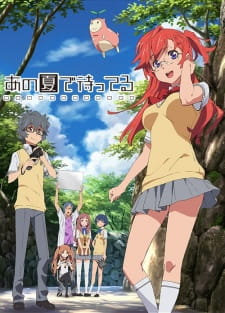
Ano Natsu de Matteru

 aka Waiting in the Summer


Number of Episodes: 12

What Wikipedia Anime News Network says: "While testing his 8mm camera at night, Kaito Kirishima is caught amid a mysterious explosion in his small town. Strangely, Kaito wakes up the next day perfectly fine, but with no recollection of what exactly happened the day before. Unfazed by what seems to have been just a dream, he heads to school not giving much thought to the incident. Discussing with his friends about the camera, they decide to make a movie during summer break. They invite two upperclass students to participate in the project: recently arrived Ichika Takatsuki and the odd Remon Yamano. In a strange twist of fate, Ichika starts living with Kaito as his sister has to work overseas. Summer days are about to get exciting for the small film crew."

tTPO says: This is the second romance series in a row to review and again it is also not a dud. It is not really a harem show proper, though there is a bit of competition, and probably more accurately is a love square with several unrequited loves. These relationships do travel and develop (some characters more than others - go Mio!) over the series, and happily and unhappily, decisions are made by characters with consequences for the relationships. 

The plot framing this is not so original (Senpai? Tick. Aliens? Tick. Cute inexplicable mascot? Tick. Childhood friends? Tick. School? Tick. Summer movie? Tick. No parents in the picture? Tick.) and the movie is largely a device to keep the relationship issues rolling on in the mid part of the series. Suprisingly the plot leaps to the fore in the last 2 episodes turning it into an action-lite series. And it manages this without jarring, which is surprising.

Despite this smooth execution at the end, the main fault to me lay with the pacing of the show in the middle, highlighted by a rather distracting 2-episode beach arc which introduced some unnecessarily annoying characters and fan service which was not prominent in the rest of the series. Unlike some other reviewers I think a 1 or 2 episodes less would have relieved the mid season sag.

How About the Music?:  Not much to say here. I have just finished watching the series and can't remember too much about it. It is simply neither memorably good or bad. Listening back now both the OP (sign by ray) and ED (Vidro Moyo by Nagi Yanagi) are exactly that - competant if forgettable J-pop.


So how does it end? (Spoiler Free): Fantasically well. Interestingly for a romantic series, the relationship issues are cleared up a couple of episodes before the plot, and the very end is cleverly executed, with some great reveals and wrapping up all the major bits, while leaving out a few teasing details, either for the viewers imagination or an OVA to fill in.

Overall Grade: Yet another romance show that does a lot right, especially at the end. However, the mid season sag was significant and the broad idea stayed just a little close to the genre (despite the great ending) to go full marks. Grade B-.